

Artificial intelligence has grown beyond simple automation. As the digital age matures, we are seeing the evolution of AI into highly specialised domains, most notably conversational AI vs generative AI. While these terms are often used interchangeably in mainstream discussions, they represent two distinct paradigms with unique capabilities, applications, and challenges.
Understanding the difference between conversational AI and generative AI isn’t just a matter of semantics—it’s essential for businesses, developers, and technology strategists. As organisations race to integrate AI into their ecosystems, clarity around these concepts empowers better decisions and more impactful innovation.
Let’s dissect this dichotomy with clarity, depth, and insight.

| Aspect | Conversational AI | Generative AI |
|---|---|---|
| Definition | Technologies designed to simulate human-like dialogue and manage multi-turn interactions. | Models that produce new content (text, images, audio, code, etc.) by learning data distributions. |
| Primary Focus | Interaction quality, intent recognition, context management, and dialogue flow. | Novelty and output quality — creating original content that resembles training data. |
| Core Technologies | NLU/NLP, intent/entity recognition, dialogue management, speech-to-text / text-to-speech (if voice). | Large-scale transformer models, autoregressive decoding, diffusion (for images), self-/unsupervised learning. |
| Typical Use Cases | Customer support chatbots, virtual assistants, voice agents, FAQ bots, conversational interfaces. | Content generation (articles, marketing copy), image/audio synthesis, code generation, creative applications. |
| Strengths | Low-latency, context-aware dialogue, structured flows, reliability and predictable behaviour. | High creativity, flexible outputs, adaptable to many domains through fine-tuning. |
| Weaknesses / Risks | Limited creativity may fail with ambiguous queries or complex content creation tasks. | Hallucinations (fabricated facts), bias, inappropriate or plagiaristic outputs, and high computational needs. |
| Typical Components | Intent detector, entity extractor, dialogue manager, response generator, safety filters. | Pretrained transformer backbone, tokeniser, sampling/decoding strategy, fine-tuning datasets, safety layers. |
| Performance Priorities | Accuracy, low latency, robustness, consistent UX and error handling. | Output quality, diversity, controllability, and domain-specific correctness. |
| Integration | Often embedded in user-facing systems (apps, websites, IVR) and linked to backend services. | Used as engines for asset creation, APIs for content pipelines, or combined with UI layers for interactivity. |
| When to Choose | Choose when the goal is guided interaction, support workflows, or automating conversational tasks. | Choose when you need creative generation, scalable content production, or media synthesis. |
| Common Real-world Examples | Siri, Alexa, customer support chatbots, bank virtual assistants, symptom checkers. | GPT-family for long-form text, DALL·E/Stable Diffusion for images, music/code generation models. |
Quick Links
What Is Conversational AI?
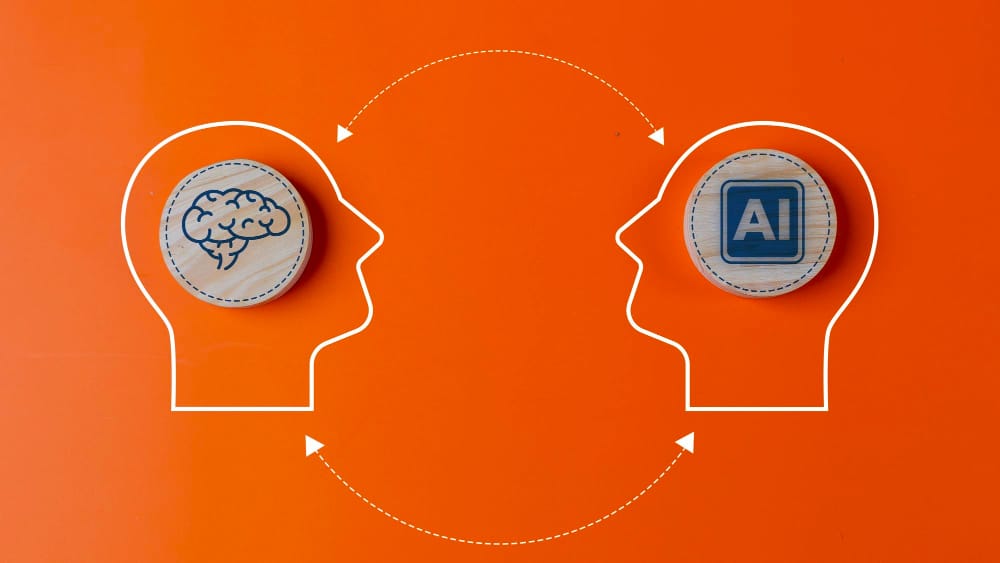
Conversational AI refers to technologies designed to simulate human-like conversation. These systems are trained to understand, process, and naturally respond to human language. Chatbots, virtual assistants like Siri and Alexa, and customer service bots all fall under this umbrella. The goal is to create a dialogue that feels intuitive, informative, and contextually appropriate.
At the heart of conversational AI is Natural Language Understanding (NLU) and Natural Language Processing (NLP). These engines help the AI grasp intent, manage context, and formulate coherent responses. Unlike simpler command-based systems, modern conversational AI is capable of holding multi-turn conversations and adapting to different tones and user behaviours. While they may leverage generative models for certain responses, their primary focus is dialogue optimisation and intent recognition.
What Is Generative AI?
In contrast, generative AI is focused on creation. This branch of AI leverages deep learning models, particularly transformer architectures like GPT (Generative Pre-trained Transformer), to generate new content. This could include text, images, audio, video, or even code. The key here is novelty. Generative AI doesn’t just respond to inputs; it produces new data based on the patterns it has learned.
Unlike conversational AI, generative AI is not inherently optimised for dialogue or interaction. Instead, it’s used in creative domains like content generation, image synthesis, music composition, and simulation. Applications such as DALL·E for visual art and ChatGPT for long-form writing are prime examples of how generative AI pushes boundaries far beyond simple interactions.
Why Does the Distinction Matter?
The distinction between conversational AI vs generative AI is not just academic—it has profound practical implications. Each serves a different business need and requires distinct architectural strategies. Organisations aiming to deploy a customer support chatbot will have vastly different requirements than those looking to automate blog writing or create AI-driven marketing assets.
From a technical standpoint, conversational AI requires rigorous input/output optimisation, real-time responsiveness, and safety filters. Generative AI, by contrast, demands vast computational resources, deep training sets, and ethical safeguards to ensure the output is not misleading, biased, or inappropriate.
Moreover, understanding this distinction allows enterprises to mix and match capabilities. For instance, combining a generative model’s creativity with a conversational agent’s interaction flow can yield highly dynamic customer experiences. However, this fusion requires precise engineering and a clear grasp of what each AI type brings to the table.
How Conversational AI Works
Conversational AI is typically built on a pipeline involving speech recognition (if voice is involved), intent detection, entity recognition, dialogue management, and response generation. Each of these components must function in harmony to ensure fluid and effective communication. While older systems relied heavily on decision trees and scripted responses, modern conversational agents increasingly utilise machine learning to improve interaction quality.
To illustrate, consider a banking virtual assistant. When a user types, “I want to check my balance,” the system must parse this input, identify “check balance” as the intent, possibly extract the account type (if specified), verify the user’s identity, and then return the balance—all while maintaining a coherent tone and language. These systems must also manage interruptions, remember context, and handle ambiguity gracefully.
Furthermore, conversational AI is often embedded in critical user-facing systems. This demands high accuracy, low latency, and comprehensive error handling. Consequently, reliability and consistency often take precedence over creativity in design.
How Generative AI Works- Conversational AI vs Generative AI
Generative AI, on the other hand, employs models that learn the underlying distribution of data and can sample from it to create new, similar data points. These models are trained on enormous datasets—sometimes encompassing the entire internet—and learn to predict the next word, pixel, or note based on context. The resulting systems can generate essays, paintings, or music that mimic human creativity to an uncanny degree.
Technically, generative AI models often use unsupervised or self-supervised learning. Once trained, these models can be fine-tuned on specific domains, enabling specialised applications like legal writing, medical transcription, or even screenplay generation. The transformer architecture has become the gold standard here, allowing for parallelised training and deep contextual awareness.
Where conversational AI focuses on interaction design, generative AI emphasises output quality and novelty. However, this creativity comes with risks. Generative models can produce hallucinated facts, inappropriate content, or plagiaristic outputs if not carefully governed.
Where They Intersect- Conversational AI vs Generative AI
Despite their differences, conversational AI vs generative AI are not mutually exclusive. The convergence of these technologies is giving rise to powerful new applications. For example, conversational agents can now use generative models to formulate more engaging and contextually rich responses. Similarly, generative tools are being embedded into chat interfaces, enabling users to guide creative processes through dialogue.
Consider a customer support bot that not only answers product queries but also drafts follow-up emails, creates summaries of interactions, and translates responses on the fly. Such capabilities are only possible through the harmonious integration of conversational and generative intelligence.
Yet, this convergence also introduces complexity. Developers must ensure that the creative output of generative models aligns with the expectations and constraints of conversational contexts. Guardrails, moderation, and user feedback loops become essential components in managing this fusion responsibly.
Use Cases in the Real World- Conversational AI vs Generative AI
The real-world applications of conversational AI vs generative AI illustrate their unique strengths. In healthcare, conversational AI powers symptom checkers and appointment scheduling bots, while generative AI is used to draft patient summaries and analyse clinical data. In e-commerce, chatbots guide purchasing decisions, while generative models write product descriptions and generate visual content for catalogues.
Even in education, the dichotomy is evident. Conversational AI can act as a tutor, answering student queries and guiding coursework. Meanwhile, generative AI creates practice questions, writes explainer articles, and even simulates scientific experiments.
Enterprises leveraging both must consider compliance, data security, and user trust. The misuse of generative tools for misinformation or the failure of conversational bots to handle critical scenarios can erode credibility. Thus, successful adoption requires a well-calibrated strategy that respects the strengths and limitations of each AI type.
Future Outlook: A Synthesis on the Horizon?
As AI continues to evolve, the lines between conversational AI and generative AI systems are blurring. Multimodal models like GPT-4 and successors are capable of both coherent conversation and high-quality generation across media. These systems promise to usher in a new era of intelligent agents capable of nuanced understanding and the creation of rich content.
However, this synthesis brings ethical, philosophical, and regulatory challenges. As these systems gain influence over communication and creativity, questions about authorship, bias, and accountability will become more urgent. It is not enough for systems to be robust—they must also be aligned with human values.
Investment in explainability, transparency, and interdisciplinary oversight will be essential. Whether deployed separately or together, conversational AI and generative AI will impact and shape the contours of future interaction, information, and imagination.

Closing Remarks: Making the Right Choice
Choosing between conversational AI and generative AI depends on your goals. If your priority is interaction, support, or guided user flows, conversational AI is your best ally. If you need originality, creativity, or autonomous content generation, generative AI leads the way. Understanding their strengths and how they can work together allows for richer, more engaging, and more responsible AI solutions.
In a world increasingly shaped by intelligent systems, clarity is not optional—it is strategic. By grasping the essential differences and overlaps between these two forms of AI, we can build smarter products, deliver better experiences, and unlock the true potential of machine intelligence.
FAQs
What is Conversational AI and Generative AI?
Conversational AI is a type of technology that enables machines to communicate with people in a natural, human-like manner. On the other hand, Generative AI focuses on creating entirely new content—such as text, images, audio, or animations—by using machine learning models trained on large datasets.
How does Conversational AI work?
Conversational AI leverages natural language generation (NLG) to deliver responses to users. Before replying, it often consults a company’s customer databases, taking into account your profile and previous interactions to personalise the answer. However, there are instances where the AI may struggle to match your intent with the available data fully.
What is Generative AI and how does it work?
Generative AI relies on deep learning and neural networks to recognise patterns and structures within its training data. Using these learned patterns, it can then create new content by predicting what should come next.
What is the best model for Conversational AI?
Currently, the most effective approach for deploying conversational AI is using NLP integrated with conversational AI systems, offering seamless integration across various channels and platforms, particularly for chat-based interactions.
What are some examples of Conversational AI applications?
Well-known examples of conversational AI include Alexa, Google Assistant, and Siri. Each application relies on a company-specific knowledge base to generate responses. Business AI systems continuously learn from user interactions, updating their knowledge databases over time to improve accuracy and provide more personalised responses.
What are some examples of Conversational AI applications?
Popular conversational AI applications include Alexa, Google Assistant, and Siri. Each of these systems relies on a proprietary knowledge base to generate responses. Business AI solutions, in particular, continuously learn from user interactions, updating their knowledge databases over time to enhance accuracy and provide more personalised experiences.
What are some examples of Conversational AI applications?
Some widely used conversational AI applications are Alexa, Google Assistant, and Siri. Each of these systems relies on a knowledge base unique to its company to generate responses. Business AI platforms continuously learn from user interactions, updating their databases over time to improve responses and deliver more personalised experiences.
What are some examples of Conversational AI applications?
Popular conversational AI applications include Alexa, Google Assistant, and Siri. Each application relies on a company-specific knowledge base to provide a response. Additionally, business AI software continuously learns from user interactions, updating its knowledge database over time to improve accuracy and personalisation.
Interesting Reads:
Conversational AI Chatbots vs Assistants’ Employee Experience

