

Artificial Intelligence (AI) is no longer a futuristic concept—it’s part of everyday life. One of its most powerful applications is the development of AI-powered voice assistants. From managing household tasks to powering enterprise-grade customer service systems, these assistants combine natural language processing (NLP), conversational AI, and speech recognition to understand and respond to human commands.
Popular names like Alexa, Siri, and Google Assistant have become household staples, but the technology extends far beyond consumer devices. Businesses across industries are leveraging AI voice tools to streamline workflows, enhance customer engagement, and make services more accessible.

Quick Links
Best AI-Powered Voice Assistants
1. Alexa (Amazon)
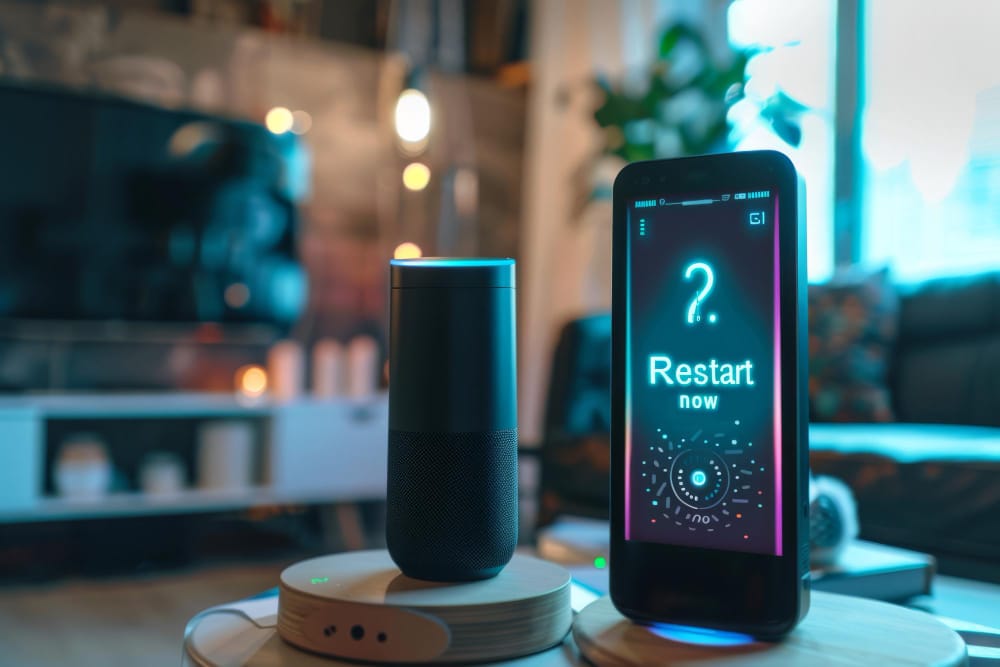
Amazon launched Alexa in 2014 alongside its Echo smart speakers, revolutionizing the way people interact with technology. Backed by Amazon Web Services (AWS), Alexa quickly became a global leader in AI-powered voice assistants, with a vast ecosystem of third-party integrations.
For individuals, Alexa simplifies daily routines with reminders, music streaming, and hands-free information retrieval. For businesses, Alexa for Business provides workplace productivity features, such as scheduling meetings, controlling conference room equipment, and accessing corporate applications through voice.
Key Features
- Smart home control with extensive compatibility
- 100,000+ third-party skills in the Alexa Skills Store
- Hands-free voice shopping through Amazon
- Routine automation for daily tasks
- Multi-room music and entertainment support
- Alexa for Business for enterprise workflows
Pros & Cons
- Wide ecosystem and smart device integration
- Robust developer community and skill marketplace
- Affordable entry devices like Echo Dot
- Privacy concerns over data collection
- Limited contextual conversation depth compared to Google Assistant
Pricing
Free to use with Echo devices (starting ~$49.99 for Echo Dot).
Also Read: Best Business Process Management Software
2. Google Assistant
Launched in 2016, Google Assistant builds on Google’s dominance in search and natural language processing. Integrated into Android devices, Nest smart speakers, and wearables, it has become one of the most accurate and widely available assistants.
One of Google Assistant’s strengths lies in contextual awareness. It understands follow-up questions, supports multi-turn conversations, and integrates seamlessly with apps like Google Calendar, Gmail, Maps, and YouTube. This makes it highly useful for professionals managing schedules, navigation, and communication on the go.
Key Features
- Context-aware multi-turn conversations
- Deep integration with Google apps (Calendar, Maps, Gmail)
- Smart home automation via Google Home and Nest
- Voice match for personalized responses
- Bilingual and multilingual support
- Customizable Google Actions for developers
Pros & Cons
- Best-in-class search accuracy
- Excellent contextual understanding
- Wide availability on Android and IoT devices
- Limited monetization options for developers
- Works best inside Google ecosystem
Pricing
Free with Android and Google devices.
3. Siri (Apple)
Apple introduced Siri in 2011, making it one of the first mainstream digital assistants. Siri is deeply integrated into Apple’s ecosystem, from iPhones and iPads to Apple Watch and HomePod.
Siri excels in device integration. With deep connections to iPhone, iPad, Apple Watch, and HomePod, Siri provides hands-free convenience for managing tasks like sending messages, making calls, setting reminders, and controlling smart home devices through Apple’s HomeKit. It also leverages Apple Shortcuts, allowing users to automate workflows and trigger multi-step actions with a single command.
Key Features
- Voice commands for calls, texts, and app controls
- Siri Shortcuts for workflow automation
- Integration with Apple services (Apple Music, Maps)
- Smart home management via HomeKit
- Multi-language support
- Privacy-first design with on-device processing
Pros & Cons
- Seamless integration with Apple devices
- Strong privacy protections
- Easy-to-use for everyday tasks
- Limited developer ecosystem compared to Alexa
- Less advanced in conversational context
Pricing
Included free with Apple devices.
4. Microsoft Cortana
First introduced in 2014, Cortana has transitioned from a consumer-facing assistant to an enterprise-focused productivity tool. It is now embedded within Microsoft 365 apps and Teams.
Cortana is integrated across Windows PCs, Microsoft Teams, and Outlook, helping users manage calendars, emails, and tasks through natural language commands. For enterprises, Cortana’s value lies in streamlining workflows it can schedule meetings, provide reminders, and surface relevant documents.
Key Features
- Calendar and task management
- Integration with Outlook and Teams
- Voice dictation and reminders
- Access to organizational knowledge via Microsoft Graph
- Enterprise-level security compliance
Pros & Cons
- Strong productivity features for businesses
- Secure integration with Microsoft 365
- Hands-free productivity in enterprise environments
- No longer a consumer competitor to Alexa or Google
- Limited availability outside Microsoft ecosystem
Pricing
Included in Microsoft 365 subscriptions.
Also Read: Google Nano Banana Launch: Everything You Need to Know
5. Samsung Bixby
Launched in 2017, Bixby is Samsung’s proprietary AI-powered voice assistant available on Galaxy devices, smart TVs, and appliances.Bixby’s standout feature is contextual understanding. Unlike some assistants that rely on pre-set commands, Bixby can interpret natural speech and execute complex, multi-step requests.
It also integrates deeply with Samsung hardware, allowing users to control smartphones, smart refrigerators, and IoT devices with voice.
Key Features
- Deep device control for Samsung phones and appliances
- Bixby Routines for automating actions
- Natural language understanding with contextual awareness
- Translation and text-to-speech features
- Integration with SmartThings IoT platform
Pros & Cons
- Strong device-level control for Samsung products
- Useful for smart home automation
- Free and widely available on Samsung devices
- Smaller ecosystem compared to Alexa and Google
- Limited adoption outside Samsung hardware
Pricing
Free with Samsung devices.
6. IBM Watson Assistant
IBM Watson Assistant is an enterprise-grade conversational AI platform built for creating custom AI-powered voice assistants. Unlike consumer assistants, it is designed to handle complex customer service and workflow automation.
Watson Assistant leverages natural language understanding, machine learning, and IBM’s cloud services to deliver accurate, context-aware responses. Businesses use it for customer support, virtual agents, and interactive experiences across industries such as healthcare, finance, and retail.
Key Features
- Custom conversational design
- Multi-channel deployment (web, mobile, call centers)
- AI training with contextual learning
- Integration with IBM Cloud and third-party apps
- Scalable for large enterprises
Pros & Cons
- Enterprise-grade AI and NLP capabilities
- Highly customizable and scalable
- Strong security and compliance
- Complex setup for small businesses
- Pricing higher than consumer-focused assistants
Pricing
SaaS model starting at $140/month (Lite plan available).
7. SoundHound Houndify
SoundHound’s Houndify platform enables companies to build branded, custom voice assistants. It is widely used in automotive, IoT, and hospitality industries. Houndify excels at speech-to-meaning technology, enabling natural and fast voice interactions. It is widely used in the automotive industry, powering in-car assistants, as well as in IoT devices and mobile applications.
For businesses, Houndify provides the ability to maintain brand identity while offering powerful AI-driven conversations. Unlike Alexa or Google Assistant, it doesn’t lock users into a third-party ecosystem. Instead, companies can design and own their voice experiences.
Key Features
- Speech-to-meaning technology for fast responses
- Developer-friendly APIs
- Independent platform (not tied to big tech ecosystems)
- Real-time voice interactions
- Supports custom branding and monetization
Pros & Cons
- Allows businesses to own their voice data
- Flexible and customizable
- Excellent speed and accuracy
- Smaller ecosystem than Alexa or Google
- Requires technical expertise to implement
Pricing
SaaS-based pricing depending on usage and deployment.
8. Nuance Dragon Assistant
Nuance, acquired by Microsoft, is a leader in speech recognition, best known for its Dragon suite. It specializes in transcription and healthcare solutions.
Its biggest strength lies in accuracy and domain expertise. Dragon Medical, for example, is widely used in healthcare for clinical documentation, helping doctors save time and improve accuracy in patient records. Nuance also supports customer service automation, making it valuable in enterprise environments.
Key Features
- Industry-leading dictation accuracy
- Specialized solutions like Dragon Medical
- Integration with EHR systems for healthcare
- Real-time transcription for meetings and calls
- Voice biometrics for security
Pros & Cons
- Best for healthcare and enterprise transcription
- Highly accurate recognition
- Enterprise-level compliance
- Expensive for casual users
- Limited consumer focus
Pricing
Starts at $15/month for individuals, enterprise pricing varies.
9. Rasa Open Source
Rasa is an open-source conversational AI framework that empowers developers to build fully customizable assistants with complete data ownership.Rasa provides tools for natural language understanding, dialogue management, and integration with messaging or voice platforms.
The platform is free to use under open-source licensing, with enterprise support available. Businesses in sectors like banking, insurance, and e-commerce often use Rasa to create intelligent customer support bots and voice-enabled applications.
Key Features
- Custom NLP pipelines
- Open-source and community-driven
- Integration with messaging and voice channels
- Scalable for enterprises
- Privacy-first with on-premise deployment
Pros & Cons
- Full control over data and customization
- Free open-source licensing
- Strong developer community
- Requires developer expertise
- No pre-built consumer assistant features
Pricing
Free (open-source). Paid enterprise support available.
10. Snips
Snips, a voice AI startup acquired by Sonos, focused on building privacy-first voice assistants. Unlike cloud-based assistants, Snips processes commands locally on devices, ensuring user privacy. Snips was designed for IoT developers and manufacturers wanting to integrate voice capabilities into smart products without sending data to external servers.
It is particularly attractive to businesses that prioritize data security and compliance. While Snips is no longer a standalone consumer product, its technology continues to power Sonos smart speakers and influences privacy-focused voice innovations.
Key Features
- On-device voice processing
- Privacy-focused, no cloud dependency
- Flexible for IoT and smart devices
- Multilingual support
- Easy integration into hardware
Pros & Cons
- Privacy-first approach
- Offline operation ideal for sensitive data
- Developer-friendly APIs
- Limited availability after Sonos acquisition
- Smaller ecosystem compared to Alexa/Google
Pricing
Licensing model for device manufacturers.
11. Mycroft AI
Mycroft is an open-source AI-powered voice assistant that emphasizes transparency, privacy, and customization. Launched via Kickstarter, Mycroft remains one of the few independent alternatives to big tech assistants.
Mycroft is highly flexible, allowing developers and hobbyists to create custom skills, modify its code, and run it on a variety of hardware platforms, including Raspberry Pi. It supports community-driven development, giving users complete control over their assistants.
Key Features
- Open-source and customizable
- Runs on Raspberry Pi and Linux devices
- Active community with modular skill system
- Privacy-first with local processing
- Flexible integrations for developers
Pros & Cons
- Fully customizable
- Free and open-source
- Great for developers and hobbyists
- Not as polished as mainstream assistants
- Smaller ecosystem
Pricing
Free (open-source).
Also Read: Best Lightroom Alternatives and Competitors to Try
12. Baidu DuerOS
Baidu, known as “China’s Google,” developed DuerOS, an AI-powered voice platform dominating the Chinese market. DuerOS powers smart speakers, TVs, and in-car assistants, connecting millions of users to Baidu’s ecosystem. DuerOS leverages Baidu’s expertise in natural language processing and search, offering accurate, localized responses tailored to Chinese users. It supports entertainment, smart home management, e-commerce, and navigation.
For businesses, DuerOS provides opportunities in China’s rapidly growing voice economy, from retail integrations to in-car experiences
Key Features
- Integration with Baidu’s search and AI services
- Entertainment, e-commerce, and navigation features
- Smart home and IoT support
- Multi-device ecosystem in China
- Strong language support for Mandarin
Pros & Cons
- Dominant in China’s smart assistant market
- Strong local ecosystem
- Wide adoption across devices
- Limited global availability
- Less support for non-Chinese languages
Pricing
Bundled with Baidu-enabled devices.
13. Tencent AI Assistant
Tencent, one of China’s largest tech companies, offers an AI-powered assistant integrated into its ecosystem of apps and services. With platforms like WeChat, QQ, and Tencent Cloud, its assistant reaches hundreds of millions of users.
Tencent’s assistant excels in entertainment, payments, and super-app integration. Users can order food, pay bills, stream music, and access services directly through voice commands. For businesses, Tencent provides opportunities for voice-driven commerce and customer engagement.
Key Features
- Deep WeChat integration for messaging and payments
- Voice-driven shopping and services
- Entertainment and gaming features
- Multi-language support
- Scalable for Tencent’s massive user base
Pros & Cons
- Strong integration with Tencent ecosystem
- Huge user base via WeChat
- Great for lifestyle and commerce
- Limited presence outside China
- Heavily dependent on Tencent ecosystem
Pricing
Free within Tencent apps.
14. OpenAI Voice
OpenAI, the company behind ChatGPT, introduced voice interaction capabilities that merge advanced language understanding with natural voice conversations. Unlike traditional assistants, OpenAI Voice provides context-aware, conversational dialogue at a much deeper level.
Powered by GPT models, OpenAI Voice can handle complex questions, generate creative responses, and integrate into applications via APIs. Businesses can use it for customer support, training, accessibility, and productivity tools.
Key Features
- Natural, context-aware voice conversations
- Powered by GPT models
- Multi-use cases: customer support, brainstorming, tutoring
- Available via APIs for developers
- Constantly improving with AI updates
Pros & Cons
- Advanced conversational abilities
- Adaptable to business and personal use
- Developer-friendly via APIs
- Requires subscription
- Still evolving for advanced multi-turn voice tasks
Pricing
Free (basic). Paid Pro plan: $20/month. API usage billed separately.
15. Deepgram Voice AI

Deepgram is a speech recognition company specializing in AI-powered transcription and voice analysis. Its Voice AI solutions provide real-time, highly accurate speech-to-text capabilities for businesses and developers.
Deepgram’s strength lies in its deep learning models optimized for enterprise use. Contact centers, app developers, and enterprises use Deepgram to analyze calls, power voice assistants, and enable voice search.
Key Features
- Real-time transcription with high accuracy
- Multi-language support
- Scalable API integration for developers
- Use cases in contact centers and apps
- AI-powered call analytics
Pros & Cons
- Highly accurate transcription
- Fast and scalable for enterprise use
- Developer-friendly API access
- Not a consumer assistant
- Requires technical integration
Pricing
Pay-as-you-go starting at $0.004 per second of audio.
Also Read: Tableau Alternatives and Competitors
The Future of AI-Powered Voice Assistants
AI-powered voice assistants are moving beyond basic commands into context-aware, multi-turn conversations. The future will bring tighter integration with IoT, smarter personalization, and multi-language capabilities that make assistants globally accessible.
For businesses, adopting conversational AI will mean improved customer service, reduced costs, and new ways to engage audiences. However, challenges around privacy, security, and data ownership must be addressed to build user trust.

Voice Assistants and the Road Ahead
AI-powered voice assistants in 2025 are not just helpful tools — they are powerful business assets. From streamlining operations to improving customer experiences, these technologies are reshaping how companies and individuals interact with the digital world. Each assistant has its own strengths, whether it’s Amazon Alexa’s vast ecosystem, Google Assistant’s contextual intelligence, or enterprise-grade solutions like IBM Watson Assistant and Rasa.
For businesses, the right choice depends on specific goals — customer engagement, workflow automation, or privacy-first solutions. For individuals, these assistants continue to make everyday life simpler and more connected. As AI continues to evolve, the line between human-like conversation and machine interaction will blur even further, opening up exciting opportunities for innovation.
Embracing AI-powered voice assistants today means staying ahead in a future where voice is not just an option, but an essential part of digital communication and business growth.
Interesting Read:

