

We’re entering a new phase of the internet where people are searching for answers in a different way. Instead of just using Google, many now ask tools like ChatGPT, Gemini, or Perplexity. These tools don’t just show links — they give direct answers in a way that feels more natural. This shift is changing how businesses and creators think about getting found online.
As AI tools become more accurate and helpful, more users turn to them instead of clicking through multiple websites. If you want your content to show up in these new tools, you need to understand how they work and how they think about information.
Quick Links
AI Is the New Search Engine: The Shift from Google to LLMs
People are using large language models (LLMs) like ChatGPT instead of traditional search engines. This change is happening because these AI tools can give fast, clear answers. They don’t make users scroll through ads or confusing pages. Instead, they summarize what’s important in seconds.
For years, SEO has been about getting high on Google. But now, to stay visible, you must also think about how your content appears in these AI tools. This doesn’t mean Google is going away — it means there’s a new player in the game.
Why ChatGPT, Gemini, and Perplexity Deserve Your SEO Attention
These three tools are not just chatbots. They are new kinds of search engines. People use them to ask questions, find products, and learn things. ChatGPT is very popular for general questions. Gemini connects to Google’s power. Perplexity even shows where it gets its info.
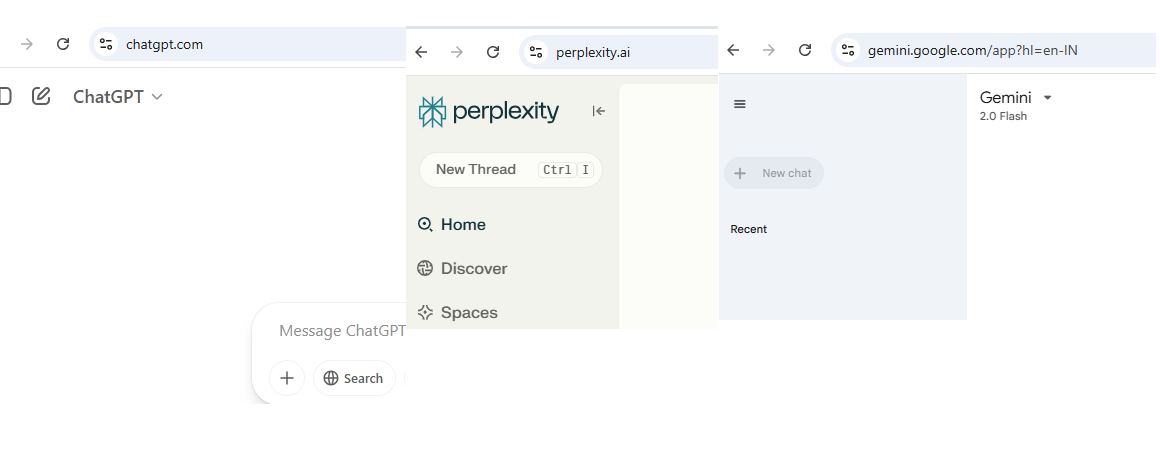
If your content isn’t being picked up by these tools, you’re missing a big opportunity. They pull information differently than Google, so you need to know how each one works. It’s not just about ranking anymore — it’s about being understood and trusted.
Understanding AI-Driven Search
AI doesn’t search like Google. Instead of focusing only on keywords, it tries to understand what the person is really asking. This means it looks at the meaning behind the words, not just the words themselves.
This shift means that writing for AI means being clear, natural, and helpful. The AI will look for content that gives strong, complete answers, not just pages that repeat the same keyword.
Semantic Search and NLP (Natural Language Processing)
AI tools use something called NLP to understand human language. This means they can tell the difference between similar words, detect emotion, and spot deeper meaning. So, your content needs to sound like something a real person would say.
Semantic search focuses on ideas and topics, not just single words. For example, if someone searches “best way to sleep better,” AI will look for sleep tips, bedtime routines, and sleep science — not just pages with the word “sleep” repeated over and over.
Contextual Understanding vs. Keyword Matching
Google often looks for keyword matches. AI looks for context. This means it reads the full sentence and figures out what the question really means. It wants to give the best answer, not just show pages with matching words.
So, if someone asks, “Is CBD good for dogs?”, AI looks for expert advice, science-backed results, and safety tips — not just keyword-packed blog posts. Writing with clear meaning helps AI pick your content as the best answer.
Why AI Is Replacing Traditional Search Engines
AI tools are rising because they skip the fluff. Traditional search often brings up ads, outdated info, or clickbait. AI cuts straight to the point, saving people time.
Also, people trust conversational tools more because it feels like talking to a smart friend. They prefer answers that are quick, confident, and easy to read. This new way is faster, simpler, and often more reliable.
How to Optimize for AI Search Platforms
Each AI platform thinks a bit differently. ChatGPT, Gemini, and Perplexity don’t follow the same rules as Google. You can’t just use the same keywords and hope it works. Instead, you need to focus on being useful, clear, and real.
ChatGPT often likes step-by-step guides. Perplexity wants well-sourced info. Gemini likes content that matches Google’s high standards. Knowing these details helps you shape content the right way.
Perplexity AI Optimization: More Detailed Tips
Perplexity shows where it gets its answers, which makes sourcing very important. It links back to the pages it trusts. So, make your website one of those sources by writing clear, helpful content and citing your own trustworthy sources.
To be found by Perplexity, include direct facts, summaries, and quotes. Keep your language simple. Focus on giving answers that sound confident and informed. This helps Perplexity lift your content into its answers.
Optimizing for AI Traffic
Not all traffic comes from search engines now. AI tools send users to pages they quote or summarize. If your brand is mentioned or linked in these answers, it can bring new visitors to your site.
You should start watching for AI mentions and track how many visitors come from these platforms. This tells you how well you’re doing with AI, not just Google.
Optimize for Conversational Queries
AI responds better to natural questions. That means your content should include common questions and clear answers. Think like your reader: What would they ask? What problems are they trying to solve?
Articles that are structured like FAQs or tutorials perform better. If you write in a way that mimics conversation, AI is more likely to understand and use your content.
Embrace Natural Language and Conversational Tone
Don’t try to sound too fancy or robotic. Write like you’re talking to a friend, but still keep it accurate. AI prefers content that feels real and easy to follow.
Avoid big, confusing words unless necessary. Even if your topic is technical, explain it in a way that anyone can understand. This helps AI know your content is helpful for all readers.
Anticipate and Address Follow-up Questions
AI tools love to give full answers. If your content answers a main question and the next few questions someone might have, it becomes more useful.
You can do this by creating connected posts, adding internal links, or building a content series. Think of it like a tree — every branch answers a new question, and it all leads back to the same topic.
Structuring Content for Easy Extraction
AI prefers content that’s clean and clear. Start your paragraphs with the answer. Then explain it in more detail. This helps AI grab the key point fast.
Use bullet points, lists, and headers. Short paragraphs and simple layout make your content easier to scan — both for humans and machines.
Optimize for Industry-Specific Platforms
Different topics do better on different platforms. If you’re writing about health, tech, or law, your content might show up in special AI tools that focus on those areas.
Understand which tools serve your audience and write content that fits their needs. Some AI tools work better for certain fields, so being specific helps you stand out.
Leverage User-Generated Content
Reviews, comments, and community questions help AI trust your site. When real people share experiences, AI sees it as a sign of quality and social proof.
You can use these types of content in your pages to make them stronger. Show that people are using and talking about your product, service, or idea.
Emphasis on Data Visualizations
AI struggles with long paragraphs full of stats. But it loves charts, graphs, and tables. Visuals make it easier for AI to pull numbers and summarize complex points.
Add clear data graphics when possible. These can boost your credibility and make your content more useful to AI.
The Role of E-E-A-T and Structured Data in AI Search
AI still checks for things like expertise and trust. This is called E-E-A-T: Experience, Expertise, Authority, and Trust. Make sure your content reflects this.
Use proper structure like schema markup and cite your sources. This helps AI know your content is real and reliable. It also makes it easier for AI to sort and present your information.
Tools & Tactics to Audit Your AI Readiness
There are tools to check how your content performs in AI tools. Some show how readable your content is or simulate AI prompts to test responses. Others monitor mentions of your brand in AI answers.
Using these tools helps you find what’s working and what needs fixing. It’s like doing SEO, but for AI.
Case Studies: Brands Winning With AI SEO
Some brands have already figured this out. They’ve optimized their content and are now getting found in AI searches. These early winners show that the strategy works.
You can learn from their approach — how they write, what kind of content they focus on, and how they’ve changed their structure for AI.
The Future of SEO in an AI-First World
Search isn’t dead — it’s changing. In the future, traditional Google search and AI search will both matter. You’ll need to create content that works for both.
Even with smart machines, human creativity is still key. Your ability to explain things clearly, connect with readers, and share real experience will always matter.
Final Thoughts
If you want to be seen online in 2025 and beyond, you need to understand how AI search works. It’s not just about ranking anymore — it’s about helping.
Start by making your content more clear, helpful, and natural. Use the tips above to stay ahead. The future is here, and it’s time to lead the way.
Interesting Reads:
How to Duplicate a Page in WordPress
How to Effectively Do Local SEO for Multiple Locations and Rank in Every City
Internal Linking and URL Parameters: How Inconsistency Hurts Crawl Efficiency

