

Customer loyalty is one of the key differentiators in e-commerce success. If you look at numbers, 65% of a company’s revenue comes from the repeat business of existing customers.
Moreover, you have a 60-70% chance of selling to an existing customer versus a mere 5-20% chance of selling to a new prospect.
But how do you build customer loyalty in a time of fleeting attention spans?
Well, one way to do so is via email marketing. However, it is not free of its own challenges. Inboxes, too, are crowded. Not to mention, the trouble of getting your emails across stringent spam filters affects email deliverability.
Another challenge lies in creating campaigns that capture and maintain customer attention.
So, how do you build an email marketing campaign that fosters customer loyalty in e-commerce? Let’s explore the key strategies in this article.

Quick Links
How Does Email Marketing Help Build Customer Loyalty?
Email is a preferred choice of communication for most customers – even today.
A primary reason is that email is less intrusive than other forms of brand communication. Customers can access it in their free time and can manage how they want to receive email communication from your brand.
Another reason why email is quite effective in building a relationship with customers is its personalization capabilities.
You can personalize your emails to fit each recipient’s preferences, purchase history, and behavior.
For example, Spotify sends personalized emails featuring curated playlists, new releases from favorite artists, and concert recommendations based on listening habits. Their “Spotify Wrapped” campaign is an excellent example of using customer data to create highly personalized year-end summaries that users love to share.
An example below:

Image Credits: Spotify
This creates a listening experience that feels uniquely curated for each individual.
Other examples of e-commerce email marketing include:
- Amazon reminds users about frequent and repeat purchases, such as grocery items, ensuring that essential products are always noticed.
These reminders are not just convenient; they demonstrate an understanding of the customer’s needs and habits, reinforcing their connection to the brand and enhancing overall loyalty.
- Amazon Prime is a loyalty program that offers subscribers a host of benefits, including free two-day shipping, access to Prime Video and Prime Music, and exclusive deals.
- Sephora’s Beauty Insider program offers points for every purchase, which can be redeemed for exclusive products, samples, and experiences.
- The Starbucks Rewards program allows customers to earn stars for every purchase, which can be redeemed for free drinks and food items.
Emails are a fantastic way to build a sense of community.
Most of these brands utilize email marketing to deliver personalized experiences and thus foster a sense of community.
However, to make the most of your email marketing campaigns, you have to leverage the right tools. With email service providers developing stringent policies to protect users from spam, getting your emails across requires the right tools and strategies and a tool that prioritizes email deliverability.
Ways To Increase Customer Loyalty Via Email Marketing (Key Strategies)
Now that you know how email marketing can help you build customer loyalty, let’s look at the strategies you can use to start reaping the benefits today.
1. Tailor Messages Through Segmentation and Personalization
Personalized experiences are a key to success in e-commerce email marketing.
When customers buy from your e-commerce brand, it should not feel like a one-time activity; you have to build an experience around it.
From recommending products to customers to requesting their review or feedback, you have to make it about them.
Data is essential for building personalized experiences. Your email marketing tool and CRM can help here. Modern email marketing tools can help you segment customer data and collect key data related to their previous interactions with your brand.
For example, Netflix uses segmentation and personalization to recommend TV shows and movies based on a user’s viewing history and preferences. Their emails suggest new releases, trending content, and personalized recommendations, making each user feel like the content is curated just for them.
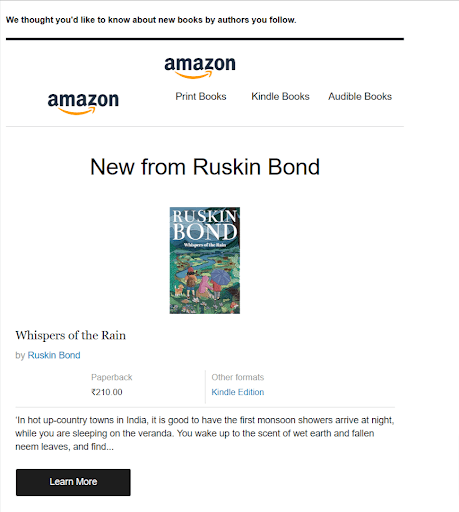
Similarly, Amazon sends recommendations based on your previous buying behavior. An example below:
2. Offer Exclusive Discounts and Rewards
Your customers love to feel special, and what better way to show appreciation than by sharing exclusive promotions and rewards?
Exclusive deals can include early access to sales, special birthday discounts, or limited-time offers tailored to their shopping preferences.
These rewards incentivize repeat purchases and create a sense of exclusivity and appreciation that strengthens the customer-brand relationship.
Setting up loyalty programs using comprehensive loyalty program software is another powerful strategy.
Think of tiered reward systems that offer increasing benefits as customers spend more. For instance, a basic tier could offer standard discounts, while higher tiers provide perks such as free shipping, exclusive products, or early access to new arrivals, much like Amazon Prime.
Additionally, personalized rewards based on customer behavior and preferences can enhance the program’s appeal.
Encourage users to share reviews and earn points for their engagement. This will boost your brand’s credibility and make customers feel like an integral part of your community.
If you need help getting started, check out these ecommerce email templates.
3. Send Offers To Inactive Customers
One of the best things about email marketing is you are well aware of your prospects or customers and their journey with your brand.
This means you can differentiate between active and inactive customers.
Inactive customers don’t always mean lost sales. You need to occasionally reach out to them with the right offers so they can re-engage with your brand.
One effective strategy is to send targeted offers, such as exclusive discounts, special promotions, or personalized recommendations, designed to pique their interest and encourage them to return.
For instance, you can create a “We Miss You” campaign, offering a significant discount or a limited-time deal to entice inactive customers to your site.
Personalized emails highlighting products based on their previous purchases or browsing history can also be highly effective.
Additionally, consider sending reminders about abandoned carts or upcoming sales events.
4. Share Brand Culture Stories
Modern customers do not just buy from brands—they buy from people. Thanks to social media, brands can now share the people behind the scenes and thus promote their culture.
These brand culture stories are a powerful way to connect with your customers on a deeper, more personal level. These stories showcase your brand’s values, mission, and the people behind the scenes, creating a sense of authenticity and trust.
You know what brand-specific content means if you follow brands like Ikea.
For instance, they share stories about their team’s efforts in community service, sustainability initiatives, or the inspiration behind their products. An example below:

By highlighting the unique aspects of your brand culture, you can foster a strong emotional connection with your audience, making them feel like part of your journey.
In email, this can be done by sharing newsletters, BTS clips, milestones, achievements, etc.
These narratives humanize your brand and resonate with customers who share similar values.
When customers feel aligned with your brand’s culture and mission, they are likelier to develop a sense of loyalty and advocate for your brand within their networks.
5. Build Connections With Value-Add Marketing
Building connections through value-added marketing is about providing customers with more than just a product or service. It involves delivering additional value that enhances their experience and loyalty to your brand.
For example:
- Create informative blog posts, how-to guides, or video tutorials that help customers make the most of your products.
- Offer exclusive access to webinars, workshops, or expert advice that aligns with their interests and needs.
- Additionally, consider providing personalized recommendations, tips, and insights based on their previous interactions with your brand.
- When customers feel your brand genuinely cares about adding value to their lives, they are likelier to stay engaged and loyal.
Additional Considerations When Using Email Marketing To Build Customer Loyalty
To run successful email campaigns for building e-commerce customer loyalty, consider the following:
- Use the Right Email Infrastructure: Invest in a robust email infrastructure and sending tool to effectively manage and scale your campaigns.
- Ensure High Email Deliverability: Implement best email delivery practices to ensure your emails land in the intended recipients’ inboxes, not their spam folders.
- Maintain Data Hygiene: Regularly update your email list to avoid sending messages to inactive or invalid addresses.
- Optimize for Mobile: Ensure your emails are mobile-friendly, as many users access them on their phones.
- Test and Analyze: Continuously test different elements of your emails (subject lines, content, CTAs) and analyze performance metrics to refine your strategy and improve engagement.

Winding-Up
Customer Loyalty can make or break your e-commerce business.
As e-commerce companies try to attract more customers, building a solid relationship with them can be a significant differentiator.
By implementing effective email marketing strategies, offering personalized experiences exclusive discounts, and sharing authentic brand stories, you can create lasting connections that encourage repeat business.
Remember, loyal customers bring in consistent revenue and act as brand ambassadors, spreading positive word-of-mouth and driving new customer acquisition.
Focus on nurturing these relationships, and your e-commerce business will thrive in a competitive market.
Interesting Reads:
How Do You Manually Overwrite The robots.txt File In WordPress

