How Email Marketing Data Can Boost Your Efforts


Email marketing has long been an aspect of marketing strategies and is widely recognized as an effective tool employed by numerous businesses today. However, simply utilizing it does not guarantee success – failing to gather and analyze email marketing data could result in missed opportunities for enhancing your advertising initiatives. This article delves into the significance of analyzing email marketing data and its potential to elevate the effectiveness of your marketing campaigns.

Email Marketing Is Still Relevant – Here’s Why It Works
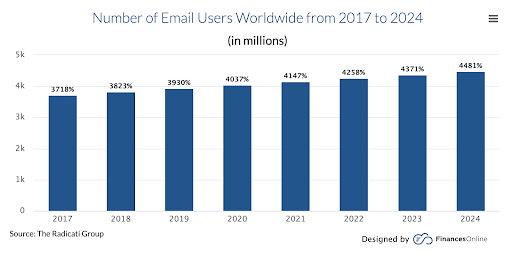
Did you know that over 4 billion individuals have an email account? What’s particularly fascinating is that 99 percent of those individuals review their emails daily. Although sending emails is not even a remotely new thing in the digital world, for quite some time now, marketing experts still consider it one of the most effective advertising methods available – and what’s even better is its simplicity! Hence, it comes as no surprise that a vast majority of businesses choose to utilize this strategy.
Why You Need Email Advertising in the Social Media Era
Now, you may wonder – isn’t social media better in today’s day and age? Of course, we can’t deny its impact on branding and advertising, but email has advantages that are hard to beat. It’s not affected by frequent algorithm changes, and it’s highly personalized – the days of one-size-fits-all are long gone. Plus, it has been shown that email marketing can actually increase conversion rates on social media.
Data-Driven Email Marketing Is the Key to Success
Email performance metrics are very easy to track – so why wouldn’t you analyze them and use them to improve your marketing efforts? Being data-driven is essential in any digital advertising strategy, and email marketing data analysis is no exception to the rule.
If you don’t back your campaigns with data, you might as well be pouring your money down the drain – you won’t have any idea how efficient your strategy is and what you should change about it. Tracking behavioral, demographic, and historical data will help you match the campaign to the right audience and your ideal customers.
To take email analysis a step further, many marketers are now adopting AI tools for email marketing. These tools can automatically segment audiences, personalize content in real time, and optimize send times based on user behavior. By leveraging artificial intelligence, businesses can enhance campaign performance while reducing the manual workload involved in traditional email strategy.

Use Email Marketing Data Analysis to Your Advantage – Understand Your Audience
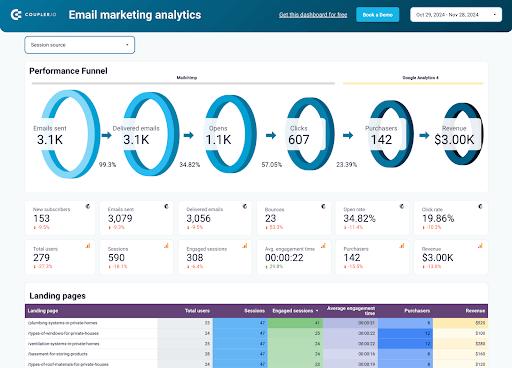
One of the main points of email data analytics is to gain a better understanding of your target audience. This allows you to tailor your content to your ideal customer and boost the efficiency of your strategy. What do we mean by that? You need to analyze customer behavior, or in this case – engagement metrics such as open rates, unsubscribe rates, and click-through rates. This data can give you an idea of what your subscribers liked and disliked about the content you sent them, consequently helping you adapt to retain your current readers.
Data-driven email marketing is great because it allows you to pinpoint where you’re making a mistake – most commonly, the problem lies in emails being too frequent or the content being irrelevant to your audience. For example, a marketer can force topics they personally like, but without data, they aren’t able to see that their readers are over that and want something new.
On the other hand, if they spot a decrease in engagement, they will quickly realize there is a problem. After that, it’s not difficult to adapt the campaign and watch email performance metrics improve. So, instead of sending frequent emails without much thought, take your time to sort through email data analytics to see how each email contributes to your goals.
Segment Your Email List, Personalize Content, and See How That Changes Your Email Data Analytics
If you’re analyzing your audience, you are most likely also segmenting your email list based on demographic data such as gender, age, or maybe even profession or level of education. It’s worth mentioning that profession is an especially important factor if you’re working with a B2B (business-to-business) approach. When you have a segmented audience, you can easily adapt your content and messaging to each group and their preferences.
Another crucial thing you must consider is the quality of the content you put in your emails – is the subject line engaging enough for the reader? Will it make them want to read your email among dozens of others they receive each day? Besides a catchy phrase, what you can do to boost engagement is to personalize – most commonly, this means including the subscriber’s first name in the subject line. Personalization is crucial for meaningful interactions and customer relations – an impersonalized experience is the quickest way to lose your audience.
Once You’ve Conducted Email Campaign Analysis, You Can Adjust Your Marketing Strategy
Once you analyze your metrics, the obvious next step is to boost email campaigns by changing what needs to be changed. One of the most common ways marketers fix the problems with email campaigns is by conducting A/B testing, a popular user experience research method that can be done with various indirect marketing attribution software.
This allows you to test a few different variations of emails and see which subject lines lead to better results – or, in other words, higher engagement. This is an excellent way to improve the quality of your email campaigns. Remember, when it comes to this form of advertising, quality beats quantity any day – it’s better to send fewer emails but ensure they are top-quality.
Adjusting Send Time Is Essential as Well
The timing of your emails is an important factor, yet it’s something marketers often overlook. Email analytics tools can easily be used to find out when your subscribers are most likely to engage with the content you send them. So, a simple change in send time can do wonders for your engagement. Another option is to check if your email marketing provider offers smart sending – this feature is based on when they think your subscribers are most likely to open the email.
Don’t Overlook Mobile Optimization – It’s Quite Important
When it comes to advertising strategies and email marketing campaigns, mobile optimization plays a role that often goes unnoticed by most people. Ensuring that your emails are easily accessible and visually appealing on devices can significantly impact the success of your efforts. Considering the increasing number of individuals checking their emails on their smartphones, it’s evident that effective mobile optimization can greatly influence your engagement levels regardless of the quality of your line or content. To further enhance performance, businesses increasingly leverage AI tools for mobile optimization, enabling smarter layout adjustments, dynamic content rendering, and predictive user experience enhancements across devices.

Data Analyzing Can Be Used to Improve Email Deliverability
Even the most beautifully crafted email isn’t worth anything if it doesn’t reach the inbox. So, how can email campaign analysis help you with deliverability? First, analyzing data can show you which subscribers haven’t engaged with your content in a long time – you can remove these addresses, consequently cleansing your email list. Working with an Excel consultant can help streamline this process by organizing engagement data efficiently and identifying inactive subscribers more effectively. Well-maintained lists have been proven to have better engagement rates than those that haven’t been updated in a while.
Another thing to pay attention to is avoiding spam filters. You have to make sure that the email you worked so hard on doesn’t go to spam. The best and simplest way to do that is to make sure the content doesn’t contain any spam triggers. So, what are the most common triggers? Be aware of excessive use of capital letters and exclamation marks, as well as certain trigger words. Of course, plenty of email marketing providers include spam checks in their offer – make sure yours does as well, so you’ll be covered.
Why Use Email Archiving for Better Campaign Management
Leveraging the email archiving cloud can significantly enhance how you manage and analyze email marketing data. These solutions ensure your marketing emails are securely stored and make it easier to access past campaigns for valuable insights. With a well-maintained archive, marketers can track historical trends, pinpoint successful strategies, and refine future efforts. Cloud-based systems offer scalability and convenience, making them ideal for businesses of all sizes looking to streamline their data management without the hassle of traditional storage methods.
How Surveys Improve Email Marketing Strategies
Incorporating an anonymous survey into your email campaigns is a simple yet powerful way to gather honest feedback from your audience. These surveys provide valuable insights into customer preferences, pain points, and overall impressions of your brand. Using this data to inform your strategy, you can create more relevant and engaging content that resonates with your subscribers. Anonymous surveys also encourage participation by protecting respondents’ privacy, giving you the input you need to optimize your email marketing efforts.
Examining Data With Email Analytics Tools – A Simple Way to Boost Your Email Campaign
When it comes to email analytics tools, the options are endless – it’s up to you to decide which ones you want to use in your work. To help you out, we have prepared a few suggestions. These are the analytics tools that can boost your efforts and help you improve the quality of your campaigns:
- Email tracking pixels – These are often included in your email marketing software. The pixels are essentially tiny images, invisible to the subscriber, that are used to gather information about how they receive the message in the email campaign.
- Google Analytics – This tool allows you to see beyond mere email marketing data. It provides deeper insight into how the campaign is performing. For example, it can track user behavior on your website after they click on it from the email.
- CRM system – A customer relationship management system is an essential tool for analyzing customer behavior, helping you segment the email list and personalize content. It can also integrate data from different sources. This helps you gain a better understanding of your target audience.
Why Let Your Email Marketing Data Go to Waste When You Can Use It to Improve Your Strategy
As you can clearly see, the potential that email marketing data holds is endless. Analyzing it can do wonders for your advertising efforts – so why not put it to good use? The data is there either way, and it’s up to you to decide whether you’re going to let it go to waste or use every little bit of information toward improving your digital advertising channels.

Shashank is a seasoned digital marketing and WordPress expert who specializes in SEO, software tools reviews, and cutting-edge strategies for boosting online presence. With a passion for simplifying complex topics, Goutham crafts engaging blog posts that help readers optimize their websites, improve search engine rankings, and stay ahead in the ever-evolving digital landscape.