How to Create an Online Travel Community Blog with WordPress and BuddyX


Have you ever dreamed of bringing travel lovers together in one vibrant, engaging space online? A place where people from different backgrounds and cultures can connect through their shared love for adventure, storytelling, and discovering new places? A space that feels alive with real-time discussions, photo albums from exotic destinations, group itineraries, and first-hand travel advice?
Well, that’s exactly what happens when you create an online travel community blog—and the good news is, you don’t need to be a web developer to build one. With WordPress and the powerful BuddyX Pro theme, you can create a beautiful, functional, and welcoming space where globetrotters unite, share, and inspire each other.
What is an Online Travel Community Blog?
An online travel community blog is more than just a typical travel website. It’s a digital ecosystem where like-minded adventurers can come together to:
- Share their travel blogs and itineraries
- Engage in lively discussions about destinations
- Recommend places to stay and eat
- Join niche-based interest groups
- Ask questions and receive practical travel advice
- Post stunning photo journals from their journeys
It’s the perfect blend of a traditional blog, a travel forum, and a social networking site. And when built right, it can become a go-to hub for travel inspiration and planning.
Why Create an Online Travel Community Blog?
There are several compelling reasons to start one:
- You bring people together. Travel communities foster meaningful connections between people who share a passion for exploring the world.
- You offer real value. Members gain access to firsthand insights and tips they can’t find in guidebooks.
- Your content grows organically. With user-generated posts, the site stays fresh and dynamic.
- You increase engagement. Unlike a static blog, community features encourage members to return, interact, and participate regularly.
- You open revenue opportunities. From affiliate marketing to sponsored content, a well-structured travel blog can become a business.
Shaping Your Travel Identity Online
Before diving into the technical steps, let’s take a moment to define your blog’s identity. Two key decisions will lay the groundwork for everything you build:
Defining Your Unique Travel Angle
Ask yourself: What kind of traveler are you trying to attract? Will your platform cater to digital nomads, backpackers, luxury vacationers, or perhaps food and culture enthusiasts? Choosing a well-defined niche will help you tailor content, branding, and community experiences that resonate deeply with your target audience.
Picking a Memorable Blog Name and Domain
Your blog’s name should be catchy, relevant, and easy to remember. More importantly, it should reflect the essence of your community. Once you’ve chosen a name, use a domain registrar to secure the perfect .com or travel-friendly domain like .travel or .journey. This small step makes your platform instantly more professional and accessible.
These early branding choices set the tone for everything that follows—from the site’s visual identity to the content your community creates.
Building the Heartbeat of Your Community
Beyond design and functionality, a travel blog thrives on emotional resonance. It should feel like a second home for wanderers. Ask yourself: what emotions should users feel when they land on your site? Curiosity? Belonging? Inspiration? Designing your platform to evoke these feelings can make the difference between a forgettable blog and a beloved community hub.
Also, consider the tone and voice of your content. Is it casual and fun, like chatting with a travel buddy? Or more curated and aspirational, like a luxury travel magazine? Defining this early helps you stay consistent and on-brand.
Choosing the Right Visual Style for a Travel Audience
Visuals are not just about beauty—they’re a key part of storytelling. Travel is a visual experience, and your site should reflect that. Use large, immersive photos, clean layouts, and consistent color themes inspired by nature, skies, or landmarks. Let your design mirror the adventure your readers are looking for.
Choose fonts that are easy to read but have character, and avoid overloading the page with too many visual distractions. Let each image breathe, and curate visuals that make users want to pack their bags.
What Kind of Content Can Members Share?
An engaging travel community thrives on user-generated content. Here’s a breakdown of the types of content members can contribute:
1. Travel Stories and Blogs
Members can write about their latest adventures, sharing stories from the road. These posts often include highlights, mistakes to avoid, cultural insights, and emotional moments that inspire readers.
2. Destination Guides
Your platform can host detailed guides for various locations, covering everything from hidden cafes in Paris to visa hacks for Southeast Asia. These resources provide immense value to travelers in the planning stages.
3. Photo Diaries
Travelers love visual storytelling. Allow users to share galleries or single-photo moments that capture the essence of their trips. These often generate high engagement and create a visually rich site experience.
4. Q&A Threads
With a forum or discussion section, members can post questions and receive practical, experience-based answers. It’s like Reddit for travelers, but focused and community-based.
5. Travel Resources
Your members can also share helpful tools, templates, and guides that make planning trips easier. This might include printable packing lists, visa requirement summaries, or how-to guides for tech-savvy travel. One incredibly useful modern resource is an Italy travel eSIM—perfect for travelers who want reliable mobile data without the hassle of switching SIM cards or incurring roaming fees. Sharing such up-to-date digital tips makes your community incredibly practical and valuable for real-world travelers.
6. Event Listings
Organizing local or global meetups adds a real-world touch to your virtual community. Whether it’s a group hike or a digital travel storytelling night, these events deepen user engagement.
7. Travel Reviews
Encourage users to review hotels, hostels, travel gear, or food spots. Authentic peer reviews are invaluable in helping others make smart travel decisions.
How to Build a Travel Community Website with WordPress and BuddyX
Once you’ve nailed your vision, it’s time to build. WordPress and BuddyX make this process efficient and flexible.
Step 1: Set Up WordPress
Start with choosing a hosting provider that offers fast performance and easy WordPress installation. Popular hosts like SiteGround, Bluehost, or Cloudways can handle community traffic well. Install WordPress via your host’s dashboard and set up your basic site settings.
Step 2: Install the BuddyX Pro Theme
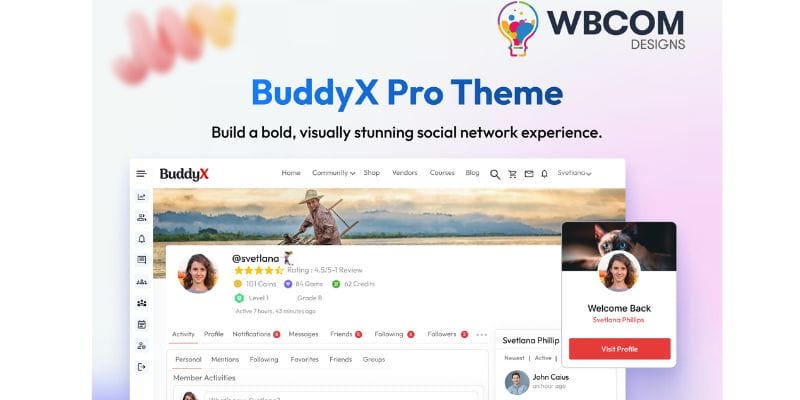
Next, download and install the BuddyX Pro theme, a premium solution built specifically for creating online communities with advanced features and seamless integration. BuddyX Pro goes beyond the basic offering and is ideal for building a feature-rich travel community blog.
BuddyX Pro offers:
- A clean, responsive, and modern design with enhanced customization options
- Deep integration with BuddyPress, bbPress, WooCommerce, LearnDash, and more
- Advanced layout controls and multiple header/footer variations
- Built-in support for gamification, badges, and points using plugins like GamiPress
- Optimized performance with lazy loading, fast load times, and minimal dependencies
- Priority support and regular premium updates
You can purchase and download the BuddyX Pro theme directly from the Wbcom Designs website. Once installed, you can begin customizing your community to suit your travel niche with much more precision and power.
Step 3: Install and Configure BuddyPress
BuddyPress is the plugin that transforms your blog into a community platform. It adds features like:
- Member profiles
- Activity feeds
- Messaging and notifications
- Group creation and joining
To install:
- Go to your WordPress dashboard
- Click Plugins → Add New
- Search for “BuddyPress”
- Install and activate
- Customize which components you want enabled in the settings
Step 4: Enable Frontend Blog Posting
To let members publish their travel stories, install a frontend posting plugin such as:
- BuddyBlog: Integrates smoothly with BuddyPress and allows users to write posts without backend access.
- WP User Frontend: Offers customizable frontend submission forms.
You can configure post types, categories, and media uploads to make publishing simple and intuitive for all users.
Step 5: Structure Your Community
Now, organize your site into sections that align with your goals:
- Blog: The central hub for member posts
- Groups: Interest-based communities (e.g., solo female travelers, digital nomads)
- Forum: A Q&A area powered by bbPress for discussions
- Events: Use “The Events Calendar” plugin to manage meetups or webinars
- Member Directory: Showcase active community contributors
This structure ensures your site feels navigable, engaging, and rich in content from day one.
Step 6: Customize the Look and Feel
Using Elementor or the WordPress Customizer, you can modify the layout, colors, typography, and branding to reflect your unique travel niche. Add custom widgets, featured post carousels, or user badges to gamify the experience.
Make sure your branding—logos, taglines, and calls to action—all speak to the spirit of travel and connection.
Step 7: Add Monetization Options (Optional)
If you want to turn your blog into a revenue source, consider:
- Affiliate Marketing: Add links for travel gear, booking sites, or eSIMs
- Premium Memberships: Offer VIP groups, early access to events, or exclusive guides
- Sponsored Content: Work with tourism boards or brands on paid content
- Ad Placements: Use Google AdSense or travel-specific ad networks
The key is to monetize ethically, keeping user trust intact.
Final Tips for Success
To keep your community thriving:
- Moderate regularly to avoid spam
- Spotlight top contributors in newsletters or social media
- Keep the design mobile-friendly for travelers on the go
- Use SEO best practices in blog posts and user-generated content
- Maintain fast site performance with caching and image optimization
Your Journey Begins Here
Creating an online travel community blog with WordPress and BuddyX Pro is more than just launching a website. It’s about building a global tribe of explorers, storytellers, and dreamers. With the right tools, a strong structure, and engaging features, your site can become a digital destination in itself.
So, whether you’re an individual travel blogger or a brand in the travel space, now is the perfect time to start. Let your passion fuel a community that inspires wanderlust in others.
Have questions or need help setting up? Drop a comment below or explore the tools BuddyX offers to take your travel community blog to the next level.
Interesting Reads:
The Future Is Now: How AI, Cloud, and Code-Free Tools Are Transforming Software Development
How Cannabis Businesses Can Compete Online Without Paid Ads
From eLearning to eCommerce: Using AI Product Photos to Enhance Digital Platforms

Shashank is a seasoned digital marketing and WordPress expert who specializes in SEO, software tools reviews, and cutting-edge strategies for boosting online presence. With a passion for simplifying complex topics, Goutham crafts engaging blog posts that help readers optimize their websites, improve search engine rankings, and stay ahead in the ever-evolving digital landscape.