

AI Tools for Content Writers are becoming indispensable in the digital age, revolutionizing the way we create and refine written content. As the demand for high-quality, engaging content grows, writers increasingly rely on AI tools to boost their productivity and enhance their creativity. These tools streamline the writing process and help maintain consistency, accuracy, and originality in the content produced. This blog aims to highlight the top 5 AI tools that are transforming the landscape for content writers, providing them with powerful resources to elevate their writing and meet the ever-evolving demands of the industry.

Quick Links
What Are AI Tools for Content Writers?
AI tools for content writers are sophisticated software applications that leverage artificial intelligence to assist in the creation, editing, and optimization of written content. These tools are specifically designed to streamline the content writing process, offering functionalities that range from grammar and spell-checking to generating entire articles based on given prompts. Common features of these AI tools include natural language processing (NLP) capabilities, which enable them to understand and mimic human writing styles, as well as SEO optimization suggestions to help content rank better in search engines.
Additionally, many of these tools provide idea generation, plagiarism detection, and readability analysis to enhance the overall quality and originality of the content. By integrating these functionalities, AI tools for content writers significantly improve efficiency, consistency, and creativity in the writing process, making them indispensable for modern content creators.
Benefits of Using AI Tools for Content Writing
- Enhanced Creativity and Idea Generation AI tools for content writing can significantly boost creativity by generating fresh ideas and unique angles for topics. These tools often provide prompts, outline suggestions, and even entire paragraphs that can spark new concepts and directions for writers, helping to overcome writer’s block and maintain a steady flow of content.
- Improved Writing Efficiency and Speed One of the most significant advantages of AI writing tools is their ability to enhance efficiency and speed. By automating mundane tasks such as grammar and spell checks, formatting, and even some parts of the actual writing process, these tools allow writers to focus on higher-level aspects of content creation. This results in faster turnaround times and increased productivity.
- Consistency in Tone and Style Maintaining a consistent tone and style across different pieces of content can be challenging, especially for larger teams or when producing content at scale. AI tools help ensure uniformity by learning and mimicking the desired tone and style, thereby providing a cohesive voice across all content. This is particularly beneficial for brands aiming to maintain a strong and recognizable identity.
- Better SEO Optimization AI writing tools often come equipped with SEO optimization features that help content rank better in search engine results. These tools can analyze keywords, suggest optimal keyword placement, and provide insights into content structure that aligns with SEO best practices. This ensures that the content not only reads well but also performs well in terms of visibility and reach.
- Data-driven insights for Content Strategy AI tools offer valuable data-driven insights that can inform and refine content strategy. By analyzing trends, audience engagement, and performance metrics, these tools can suggest which topics are likely to resonate with readers, the best times to publish, and the types of content that drive the most traffic. This helps content creators and marketers make informed decisions and tailor their strategies for maximum impact.
Also Read: Best AI Tools For Project Management (2024)
Top AI Tools For Content Writers
1. GPT-4 by OpenAI
GPT-4, developed by OpenAI, is the fourth iteration of the Generative Pre-trained Transformer model. It is a state-of-the-art language processing AI that can generate human-like text based on the input it receives. With billions of parameters, GPT-4 can understand and produce text with remarkable coherence and creativity. It can engage in conversations, write essays, summarize texts, and much more.
Features:
- Text Generation: Produces high-quality, contextually relevant text.
- Conversational Abilities: Engages in detailed and nuanced conversations.
- Multilingual Capabilities: Understands and generates text in multiple languages.
- Context Awareness: Maintains context over long passages, providing coherent and consistent responses.
- Customization: Can be fine-tuned for specific tasks and industries.
Use Cases:
- Generating Ideas: Writers can use GPT-4 to brainstorm topics and get fresh perspectives on subjects.
- Writing Drafts: It can create initial drafts for articles, blog posts, and other written content.
- Enhancing Creativity: Provides creative input, helping writers overcome blocks and explore new directions.
- Editing and Refining: Assists in refining drafts by suggesting improvements and corrections.
- Interactive Content Creation: Useful for creating interactive and engaging content for chatbots and customer service applications.
Pros and Cons:
- Pros:
- High-quality text generation that is contextually relevant and coherent.
- Enhances productivity by automating parts of the writing process.
- Versatile, with applications across various writing tasks and industries.
- Cons:
- Requires careful prompting to produce the desired output.
- Potential for generating biased or inappropriate content if not properly managed.
- High computational resources are needed for operation.
For more information on GPT-4, visit OpenAI’s website.
Also Read: 10 Best Blog Title Generators (2024)
2. Grammarly
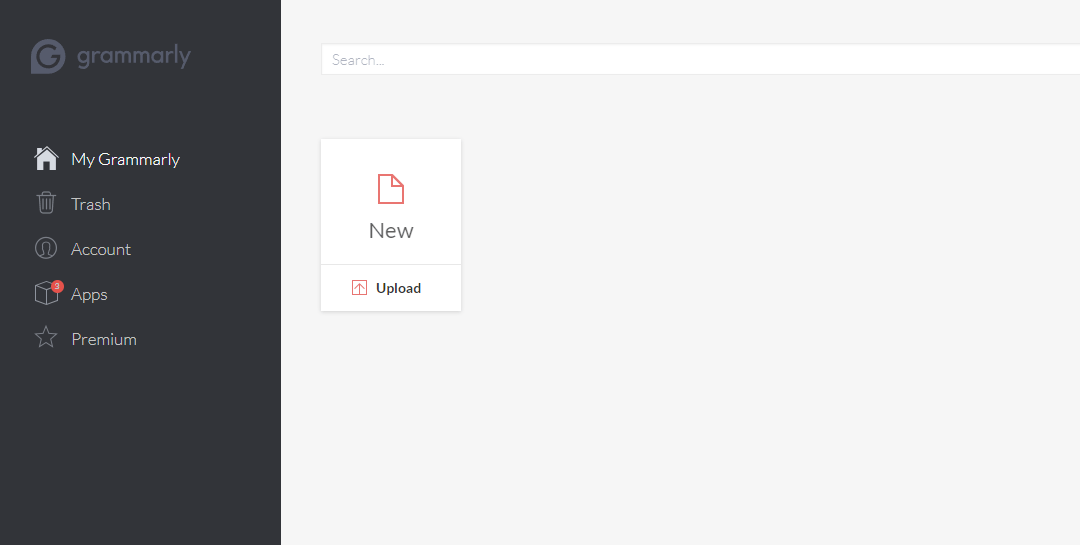
Grammarly is a digital writing assistant that helps users improve their writing by providing advanced grammar and style-checking tools. It uses AI to identify and suggest corrections for grammatical errors, style issues, and tone inconsistencies. Grammarly also includes a plagiarism checker to ensure originality.
Features:
- Advanced Grammar Checking: Identifies and corrects grammatical mistakes.
- Style Suggestions: Offers recommendations to improve the clarity and readability of text.
- Tone Detection: Analyzes the tone of the writing and suggests adjustments to match the intended audience.
- Plagiarism Checker: Scans text for potential plagiarism and provides citations for any flagged content.
- Integration: Works seamlessly with various platforms, including web browsers, Microsoft Office, and Google Docs.
Use Cases:
- Improving Writing Quality: Helps writers produce error-free and polished content.
- Reducing Errors: Identifies and corrects grammar, punctuation, and spelling mistakes.
- Ensuring Originality: Checks for plagiarism to ensure the uniqueness of the content.
- Consistent Tone: Maintains a consistent tone throughout the text, tailored to the target audience.
Pros and Cons:
- Pros:
- Real-time feedback and suggestions for improvements.
- Comprehensive grammar and style-checking capabilities.
- Easy integration with popular writing platforms.
- Cons:
- Occasional inaccuracies in context-specific suggestions.
- Limited customization for industry-specific jargon or terminology.
- Subscription-based pricing models may be expensive for some users.
For more information on Grammarly, visit Grammarly’s website.
Also Read: Best AI Tools 2024
3. Copy.ai
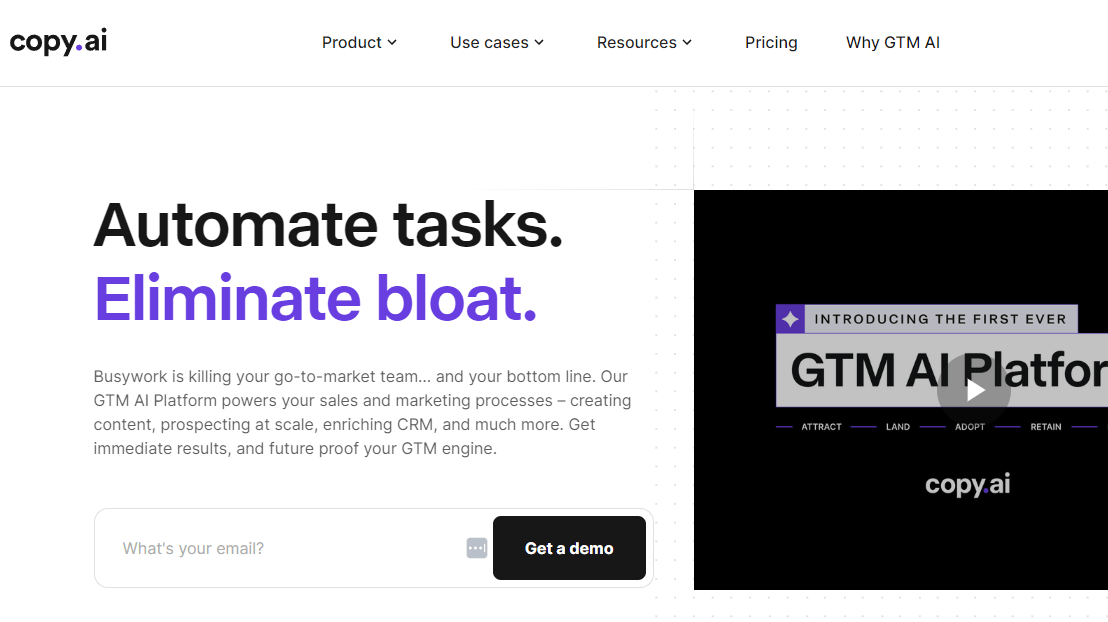
Copy.ai is an AI-powered writing tool designed to generate marketing content quickly and efficiently. It uses advanced machine learning algorithms to produce high-quality text based on user input, making it ideal for creating marketing materials, social media posts, and more.
Features:
- Template-Based Content Generation: Provides various templates for different types of content, including blog ideas, product descriptions, and ad copies.
- AI Writing Assistant: Generates content ideas and drafts based on brief prompts.
- Customizable Output: Allows users to adjust the tone and style of the generated text to suit their needs.
- Efficiency Tools: Speeds up the content creation process with automated text generation.
Use Cases:
- Marketing Content: Creates compelling marketing copy for advertisements, emails, and social media.
- Blog Ideas: Generates ideas and outlines for blog posts and articles.
- Product Descriptions: Writes engaging and informative product descriptions for e-commerce platforms.
- Social Media Posts: Crafts catchy and shareable social media content.
Pros and Cons:
- Pros:
- Quick and efficient generation of marketing content.
- User-friendly interface with customizable options.
- Reduces the time and effort needed to create engaging content.
- Cons:
- May lack depth and creativity in certain complex topics.
- Limited to marketing-related content, less suitable for other writing genres.
- Requires human oversight to ensure quality and relevance.
For more information on Copy.ai, visit Copy.ai’s website.
4. Editpad

Editpad is a versatile online platform that offers a comprehensive text editor alongside a suite of additional tools designed to simplify the writing and editing process. Whether you’re drafting an article, taking notes, or formatting text for a project, Editpad provides the essential tools you need for all purposes, making it a one-stop solution for various writing tasks.
Features:
- Basic Text Editing: Provides a simple and intuitive platform for writing and editing text.
- Multiple File Formats: Supports various file formats, including .txt, .doc, and .pdf, making it easy to work with different types of documents.
- Autosave Functionality: Automatically saves your work to prevent data loss in case of accidental closure or power failure.
- Text Formatting Tools: Includes basic text formatting options like bold, italics, underline, and more to enhance your content’s appearance.
- Multi-Tab Editing: Allows users to work on multiple documents simultaneously, improving productivity and organization.
- Additional Tools: Editpad offers various tools such as a plagiarism checker, grammar checker, and paraphrasing tool, making it a versatile platform for all your writing and editing needs.
Use Cases:
- Note-Taking: Ideal for students and professionals who need a straightforward tool for jotting down ideas or meeting notes.
- Content Drafting: Useful for bloggers, writers, and content creators to draft and edit articles or blog posts.
- Proofreading: Check the plagiarism with a built-in plagiarism checker and grammar via grammar checker.
- Document Editing: Provides basic editing features for refining reports, essays, and other written documents.
- Improve Tone and Style: If there is the requirement for a particular tone and style, use the paraphrasing tool to achieve it.
- Quick Formatting: Helps in quickly formatting text for presentations, emails, or other professional purposes.
- Comprehensive Writing Tasks: With its range of tools, Editpad can assist with everything from ensuring originality to improving grammar and readability.
Pros and Cons:
Pros:
- User-friendly and straightforward interface.
- Supports multiple file formats for diverse document needs.
- Auto save feature ensures work is never lost.
- Multi-tab editing enhances productivity.
- Includes various tools that cater to all aspects of writing and editing.
Cons:
- Lacks advanced features found in more comprehensive text editors.
- Limited customization options for text formatting.
- Does not include collaboration features for team projects.
For more information on Editpad, visit EditPad’s website
5. Jasper.ai (formerly Jarvis)
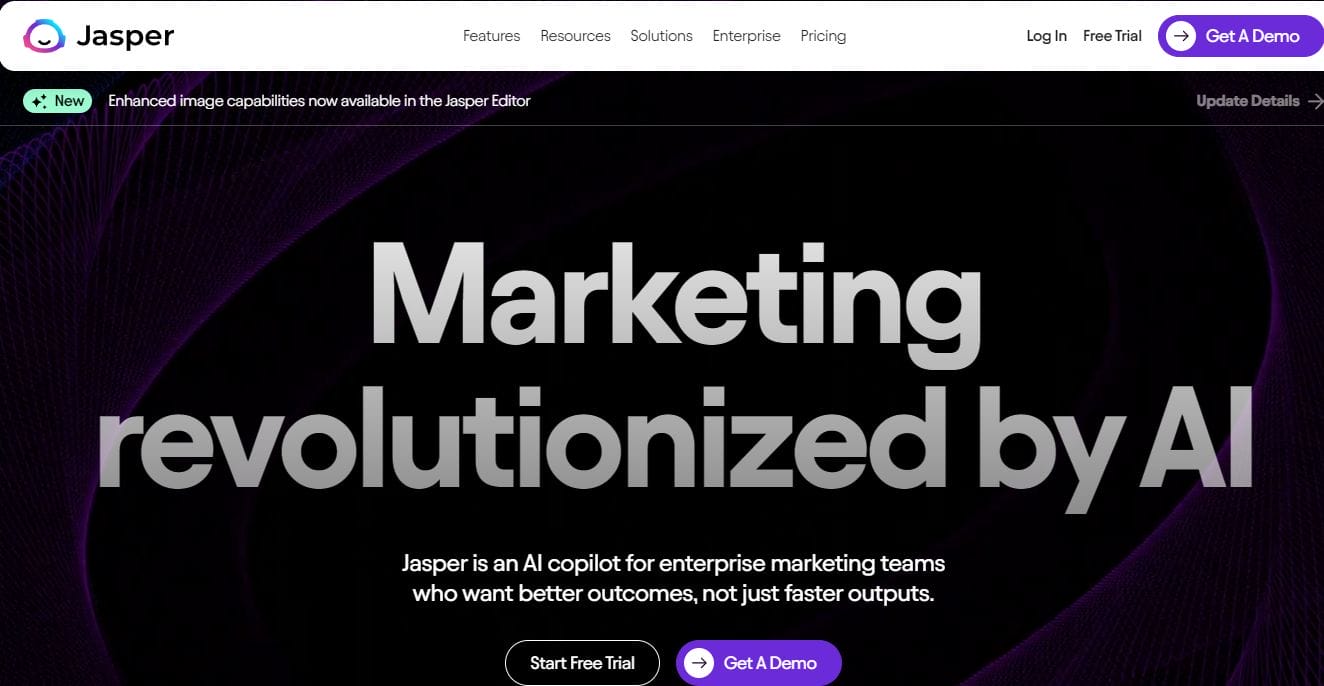
Jasper.ai, previously known as Jarvis, is a comprehensive AI writing assistant that excels in SEO optimization and long-form content creation. It is designed to help writers produce high-quality content that ranks well in search engines, making it ideal for blog posts, articles, and product descriptions.
Features:
- AI Writing Assistant: Helps generate ideas, write drafts, and refine content.
- SEO Optimization: Provides tools to optimize content for search engines, including keyword suggestions and on-page SEO tips.
- Content Templates: Offers a variety of templates for different types of content, such as blog posts, social media updates, and email campaigns.
- Long-Form Content Creation: Capable of producing detailed and well-structured long-form articles.
Use Cases:
- Blog Posts: Assists in writing and optimizing blog content to improve search engine rankings.
- SEO Articles: Generates SEO-friendly articles that attract organic traffic.
- Product Descriptions: Creates detailed and persuasive product descriptions for e-commerce websites.
- Email Campaigns: Crafts effective email content for marketing campaigns.
Pros and Cons:
- Pros:
- Strong focus on SEO, helping improve content visibility and ranking.
- Versatile content creation capabilities across various formats.
- Efficient in generating detailed and structured long-form content.
- Cons:
- Higher cost compared to other AI writing tools.
- Requires a learning curve to utilize all features effectively.
- Potentially redundant output if not carefully managed.
For more information on Jasper.ai, visit Jasper.ai’s website
Also Read: 10 Best AI Content Detector Tools in 2024
6. Hemingway Editor
Hemingway Editor is a writing tool designed to enhance readability by simplifying complex sentences and identifying common writing issues. It focuses on making the text clear and easy to understand, aligning with the writing style of Ernest Hemingway.
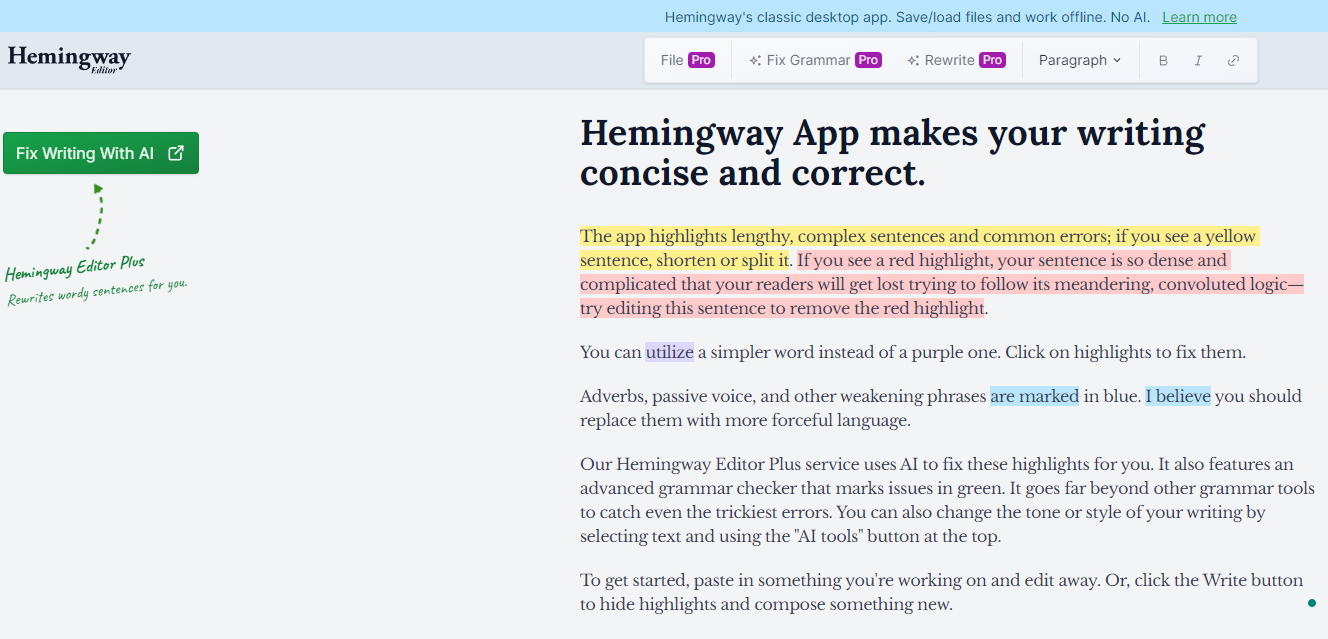
Features:
- Readability Analysis: Analyzes the text to determine its readability level and suggests improvements.
- Sentence Structure Improvement: Highlights complex and lengthy sentences, offering suggestions to simplify them.
- Passive Voice Detection: Identifies instances of passive voice and suggests alternatives.
- Adverb and Word Usage: Highlights excessive use of adverbs and suggests stronger alternatives.
Use Cases:
- Simplifying Complex Writing: Helps writers simplify their language and improve readability.
- Improving Readability: Ensures that the text is easy to understand for a broader audience.
- Ensuring Clarity: Identifies and corrects unclear or ambiguous sentences.
- Educational Writing: Useful for teachers and students to produce clear and concise academic content.
Pros and Cons:
- Pros:
- Enhances readability, making content more accessible to readers.
- Simple and intuitive interface for quick editing.
- Effective in identifying and correcting common writing issues.
- Cons:
- May oversimplify nuanced writing, potentially losing the writer’s voice.
- Limited features compared to more comprehensive writing tools.
- Does not integrate with other platforms as seamlessly.
For more information on Hemingway Editor, visit Hemingway Editor’s website.
Also Read: Elementor Container vs Section: A Detailed Comparison
How to Choose the Right AI Tool
Selecting the right AI tool for content writing can significantly impact your productivity and the quality of your work. Here are key factors to consider when making your decision:
1. Consider Your Needs
- Define Specific Requirements: Identify what you need from an AI tool. Are you looking for a tool to help with grammar checking, content generation, SEO optimization, or a combination of these functions?
- Grammar Checking: If your primary need is to ensure grammatical accuracy and improve writing style, a tool like Grammarly would be ideal.
- Content Generation: For creating content from scratch or brainstorming ideas, tools like GPT-4 or Copy.ai are more suitable.
- SEO Optimization: If your goal is to improve search engine rankings and write SEO-friendly content, Jasper.ai offers robust features in this area.
- Evaluate the Scope of Use: Consider whether you need a tool for specific tasks or a versatile solution that can handle multiple aspects of content creation.
2. Budget
- Cost Analysis: Assess the cost of the AI tools and compare it against your budget. Some tools offer free versions with basic features, while others require a subscription for advanced functionalities.
- Free and Paid Versions: Grammarly offers a free version with essential grammar and spelling checks, but its premium features like advanced style suggestions and plagiarism detection require a subscription.
- Subscription Plans: Tools like Jasper.ai and Copy.ai typically operate on subscription models with different tiers based on the features and usage limits.
- Return on Investment: Consider how the tool’s cost translates into productivity gains and quality improvements in your writing. Investing in a high-quality tool can save time and reduce the need for additional editing.
3. Integration
- Workflow Compatibility: Evaluate how well the AI tool integrates with your existing workflow and other tools you use.
- Platform Integration: Grammarly integrates seamlessly with web browsers, Microsoft Office, and Google Docs, making it easy to use across different writing environments.
- API and Plugin Support: Some tools offer APIs and plugins for deeper integration with your content management system (CMS) or other writing platforms.
- Collaboration Features: If you work in a team, consider whether the tool supports collaborative features and shared access.
4. User Experience
- Ease of Use: Assess the user interface and overall ease of use. A tool with an intuitive design will be easier to adopt and integrate into your daily routine.
- Learning Curve: Some tools may have a steep learning curve due to their advanced features. Evaluate the time it will take to become proficient in using the tool.
- User Support: Check if the tool offers tutorials, customer support, and community resources to assist you in getting the most out of it.
- Customization Options: Look for tools that allow customization to suit your writing style and specific needs. For example, Jasper.ai allows customization of templates and SEO settings.

Conclusion
AI tools for content writers have revolutionized the content creation landscape, offering a myriad of benefits that enhance creativity, efficiency, consistency, SEO optimization, and strategic insights. By leveraging these advanced technologies, writers can overcome common challenges such as writer’s block, time constraints, and maintaining a uniform voice across various pieces of content. These tools not only streamline the writing process but also ensure that the content is well-optimized for search engines and resonates with the target audience. As AI continues to evolve, its integration into content writing will only deepen, providing even more sophisticated capabilities and opportunities for innovation. Embracing AI tools is essential for content creators looking to stay ahead in a competitive digital environment and elevate the quality and effectiveness of their work.
Interesting Reads:

