

Every phone in every pocket is a channel a brand can reach, and most companies still treat it like an afterthought bolted onto a desktop strategy. That gap is exactly why mobile marketing agencies exist. The businesses that win app installs, keep users past the first session, and turn a push notification into a purchase are almost never doing it alone. They are working with specialists who live inside app store algorithms, attribution data, and in-app messaging systems every day. Below is a researched, currently accurate list of ten companies worth knowing if you are trying to grow on mobile in 2026, along with what each one actually does, who they work with, and where they are headquartered.

Why Mobile Marketing Carries So Much Weight Right Now
People check their phones dozens of times a day, often without thinking about it. That habit is the entire reason mobile marketing works: a brand gets access to a consumer at the exact moment they are paying attention, not later when they might have moved on. App marketing, SMS, push notifications, and mobile-optimized ads are not separate disciplines so much as four doors into the same room. A company that only walks through one of them is leaving reach on the table.
What makes this harder than it sounds is fragmentation. iOS and Android behave differently, attribution windows have shrunk since Apple’s privacy changes, and users abandon apps faster than they used to. A mobile marketing partner earns its fee by making sense of that mess: tracking what is actually working, tuning creative for a five-inch screen instead of a desktop monitor, and connecting mobile activity back to revenue instead of vanity metrics like raw downloads.
There’s also a timing problem most in-house teams underestimate. A push notification sent at the wrong hour gets ignored or, worse, gets the app uninstalled. An SMS campaign that fires the day after someone already converted feels tone-deaf. Getting the sequencing right, showing the right message to the right person at the right moment, is a full-time discipline, which is exactly why so many companies eventually bring in outside help rather than trying to build that expertise from scratch.
What to Check Before You Hire a Mobile Marketing Company
Track record with your specific tactics. App store optimization, SMS, push, and paid mobile advertising all require different skill sets. Ask for case studies in the exact channel you need, not a generic portfolio.
Familiarity with your industry. A team that has already solved retention problems for a fintech app understands regulatory friction and trust-building in ways a generic agency won’t.
Breadth of service. App store optimization, mobile ad buying, analytics, and retention strategy overlap constantly. A narrow specialist may hand you off to three other vendors just to finish one campaign.
Real client history. Ask who they have worked with and, ideally, talk to one of those clients directly. Anyone can list logos on a website.
A genuine data practice. The strongest mobile marketing companies can show you a dashboard, not just a deck. If a pitch is all narrative and no numbers, that’s a signal.
Creative that fits the format. Mobile ad units are small, fast, and easy to scroll past. Agencies with a real in-house creative team consistently outperform those that outsource design as an afterthought.
The Best Mobile Marketing Companies to Know in 2026
1. Moburst

Moburst built its name on app growth, and it shows in the client list. The agency runs full-funnel campaigns that cover everything from the first ad impression to the moment a user becomes a repeat customer inside an app.
- What they do: Build and run campaigns aimed at increasing installs, engagement, and long-term retention.
- Notable clients: Google, Samsung, Uber.
- Services offered: App store optimization, mobile ad campaigns, and engagement strategy.
- Years in business: 10+
- Headquarters: New York, USA
Why they stand out: Their app store optimization work has a reputation for actually moving ranking positions, not just generating a report that says it did.
2. Yodel Mobile
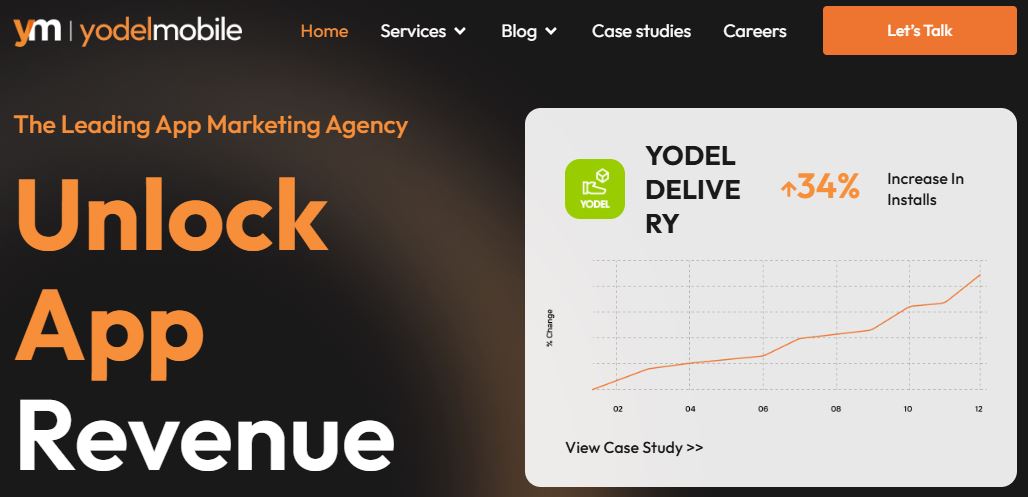
Yodel Mobile has been in the app marketing business longer than most competitors on this list, and that history has given the team a wide bench of frameworks for diagnosing why an app is stuck.
- What they do: Full-service strategy for app visibility and user retention.
- Notable clients: NBCUniversal, The Economist, Fujifilm.
- Services offered: Mobile growth strategy, app store optimization, mobile CRM, and user acquisition.
- Years in business: 11+
- Headquarters: London, UK
Why they stand out: Their internal “Mobile Maturity Scorecard” gives clients a concrete benchmark instead of a vague opinion about what to fix first.
3. AppsFlyer
AppsFlyer sits a level below the creative agencies on this list. It is a measurement platform, not a campaign shop, but that measurement layer is what most serious mobile marketing programs run on top of. Roughly 15,000 brands rely on it to see which channels actually drive installs and revenue rather than which ones simply claim credit for them.
- What they do: Provide attribution, deep linking, fraud protection, and cross-platform measurement so marketers can trust their own data.
- Notable clients: A large share of the top mobile apps in retail, gaming, and finance use AppsFlyer as their measurement backbone.
- Services offered: Attribution and measurement, deep linking, audience data collaboration, and fraud filtering.
- Years in business: 14+
- Headquarters: Herzliya, Israel, with offices worldwide including San Francisco and London.
Why they stand out: Their fraud detection tools are strict enough that a lot of agencies plan campaigns specifically around what AppsFlyer will and won’t count as a legitimate install.
4. Braze
Braze has become one of the most widely used platforms for lifecycle and engagement marketing on mobile, and it is publicly traded, which is a level of transparency most agencies on this list don’t offer. If your challenge is retention rather than acquisition, this is the category of tool that solves it.
- What they do: Power personalized push notifications, in-app messaging, email, and cross-channel journeys triggered by real user behavior.
- Notable clients: Wyndham Hotels, MetLife, Canva, TurboTax.
- Services offered: Push notifications, in-app messaging, journey orchestration, and AI-assisted campaign decisioning.
- Years in business: 10+
- Headquarters: New York, USA
Why they stand out: Their journey orchestration lets a marketing team react to a single user action, like an abandoned cart inside an app, within minutes instead of waiting for the next scheduled campaign.
5. Adjust
Adjust competes directly with AppsFlyer in the attribution space, and the two companies push each other to keep improving fraud detection year over year. Adjust was acquired by AppLovin in 2024, which gave it deeper access to ad network data on the buying side.
- What they do: Deliver mobile attribution and analytics that help businesses judge advertising return on investment honestly.
- Notable clients: Spotify, Rakuten, Procter & Gamble.
- Services offered: Mobile attribution, fraud prevention, and campaign optimization.
- Years in business: 11+
- Headquarters: Berlin, Germany
Why they stand out: Its fraud prevention suite is one of the more strict in the industry, which matters more every year as click spam gets more sophisticated.
6. InMobi

InMobi is one of the larger independent mobile advertising networks left standing, having built its footprint outside of Google and Meta’s walled gardens years before that became a common strategy.
- What they do: Deliver mobile advertising built on first-party data and behavioral targeting.
- Notable clients: Airbnb, Amazon, Unilever.
- Services offered: Mobile advertising, app monetization, and analytics.
- Years in business: 15+
- Headquarters: Bangalore, India
Why they stand out: Its programmatic advertising stack gives smaller apps access to targeting sophistication that used to be reserved for companies with much bigger ad budgets.
7. Sensor Tower (formerly App Annie / data.ai)
This entry has a more complicated history than most on the list, and it is worth explaining rather than glossing over. App Annie rebranded to data.ai in 2021. In 2024, data.ai was acquired by Sensor Tower, and the two companies’ market intelligence products were folded together under the Sensor Tower name. If you go looking for data.ai today, its site will tell you the same thing: it now operates as part of Sensor Tower.
- What they do: Provide app performance data, advertising insights, and market intelligence used to benchmark competitors and guide mobile strategy.
- Notable clients: Activision Blizzard, Spotify, Duolingo.
- Services offered: App performance insights, advertising share-of-voice tracking, gaming analytics, and audience benchmarking.
- Years in business: Sensor Tower was founded in 2013; the combined company now covers the ground that App Annie and data.ai previously did separately.
- Headquarters: San Francisco, USA
Why they stand out: The combined dataset from two formerly competing market intelligence firms makes this one of the more complete pictures of app store performance available anywhere.
8. CleverTap
CleverTap has grown into one of the larger customer engagement platforms on the market, a position it strengthened in 2022 when it acquired Leanplum and absorbed that company’s engagement technology into its own product line.
- What they do: Combine user analytics with engagement tools to run personalized campaigns across push, email, and in-app messaging.
- Notable clients: Sony, Domino’s, Vodafone.
- Services offered: Marketing automation, push notifications, and in-app messaging.
- Years in business: 10+
- Headquarters: Mountain View, USA
Why they stand out: Its customer lifecycle tools make it easier to keep a user engaged for months rather than treating retention as a single push notification sent right after signup.
9. Liftoff

Liftoff built its reputation on programmatic ad buying tuned specifically for mobile apps, focusing on finding users who are statistically more likely to stick around instead of chasing raw install counts.
- What they do: Use machine learning to optimize user acquisition and re-engagement campaigns.
- Notable clients: Amazon, HBO Max, TikTok.
- Services offered: Programmatic advertising, retargeting, and mobile app marketing.
- Years in business: 10+
- Headquarters: Palo Alto, USA
Why they stand out: Its machine learning models weight campaigns toward users likely to convert, not just click, which tends to produce a healthier return on ad spend over time.
10. Branch
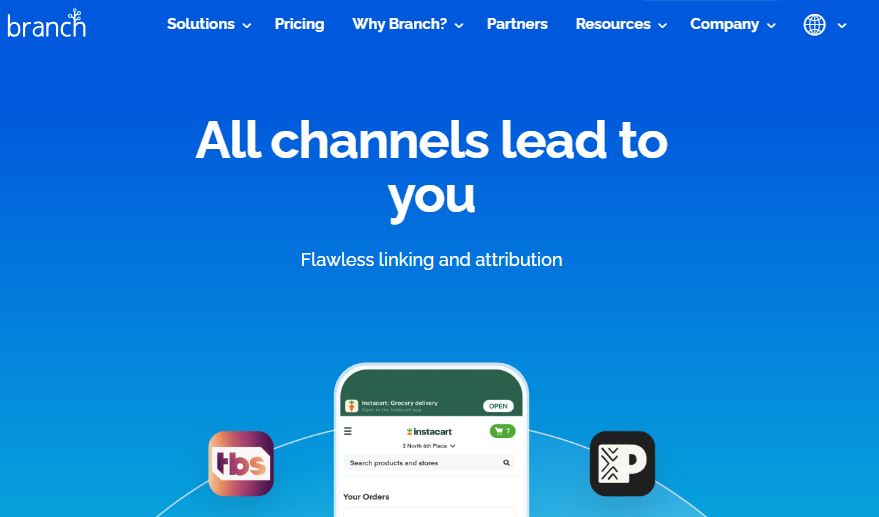
Branch solved a specific, annoying problem: getting a user from a link on the mobile web into the right screen of an app without dumping them on a generic home page or, worse, an app store listing they’ve already seen.
- What they do: Simplify the user journey through accurate deep links and attribution that survives the install process.
- Notable clients: Pinterest, Airbnb, Starbucks.
- Services offered: Deep linking, mobile analytics, and user engagement tools.
- Years in business: 9+
- Headquarters: Redwood City, USA
Why they stand out: Its linking technology means a customer can click an ad, land inside the exact product page they were shown, and never hit a dead end, which sounds simple until you’ve watched a competitor’s app fail to do it.
How to Actually Choose Between Them
Not every company on this list solves the same problem, and that is intentional. Moburst and Yodel Mobile are full-service agencies you hire to run a campaign end to end. AppsFlyer, Adjust, and Sensor Tower are measurement and intelligence platforms you use to judge whether that campaign worked. Braze and CleverTap are engagement platforms built for retention once a user is already inside your app. InMobi and Liftoff are advertising networks focused on acquisition. Branch solves the narrower but critical problem of linking.
A small team with one app and a limited budget probably doesn’t need all ten. Start with an attribution platform so you can trust your own numbers, then layer in an agency or an ad network once you know which channels are actually converting. Buying a full-service agency contract before you have measurement in place is one of the more common ways companies waste a mobile marketing budget.
Larger teams juggling multiple apps, regions, or product lines tend to need the full stack: measurement, an engagement platform for retention, and either an in-house team or an agency partner for acquisition. The mistake to avoid there is treating any single vendor as a complete solution. Even the best agency still needs clean attribution data to know if its campaigns are working, and even the best measurement platform can’t write your ad creative for you.
It also helps to think about timeline. Attribution platforms can usually be integrated within a couple of weeks. Engagement platforms take longer, often a month or more, because they require mapping out real user journeys rather than just installing an SDK. Full-service agency relationships are the slowest to show results, typically three to six months before you have enough campaign data to judge whether the partnership is working, so budget both the time and the patience for that ramp-up period before expecting dramatic numbers.
Mistakes That Quietly Drain a Mobile Marketing Budget
The most common mistake is chasing installs as the only metric that matters. An app with a million downloads and a 2% week-one retention rate is not a success story, it’s a leaky bucket that costs more to refill every month. Install volume looks good in a board deck, but it rarely tells you whether the users you paid for are worth what you spent to get them.
A second mistake is skipping measurement setup to save time at launch. Teams that wait until month three to install proper attribution end up with a blind spot for their most important early campaigns. By the time the dashboards are working, the data that would have told you which channel actually drove your best users is gone for good.
Fraud is the third one, and it’s easy to underestimate. Click spam and install farms specifically target apps that haven’t set up fraud filtering, because those are the easiest campaigns to siphon budget from. A platform like AppsFlyer or Adjust exists partly to catch this before it eats a meaningful share of ad spend, and skipping that step to save a subscription fee tends to cost far more in wasted media dollars.
Finally, plenty of teams treat push notifications as a blunt instrument, sending the same message to every user regardless of behavior. That approach trains people to ignore or disable notifications entirely within a few weeks. The agencies and platforms on this list that do retention well, particularly Braze and CleverTap, build campaigns around what a specific user actually did, not a one-size-fits-all blast.
What a Realistic Mobile Marketing Budget Looks Like
Pricing varies enormously depending on app category, competition, and region, but a few patterns hold across most of the companies above. Attribution and measurement platforms like AppsFlyer and Adjust typically charge based on measured events or monthly active users, which means costs scale with your app’s growth rather than requiring a huge upfront commitment. That makes them accessible even for a small team testing its first paid campaigns.
Full-service agencies such as Moburst and Yodel Mobile generally require a retainer, often starting in the five figures per month once you include media spend, because the work involves ongoing strategy and creative production rather than a one-time setup. Engagement platforms like Braze and CleverTap sit somewhere in between, priced on user volume and messaging complexity, and they tend to become more cost-effective as an app’s user base grows since the retention value compounds.
Advertising networks like InMobi and Liftoff work on media spend plus a management fee, so the real cost is tied directly to how aggressively you’re trying to acquire users. None of this is fixed, and every one of these companies will negotiate based on your app’s size and stage, but going in with a rough sense of these pricing models saves you from a proposal that doesn’t match your budget reality.
Choosing the Right Mobile Marketing Partner
The companies on this list represent different pieces of the same puzzle rather than direct competitors fighting for the same job. From app store optimization to lifecycle engagement and fraud-resistant attribution, each plays a distinct role in a mobile growth strategy. Whether you’re a startup shipping your first app or an established brand trying to fix a retention problem, the right partner depends less on reputation and more on which specific gap in your funnel needs to close first.
One habit worth borrowing from teams who get this right: revisit the vendor list annually. This space consolidates fast, as the Leanplum, App Annie, and data.ai acquisitions above show, and a partner that made sense two years ago may have been absorbed into a different company with a different focus by the time your contract renews.
Interesting Reads
Top 10 Direct Marketing Companies 2025
Top 10 Digital Marketing Agencies 2025
YouTube marketing: Creating Engaging Video Content for Online Communities