

The 8 best WordPress events calendar plugins in 2026 are The Events Calendar, Timetable and Event Schedule by MotoPress, Modern Events Calendar Lite, Eventin, Events Manager, WooCommerce Event Manager, WP Event Manager, and Event Organizer. Each covers a different niche, from free community calendars to WooCommerce ticketing and complex multi-venue scheduling.
An events calendar is one of the most practical additions you can make to a WordPress site. Whether you’re promoting workshops, managing conference schedules, or letting community members browse upcoming meetups, the right plugin makes the difference between a calendar that works and one visitors ignore. This guide breaks down the top options for 2026 so you can match the right plugin to your specific setup.
What Makes a Quality WordPress Events Calendar Plugin?
A good events calendar plugin in 2026 needs to go beyond just displaying dates. Here are the core qualities that separate a solid option from a frustrating one:
- Clean User Interface: Easy event creation and editing for admins, and a clear browsing experience for visitors. Both matter.
- Customization Flexibility: Color schemes, layouts, event views, and styling options that match your site’s branding without custom development.
- Mobile-Responsive Design: Most event browsers come from phones. The calendar needs to look and function properly on every device.
- Feature Depth: RSVP, ticketing, location mapping, social sharing, recurring events, and filtering, the more of these built in, the less you need to bolt on separately.
Additional factors to evaluate:
- Theme compatibility, the plugin should work with your current theme without layout conflicts.
- External calendar integrations, Google Calendar, iCal, and Facebook Events connectivity if you need cross-platform syncing.
- Frontend submission, whether event organizers can add events without admin access.
The 8 Best WordPress Events Calendar Plugins for 2026
1. The Events Calendar
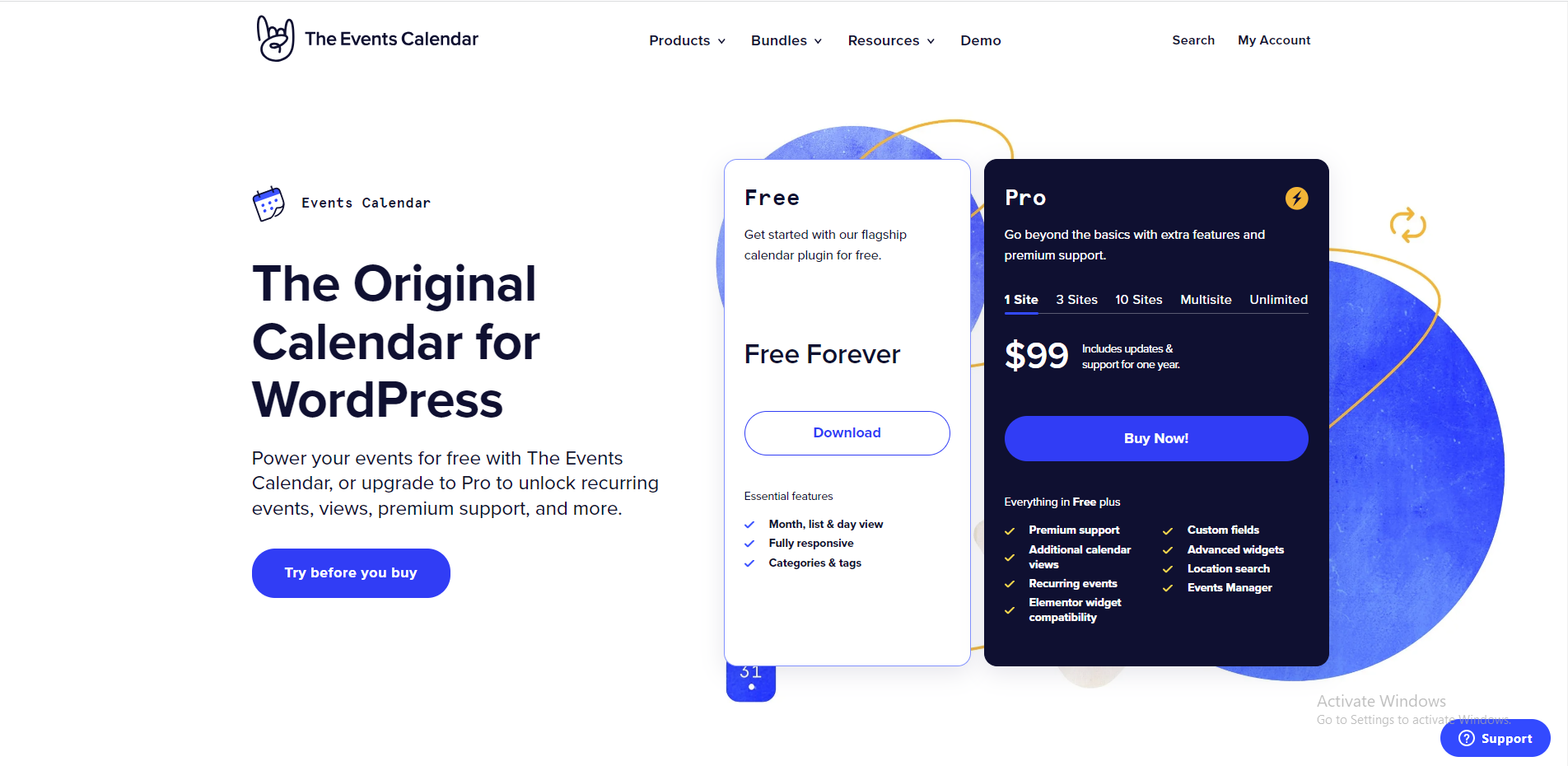
The Events Calendar is the most widely deployed WordPress calendar plugin, and for good reason. It handles everything from simple date listings to complex multi-day event schedules, with a clean interface that works for both admins and visitors. The free version covers the fundamentals well; the premium add-ons extend it into ticketing, recurring events, virtual events, and more.
Key components of a well-built events calendar typically include:
- Event Display: A calendar grid showing events by day, week, month, or custom timeframes. Each event shows date, time, title, and additional details.
- Event Details: Descriptions, locations, organizers, RSVP or ticketing options, images, and links for registration.
- Customization Options: Flexible color schemes, layouts, views, and styling to match site branding.
- Interactive Functionality: Click-through to event pages, social sharing, personal calendar export, and reminders.
- Filtering and Search: Filter events by category, tag, location, or keyword for fast discovery.
2. Timetable and Event Schedule by MotoPress
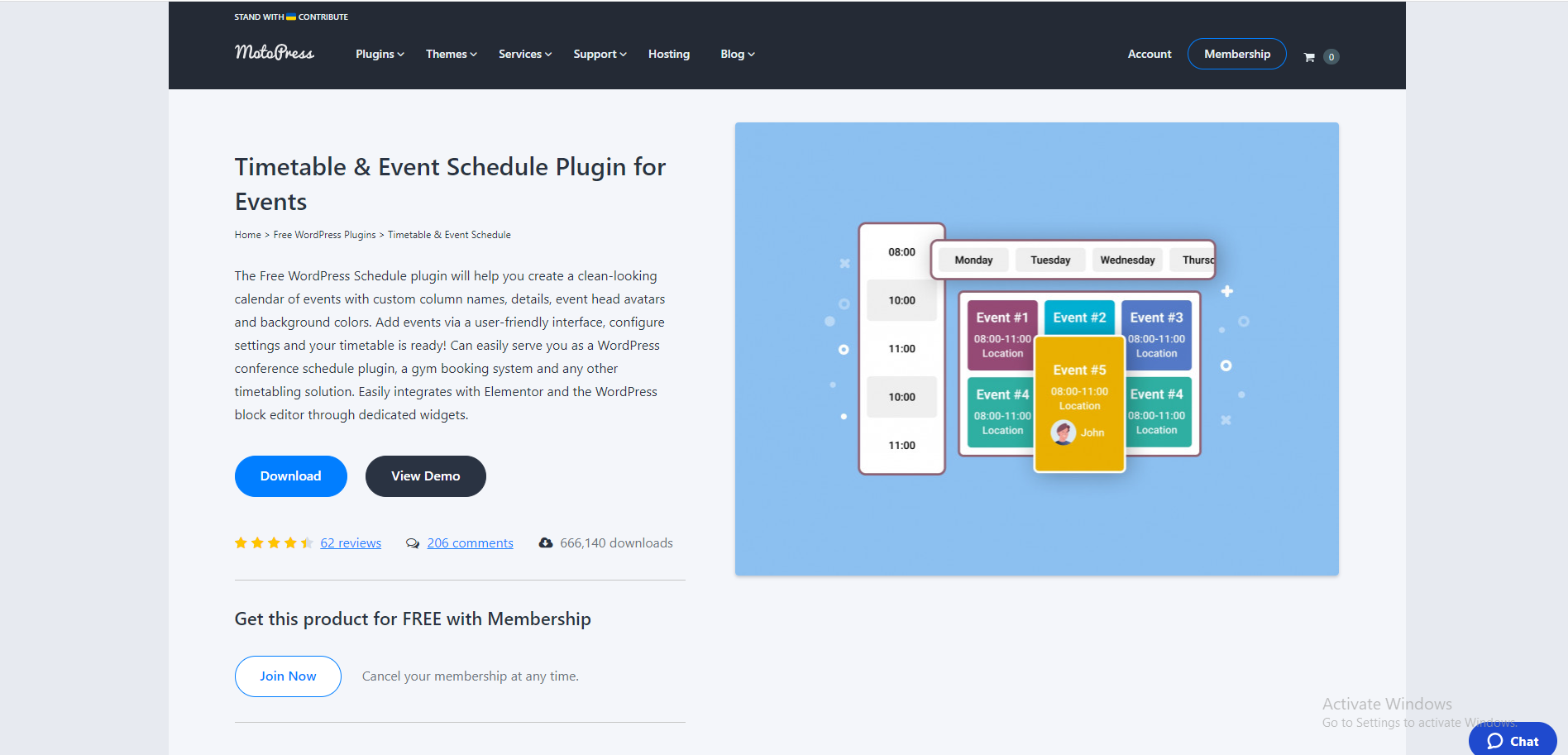
MotoPress built this plugin specifically for schedule-heavy use cases: fitness studios, conference programs, school timetables, and similar situations where events happen in structured time blocks. The drag-and-drop visual editor makes building complex schedules straightforward, and the responsive layout handles mobile display well.
Key features of the MotoPress Timetable and Event Schedule:
- Flexible Event Display: Multiple layouts and customization options, templates, colors, fonts, and styles, to match the site’s design.
- Easy Management: Add, edit, or delete events, assign categories, set recurring schedules, and manage event details from a straightforward admin interface.
- Responsive Design: Adapts to desktops, tablets, and mobile devices without layout breakage.
- Customizable Views: Daily, weekly, monthly, or list views so visitors can browse on their preferred timeframe.
- Rich Content Support: Display images, videos, descriptions, location details, and speaker information within event entries.
3. Modern Events Calendar Lite
Modern Events Calendar Lite is a good starting point for anyone new to WordPress event management. It includes a setup wizard that walks through calendar styles, colors, and countdowns from the start, reducing the initial configuration overhead.

The free version lets you add events manually and allow user-submitted events. It stores categories, locations, and organizer information, and supports typography and color customization plus custom CSS. Calendar theme functionality requires the paid version.
Key Features for Modern Events Calendar Lite:
- Set up an events calendar with a guided wizard
- Add new events manually or enable user submissions
- Manage event categories, locations, and organizers
- Customize calendar style, typography, and colors
4. Eventin
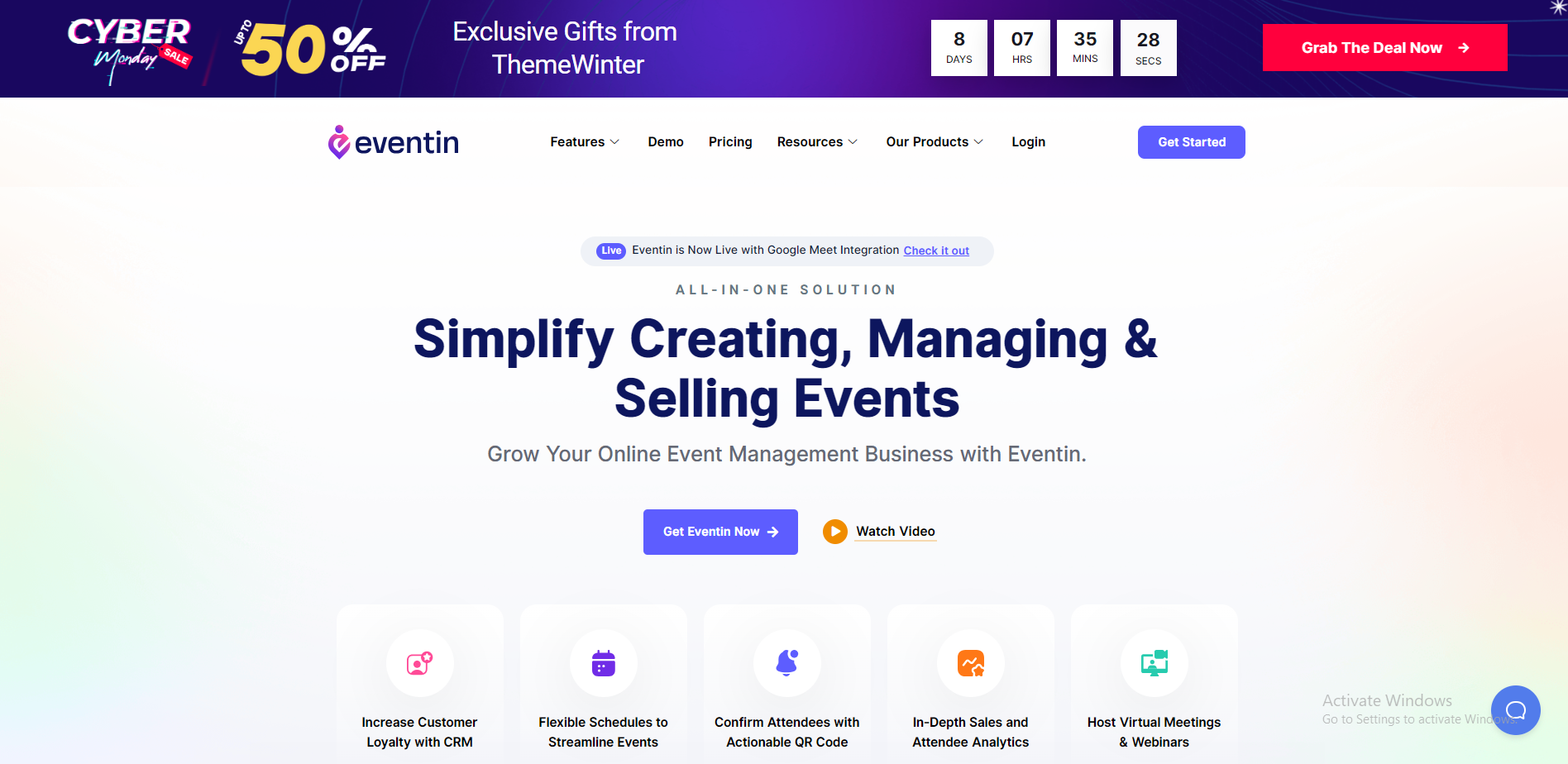
Eventin is built for organizations that need both event management and attendee engagement in one plugin. It handles recurring events, RSVP, and ticket sales while offering multiple display formats, grid, list, monthly calendar, or weekly view, making it easy to match the right layout to the page design.
Key Features of Eventin:
- Intuitive Event Creation: Add date, time, location, descriptions, images, and categories from a clean interface.
- Customizable Views: Grid, list, monthly calendar, weekly calendar, pick what fits your site design.
- Responsive Design: Consistent experience across desktops, tablets, and mobile phones.
- Recurring Events: Daily, weekly, monthly, or yearly recurrence for regularly scheduled events.
- RSVP and Ticketing Integration: Manage registrations, ticket sales, and attendee information in one place.
- Location Mapping: Google Maps integration so attendees can find venues easily.
5. Events Manager
Events Manager is a strong all-rounder, the free version handles event creation, location management, bookings, and a customizable calendar layout. The premium version adds recurring event limits, attendance tracking, QR code mobile check-in, PDF ticket downloads, waitlists, iCal attachments, and coupon management.
Key Features for Events Manager:
- Full events calendar with location and booking support
- Manual event entry and user-submitted events
- Booking and attendee management
- Customizable event page behavior and display
- Premium: recurring event limits, QR check-in, PDF tickets, waitlists, iCal, and coupons
6. WooCommerce Event Manager
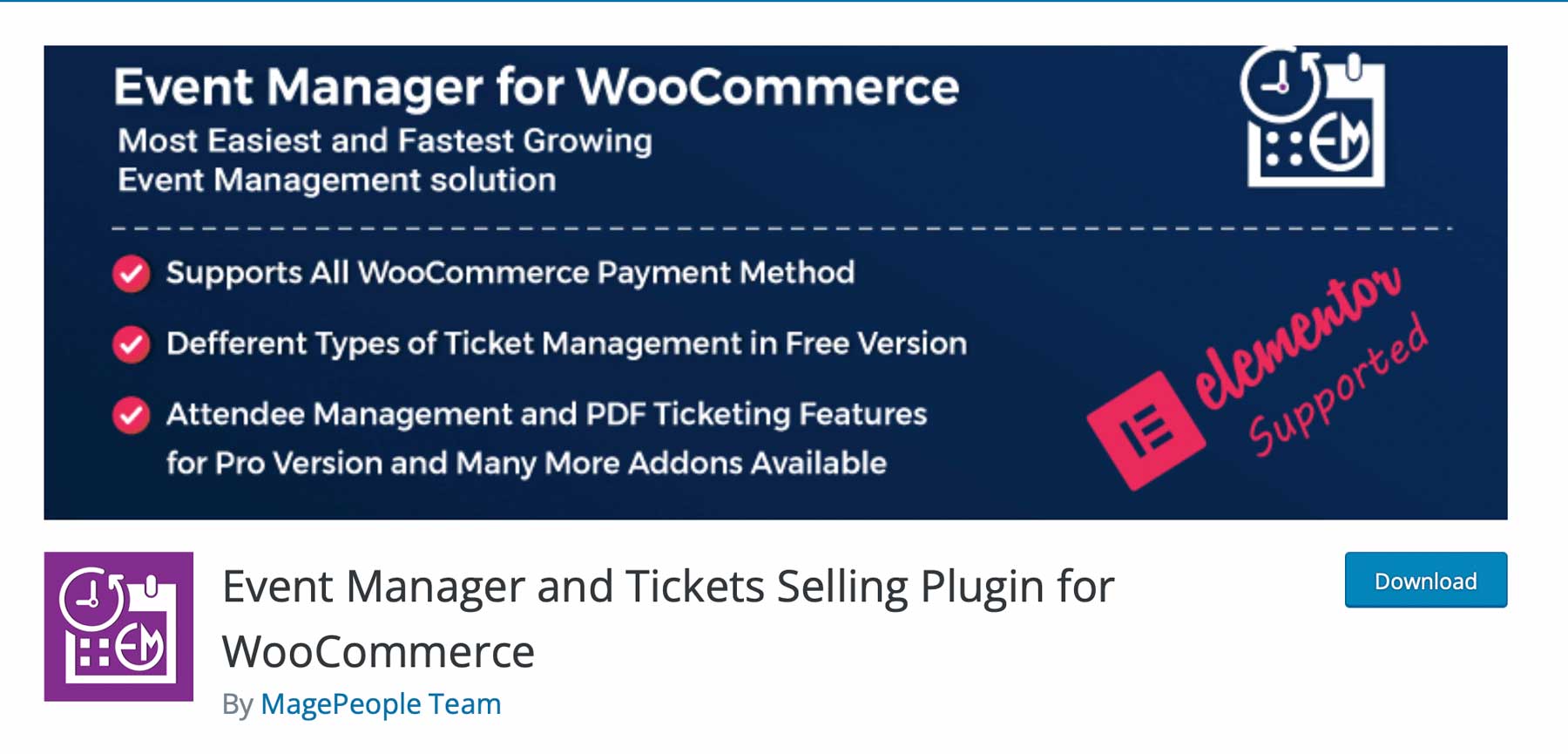
WooCommerce Event Manager extends WooCommerce to handle event ticketing directly from your store. If you’re already running WooCommerce and want to sell event tickets without switching platforms, this keeps everything in one system, payment processing, attendee records, and event display all managed through the WooCommerce dashboard.
Key features of WooCommerce Event Manager:
- Event Creation and Management: Create and manage events within the WooCommerce dashboard, date, time, location, descriptions, ticket types, and pricing.
- Ticketing and Registration: Multiple ticket types, pricing tiers, discounts, and attendee data management.
- Calendar View: A calendar or schedule layout for visitors to browse upcoming events.
- Customization Options: Customizable templates and styles to match the overall site design.
- WooCommerce Integration: Uses existing WooCommerce payment gateways for secure ticket sales.
7. WP Event Manager
WP Event Manager positions itself as a flexible solution for sites that need frontend event submissions, organizers can add events directly from the public-facing site without logging into the WordPress backend. It also handles bookings, advanced search and filtering, and integrates with external ticketing systems.
Key features of WP Event Manager:
- Event Submission and Management: User-friendly event creation from the WordPress dashboard with full detail fields.
- Customizable Event Listings: Flexible layouts and views that integrate into WordPress themes without custom development.
- Advanced Search and Filtering: Filter by date, location, category, and keywords for targeted event discovery.
- Frontend Event Submission: Organizers can add events from the public site, no backend access needed.
- Booking and Registration Management: RSVP, ticket sales, and attendee capacity tracking.
8. Event Organizer
Event Organizer handles complex event schedules including recurring events at custom intervals, multiple venue management, and full RSVP and ticketing. It offers customizable templates for event listings, calendars, and single event pages, making it adaptable to diverse site designs.
Key features of Event Organizer:
- Event Creation and Management: Full event details, title, date, time, location, descriptions, and images, through a clean interface.
- Recurring Events: Daily, weekly, monthly, or custom interval recurrence.
- Venue and Location Management: Multiple venues with maps and directions for each.
- Customizable Templates and Views: Adapt listings, calendars, and single event pages to match site branding.
- Ticketing and RSVPs: Ticket sales, registration management, and attendee tracking.
Final Thoughts on 8 Best WordPress Events Calendar Plugins in 2026
All eight plugins on this list are capable, the right choice depends on your specific situation. If you need a free, general-purpose calendar, The Events Calendar or Modern Events Calendar Lite are the easiest starting points. For WooCommerce-based ticket sales, WooCommerce Event Manager keeps everything in one system. For complex schedules with multiple venues and recurring events, Events Manager or Event Organizer are the strongest options.
One addition worth considering: pairing your calendar plugin with WordPress Polls lets you gather attendee feedback before or after events directly within your posts and pages, useful for gauging interest in future events or collecting post-event opinions without a separate tool.
Whichever plugin you choose, test it on a staging site first to confirm compatibility with your theme and any other active plugins before pushing it to production.