

Creating an engaging and vibrant community website involves more than just providing information. Including events can significantly enhance user interaction and participation. Adding events to your community website fosters a sense of belonging. It also promotes active engagement among your audience in a way that static content rarely does on its own. In this guide, we’ll cover the methods and steps to integrate events into your community platform, along with the decisions that determine whether members actually show up once the event is on the calendar.
Most of what follows applies whether the community is a WordPress-powered membership site, a small local interest group, or a growing niche community that’s outgrown ad hoc email invites. The mechanics of setting up the plugin are the easy part. The harder, more valuable part is everything around it: getting the calendar in front of the right people, at the right time, in a format they’ll actually use.
We are going to show how to add events to your community with simple steps. While talking about adding events to your community, the plugin that does the heavy lifting here is The Events Calendar.
The Events Calendar
The Events Calendar is a popular WordPress plugin that enables users to manage and display events on their websites. Developed by Modern Tribe, this plugin offers a user-friendly interface for creating and organizing events, then showcasing them in a customizable calendar format. It handles event creation and scheduling, plus categorization, alongside features such as ticketing, RSVP options, recurring events, and venue management. It’s a versatile solution for individuals and businesses, as well as organizations and communities, that want to showcase and manage events on their WordPress-powered websites.
Steps to Creating an Event Through The Events Calendar
STEP 1: Go to your dashboard. Creating an event using The Events Calendar plugin in WordPress involves several steps.
1. Installation and Activation
Log in to your WordPress dashboard.
Navigate to “Plugins” and click on “Add New.”
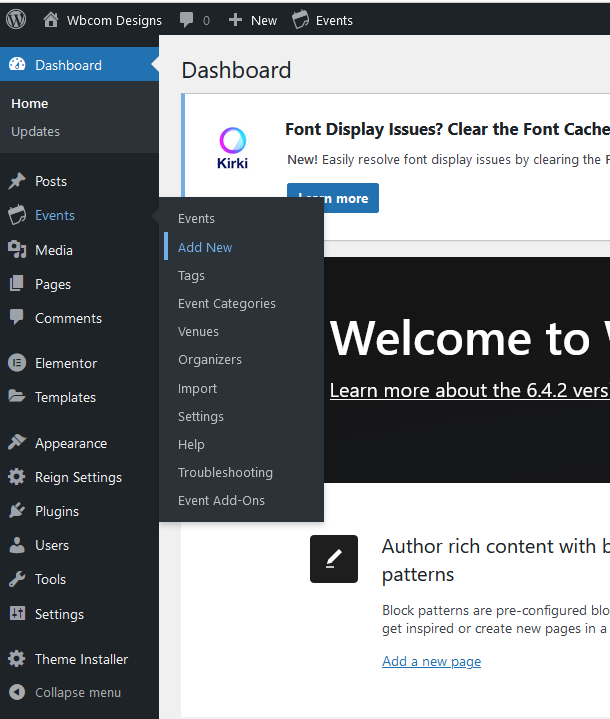
Search for “The Events Calendar” in the search bar.
Click “Install Now” next to the plugin and then click “Activate.”
2. Event Setup
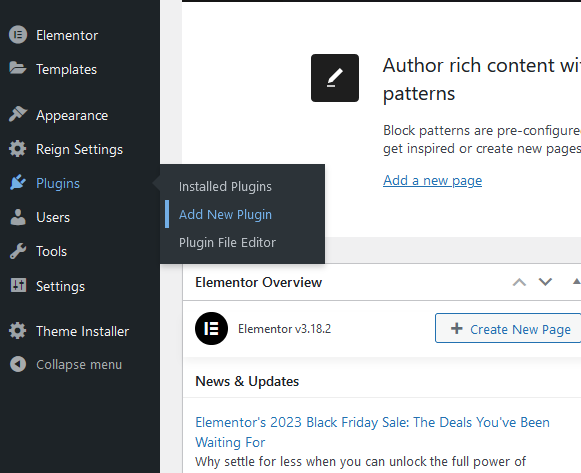
After activation, go to the left-hand sidebar of the WordPress dashboard and click on “Events.”
Click on “Add New” to create a new event.
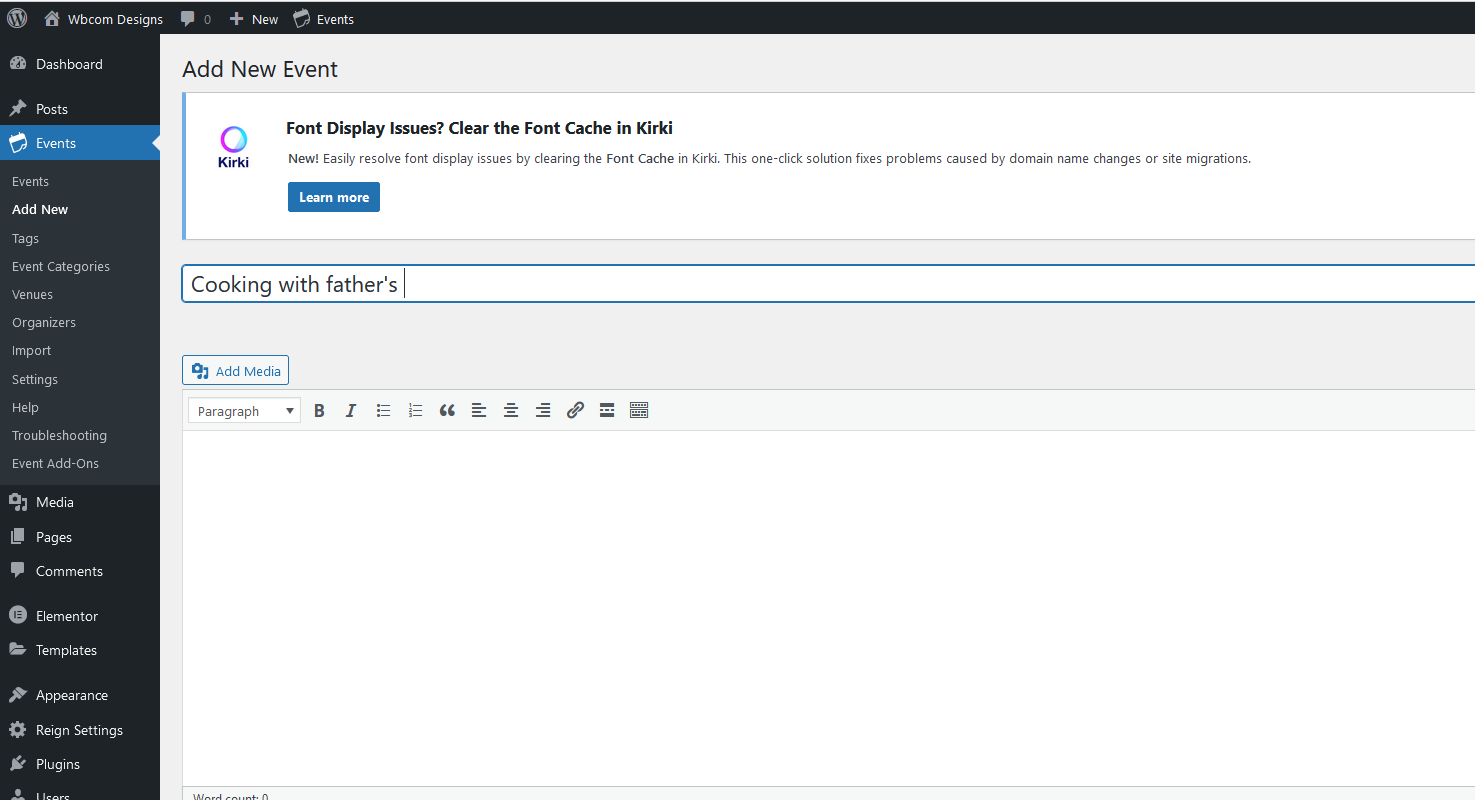
3. Event Details
Enter the event title in the provided field.
Add a detailed event description in the main content area.
Set the event start date and time, as well as the end date and time.
Optionally, you can set the event to recur if it happens regularly.
Assign event categories and tags for easy organization.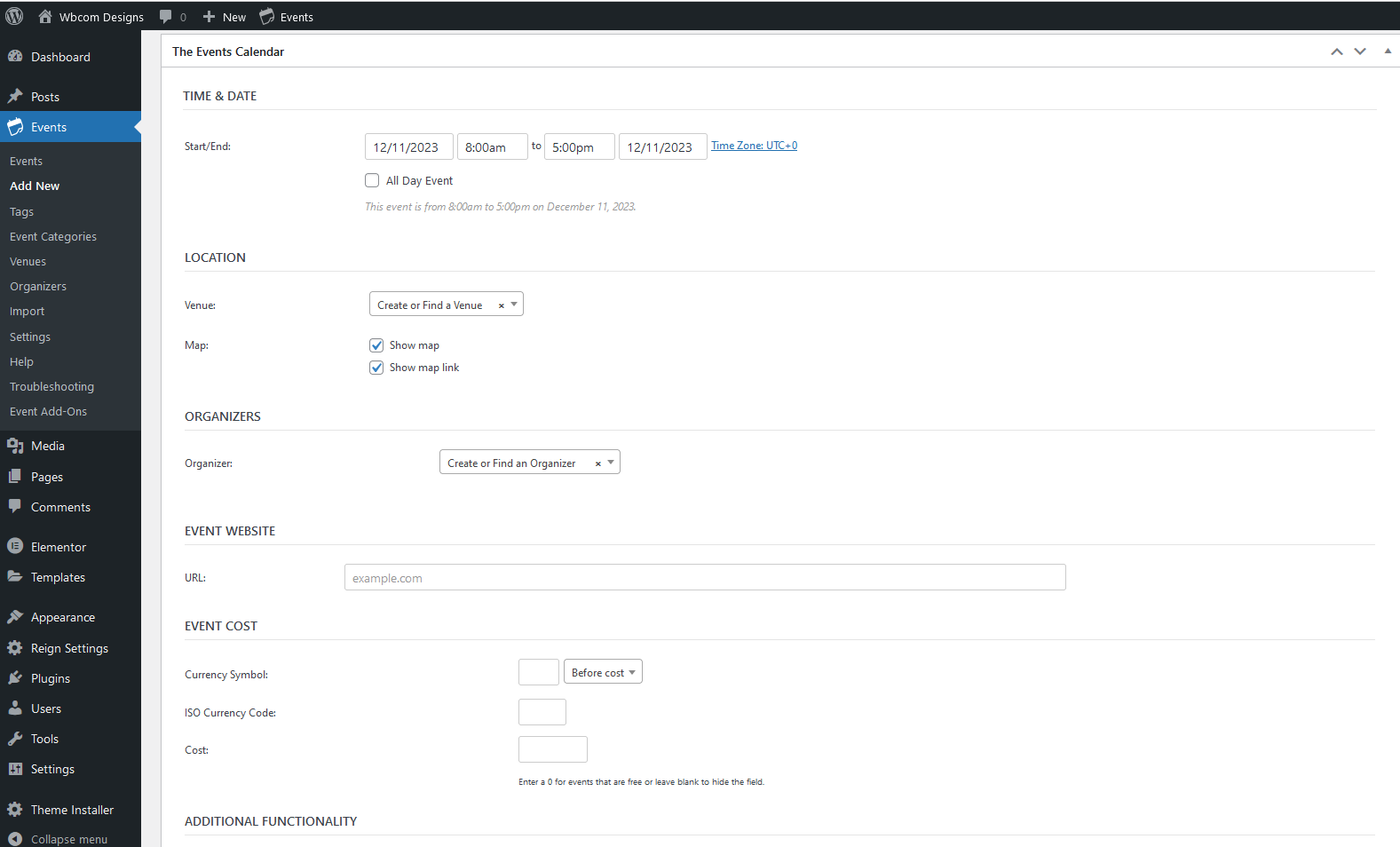
4. Event Location and Venue
Enter the event venue details, including the venue name, address, city, state, country, and postcode.
You can add a map link or coordinates for the venue location if desired.
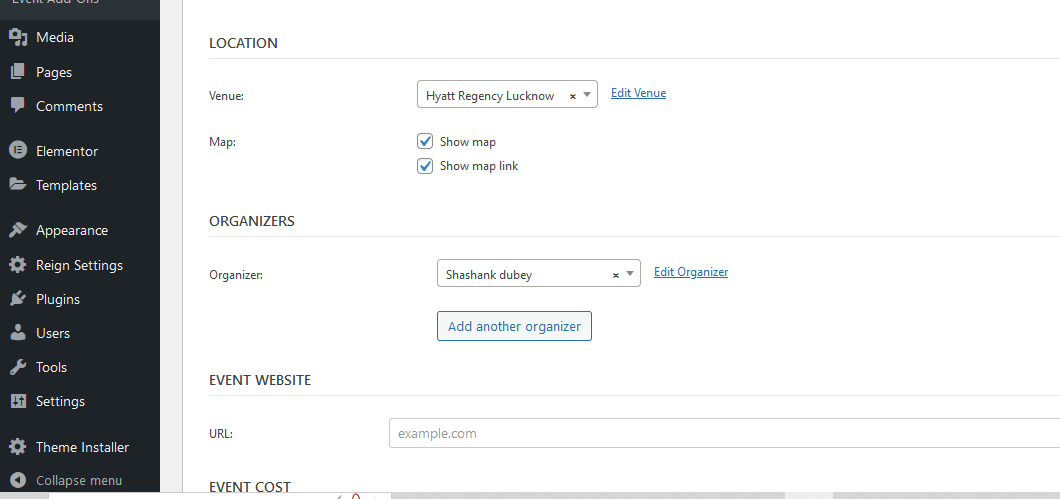
5. Event Organizer
Fill in the organizer’s details, such as the organizer’s name, website, email, and phone number.
6. Event Image
Set a featured image for the event. This image will represent the event in listings and detail pages.
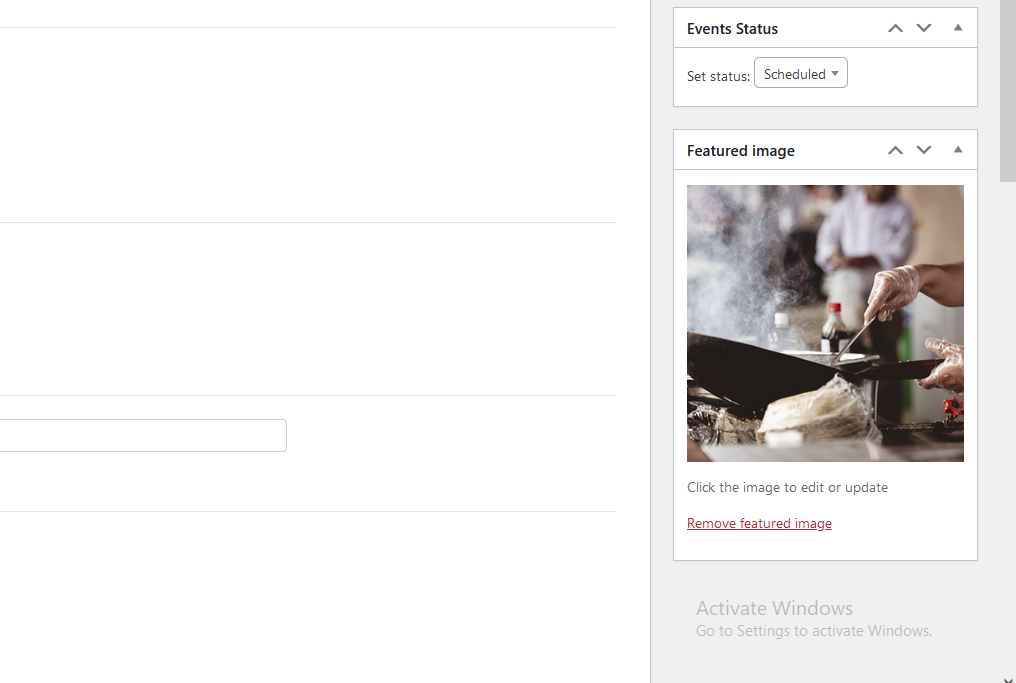
7. Event Settings
Review additional settings such as event status (published or draft), visibility, comments, and more.
8. Save or Publish
Once you’ve filled in all the necessary event details, click on “Save Draft” if you want to save it as a draft, or click on “Publish” to make the event live on your website.
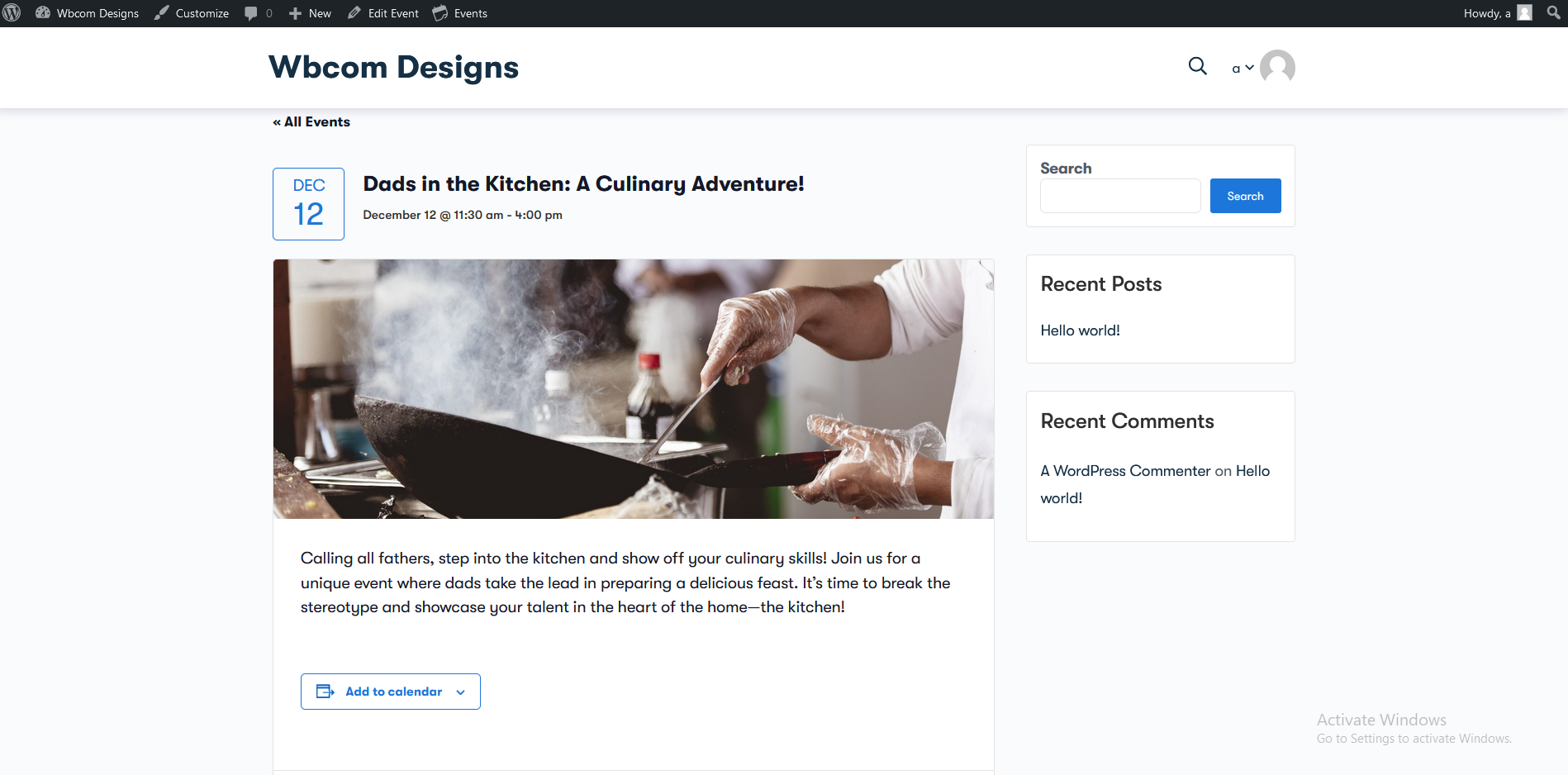
Following these steps will let you create and manage events using The Events Calendar plugin on your WordPress site.
Getting RSVPs and Ticketing Right
Publishing the event is only step one. The Events Calendar’s free version handles the listing and the calendar view well, but it doesn’t include native RSVP or ticket sales on its own; that requires Event Tickets, a companion plugin from the same developer that installs alongside it. For a free community meetup where you just need a headcount, Event Tickets’ free RSVP option is usually enough. For anything with a price attached, a paid conference session, a workshop with limited seats, the paid Events Calendar Pro tier or a dedicated ticketing add-on becomes worth the cost, since it handles payment collection and automated confirmation emails without extra custom development.
Whichever route you take, decide on RSVP versus paid ticketing before you build the event page, not after. Retrofitting payment collection onto an event that’s already been promoted as free creates confusion and, in some cases, real frustration among members who registered under different terms.
Recurring Events Without the Calendar Turning Into a Mess
Weekly meetups, monthly workshops, and other recurring gatherings are where a lot of community calendars quietly fall apart. The recurrence feature in Step 3 handles the mechanics fine, but the more important decision is how far ahead to schedule. Setting a recurring event to repeat indefinitely, with no end date, tends to clutter the calendar view with dozens of future instances that make the page slow to load and hard to scan. Capping recurrence at three to six months out, then extending it again as that window approaches, keeps the calendar readable without sacrificing the convenience of not re-creating the event by hand every week.
It’s also worth deciding early whether a single recurring event listing is the right approach, or whether each instance actually needs its own separate page, particularly if attendance, speakers, or topics change from one session to the next. A weekly “office hours” call is a good fit for true recurrence. A monthly guest speaker series, where the topic and presenter change every time, usually reads better to members as individual events rather than one repeating listing that quietly changes underneath them.
Promoting the Event So People Actually Come
A published event page does nothing on its own if members never see it. Pinning the event to the top of the community’s activity feed or homepage in the week leading up to it, sending a direct reminder through whatever notification system the community uses, and cross-posting the event link in relevant discussion threads all pull far more registrations than simply publishing the event and waiting. Communities that treat the calendar as a passive listing rather than something to actively push tend to see the same handful of highly engaged members show up every time, while everyone else never notices the event existed at all.
For communities specifically built around member-to-member connection rather than a general blog or business site, a dedicated events and RSVP tool built into the community platform itself, such as Eventonomy, a free standalone events and ticketing tool, can sit closer to where members already are instead of living as a separate calendar page they have to remember to check.
Choosing Where the Calendar Lives on Your Site
The Events Calendar installs its own dedicated events page automatically, usually at a URL like yoursite.com/events, but where that page sits in your site’s navigation says a lot about how seriously members will take it. Burying the events link three menus deep signals, even unintentionally, that events are an afterthought. Communities that treat events as a core part of the membership experience put the link in the primary navigation, sometimes even on the homepage itself as a widget showing the next two or three upcoming dates.
Some community platforms also support embedding a compact version of the calendar directly into a members-only dashboard or activity feed, rather than sending members off to a standalone events page entirely. This matters more than it sounds like it should, because every extra click and page load between a member noticing an event exists and actually registering for it loses some percentage of potential attendees. The shorter that path, the higher the RSVP count tends to be.
In-Person, Virtual, or Both: Setting Expectations Early
The venue fields in Step 4 assume an in-person location, but plenty of community events happen partly or entirely online now. For a virtual event, the “venue” field is often better used for the platform name (Zoom, Google Meet, a livestream link) rather than left blank, since members scanning the calendar quickly need to know at a glance whether they’re driving somewhere or logging in from home.
Hybrid events, where some members attend in person and others join remotely, need the clearest communication of all three formats, because the two experiences are rarely equal. If the virtual attendees can’t ask questions as easily, can’t see the room, or get a noticeably worse audio feed than the people physically present, it’s worth saying so upfront in the event description rather than letting remote attendees discover the gap in real time. Communities that are transparent about which format gets the better experience retain more trust with their remote members than ones that market a hybrid event as equivalent when it isn’t.
Capacity Limits and What Happens When an Event Fills Up
For events with a hard capacity, a workshop limited by room size, a call limited by platform participant caps, deciding what happens after the event fills matters as much as setting the limit itself. A waitlist feature, available through Event Tickets and several of the paid add-ons, automatically offers a spot to the next person in line if someone cancels, which keeps attendance closer to full capacity without requiring manual tracking from an admin.
Communities that don’t set up a waitlist and simply close registration once capacity is reached tend to see a meaningful drop-off between registered and actual attendance, since some percentage of registered members inevitably cancel or don’t show, and there’s no mechanism to backfill those open spots. A waitlist, even a simple one, closes that gap.
Measuring Whether the Events Program Is Actually Working
Publishing events on a schedule feels productive even when nobody’s actually benefiting from it, so it’s worth tracking a couple of numbers rather than going on gut feeling. RSVP-to-attendance ratio is the first one: if 40 people register but only 12 show up consistently, something in the event’s timing, format, or promotion isn’t matching what was promised. Comparing that ratio across different event types, a Tuesday evening workshop versus a Saturday morning meetup, for instance, often reveals scheduling patterns that aren’t obvious from looking at any single event in isolation.
Repeat attendance is the second number worth watching. A community running monthly events should be able to see, over time, whether the same core group shows up every month or whether the audience is constantly turning over. Neither pattern is automatically good or bad, a stable core group suggests strong loyalty among the regulars but might mean the events aren’t reaching newer members, while constant turnover suggests broad appeal but weak retention. Knowing which pattern you actually have changes what to fix.
A Few Mistakes Worth Avoiding
Scheduling an event without checking for conflicts with other things members might already have planned, major holidays, other well-known industry events, even a competing community’s regular meetup time, quietly caps attendance before the event page ever goes live. A quick scan of the calendar for the surrounding week catches most of these before they become a problem.
Publishing the event with a vague description is another common miss. “Join us for our monthly meetup” tells a prospective attendee almost nothing about whether the event is worth their time. Naming the specific topic, the format (is it a presentation, an open discussion, hands-on work), and roughly how long it runs gives members enough information to decide whether to block off the time, which matters more for busy members deciding between several things competing for the same evening.
Finally, not following up after the event is a missed opportunity that costs nothing to fix. A short recap post, even just a few photos and a thank-you to attendees, published within a day or two while the event is still fresh in people’s minds, does more to build momentum toward the next one than almost any other single action. It also gives members who missed it a reason to make sure they don’t miss the next.
Connecting Events to the Rest of the Community
An event calendar that lives entirely on its own, disconnected from everything else happening on the site, tends to get forgotten between visits. Communities that get more consistent turnout usually tie events into whatever else already pulls members back regularly. If the community runs a points or gamification system, awarding a small badge or point bonus for RSVPing, and a larger one for actually attending, gives members a reason to interact with the calendar beyond the event itself. If the community has an active discussion feed, a dedicated thread for each upcoming event, where people can ask questions or coordinate carpools for an in-person meetup, keeps the conversation going in a space members already check daily rather than isolated on the event page alone.
None of this requires expensive tooling. A single pinned post in the main feed a week out, another the day of, and a short recap afterward covers most of what matters, and can be done manually by a single community manager without any additional plugin. The tooling helps at scale, once a community is running several events a month and manual reminders start eating too much of someone’s time, but it’s not a prerequisite for getting the basics right.
Frequently Asked Questions
Do I need the paid version of The Events Calendar to run community events?
No. The free version covers event creation and categorization, plus the calendar display itself, which is enough for most community meetups. The paid Events Calendar Pro tier adds features like recurring event series with more flexible rules, additional calendar views, and integrations that larger organizations with frequent, complex event schedules tend to need more than a small or mid-sized community does.
Can members submit their own events, or does it have to come from an admin?
By default, event creation in The Events Calendar is limited to users with the appropriate WordPress role, typically an editor or administrator. Allowing regular members to submit events requires either adjusting role capabilities or using a front-end event submission add-on, which is worth considering for larger communities where a single admin can’t realistically create every event members want to host.
What’s the biggest reason community events end up poorly attended?
Almost always insufficient promotion rather than a bad event idea. A calendar entry that only lives on a rarely-visited events page, with no reminder sent closer to the date, will underperform even a mediocre event that gets pushed through the community’s main feed and a direct notification the day before.
Should past events stay visible on the calendar, or get removed?
Keeping past events visible, ideally in a separate “past events” view rather than mixed in with upcoming ones, gives new members a sense of the community’s activity history and helps them understand what kind of events to expect going forward. Deleting them outright removes that context for no real benefit.
Adding events to a community website is a great way to get people involved and create a lively, supportive space, but publishing the listing is the smallest part of the work. Choosing the right ticketing approach, setting recurrence limits that keep the calendar readable, actively promoting each event instead of letting it sit passively on a page, and following up afterward are what turn a calendar plugin into an actual events program. Do that consistently and the calendar stops being a feature nobody notices and starts being a reason members check the site every week.