
Turning a WordPress site into a multi-vendor marketplace used to mean stitching together several plugins and hoping they played nicely together. Dokan Lite handles it as one connected system: vendors get their own storefronts to manage products, orders, and customers, and you get a marketplace running on your own site instead of a cut of someone else’s platform. It works for a single niche shop with a handful of sellers just as well as a larger marketplace with hundreds of them.
Owning the platform instead of renting space on someone else’s is the part that gets underweighted in most marketplace planning. A marketplace built on Amazon or Etsy hands over customer data, takes whatever cut the platform decides to charge this year, and can lose access entirely if the platform changes its policies. A WordPress marketplace built with Dokan Lite keeps the customer relationship, the data, and the commission structure entirely under your own control.
This is the free version of the plugin, known as Dokan Lite. In this piece, we’ll walk through what it actually does: setting up a marketplace, managing vendors, and giving customers a shopping experience that doesn’t feel like it’s held together with duct tape.
Dokan Lite Multivendor Marketplace
Dokan Lite Multivendor Marketplace is a WooCommerce-based plugin built by weDevs that turns a standard WordPress install into a marketplace ecosystem, where vendors get dedicated storefronts to showcase products, manage orders, and interact with customers directly. It’s one of the most established multi-vendor plugins in the WordPress ecosystem, with over 30,000 active installations and a 4.6 out of 5 rating from more than 760 reviews on wordpress.org. The plugin is under active development, with releases shipping regularly to keep pace with WordPress and WooCommerce core updates.
Dokan is one of the fastest ways to launch an eCommerce marketplace and earn through vendor commissions, with support for digital, physical, and variable products out of the box.
Key Features of Dokan Lite Multivendor Marketplace
1. Frontend Management
Dokan gives every vendor a personalized dashboard on the store frontend, where they manage every aspect of their side of the marketplace without ever needing backend access. Backend access stays restricted to the admin, which is one of the details that sets Dokan apart from marketplace plugins that give every vendor a WordPress admin login.
2. Vendor Dashboard
The Vendor Dashboard is the heart of the Dokan experience. It gives each vendor a dedicated space within your WordPress site where they manage every part of their store. Here’s what that dashboard actually covers.
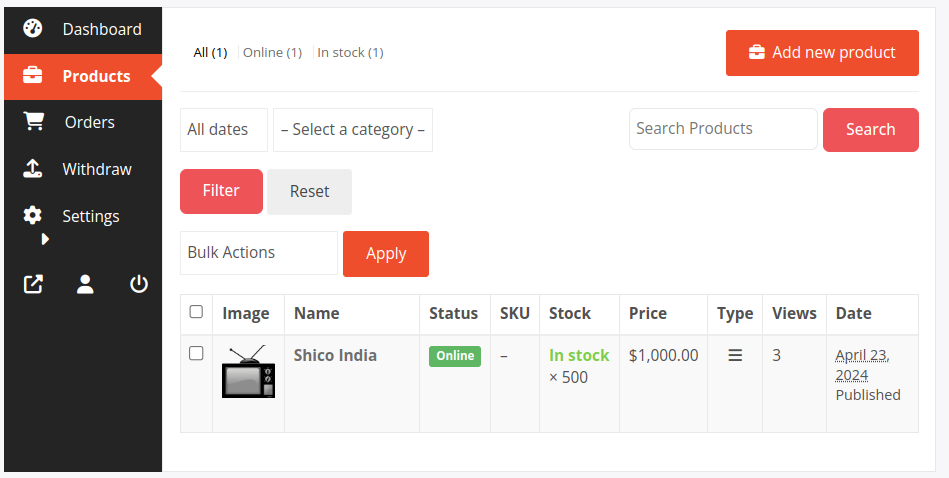
Product Management: Vendors have full control over their product listings. They can add new products, edit existing ones, or remove items no longer available, including prices, descriptions, images, and inventory levels.
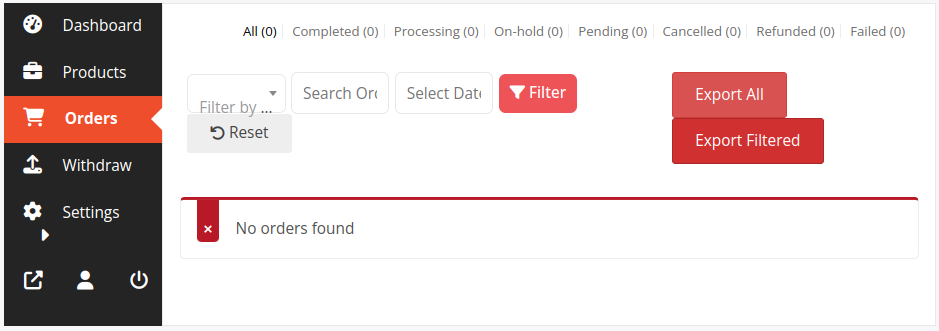
Order Management: The dashboard lets vendors track every order placed through their store. They can view order details, update statuses like processing, shipped, or completed, and communicate directly with customers about questions or concerns.
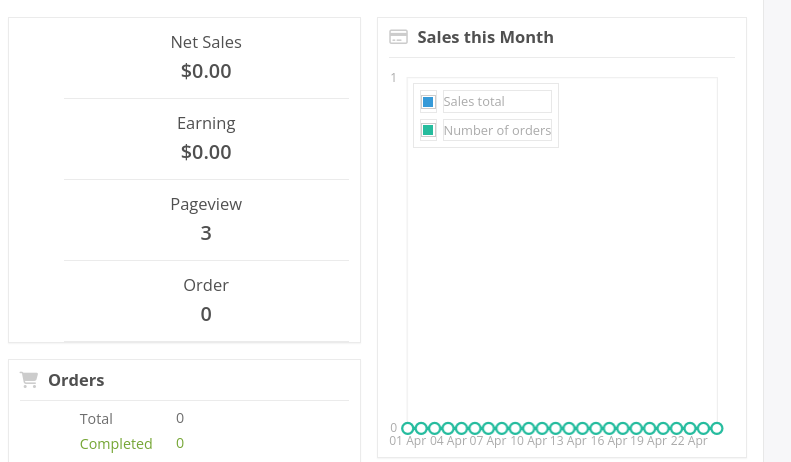
Sales Analytics: The dashboard shows sales analytics with graphical data covering total sales and order counts, plus a clear breakdown of net sales and earnings.
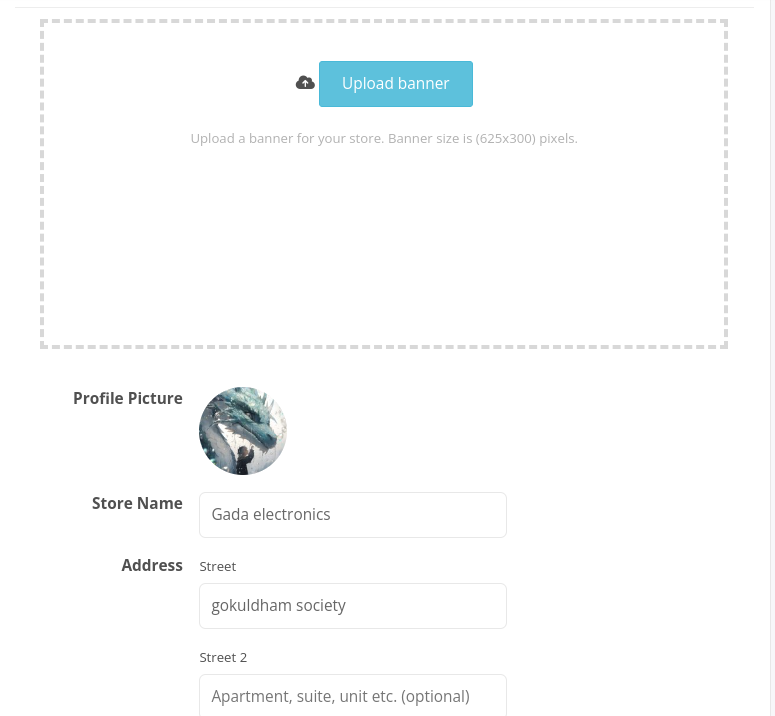
Store Customization: Vendors run their own stores independently, but they can still customize aspects like store banners, social media links, and store policies to fit their branding.
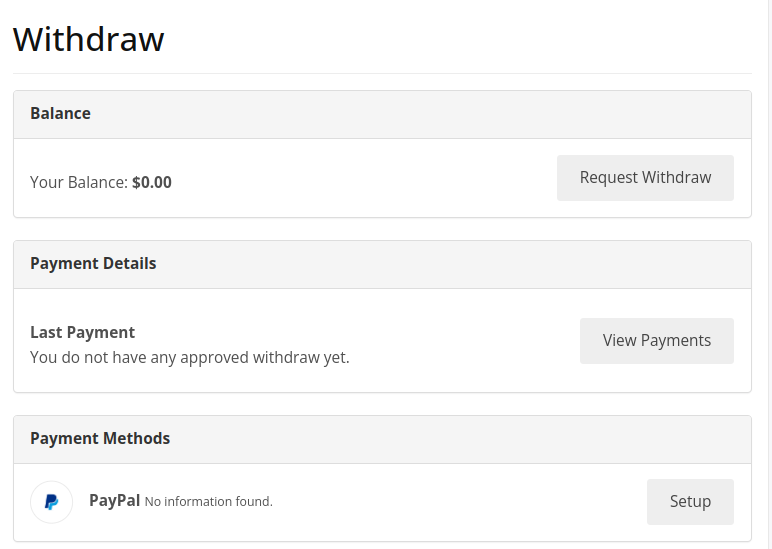
Withdraw: Vendors can withdraw their earnings from the store once they’ve crossed whatever minimum threshold you’ve set as the admin.
3. Commission
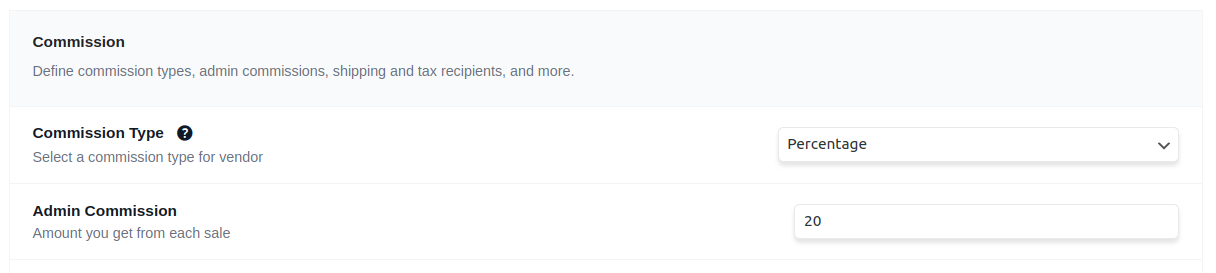
The commission system in Dokan Lite lets you set flexible commission rates based on product categories, individual vendors, or a single global rate applied across the board.
You can define different commission rates per vendor or per product category. That opens the door to charging a higher commission on high-demand categories, or for vendors who opt into premium features or additional services you offer.
Rates can be set as a flat amount or a percentage, whichever fits your marketplace’s pricing model better. Dokan Lite calculates the commission automatically for every sale based on whatever rates you’ve configured.
4. Dashboard Overview
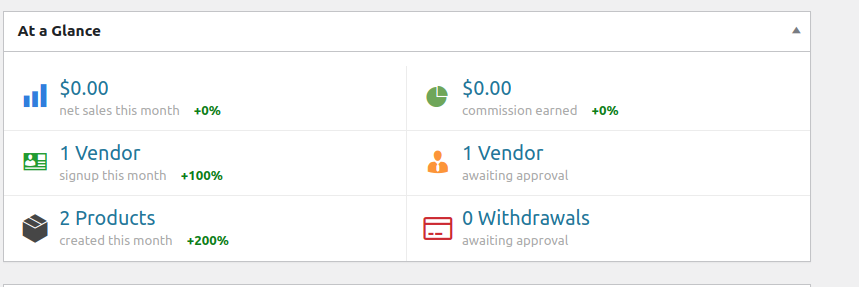
The at-a-glance section of the dashboard gives you a summary of sales, orders, earnings, and commission in one place, so you can track marketplace performance without digging through separate reports for each metric.
5. Payment Gateways
Dokan Lite supports a variety of payment gateways for secure transactions between vendors and customers, inheriting every payment option WooCommerce itself supports rather than limiting you to a narrow set built specifically for the marketplace layer.
6. Withdraw Settings
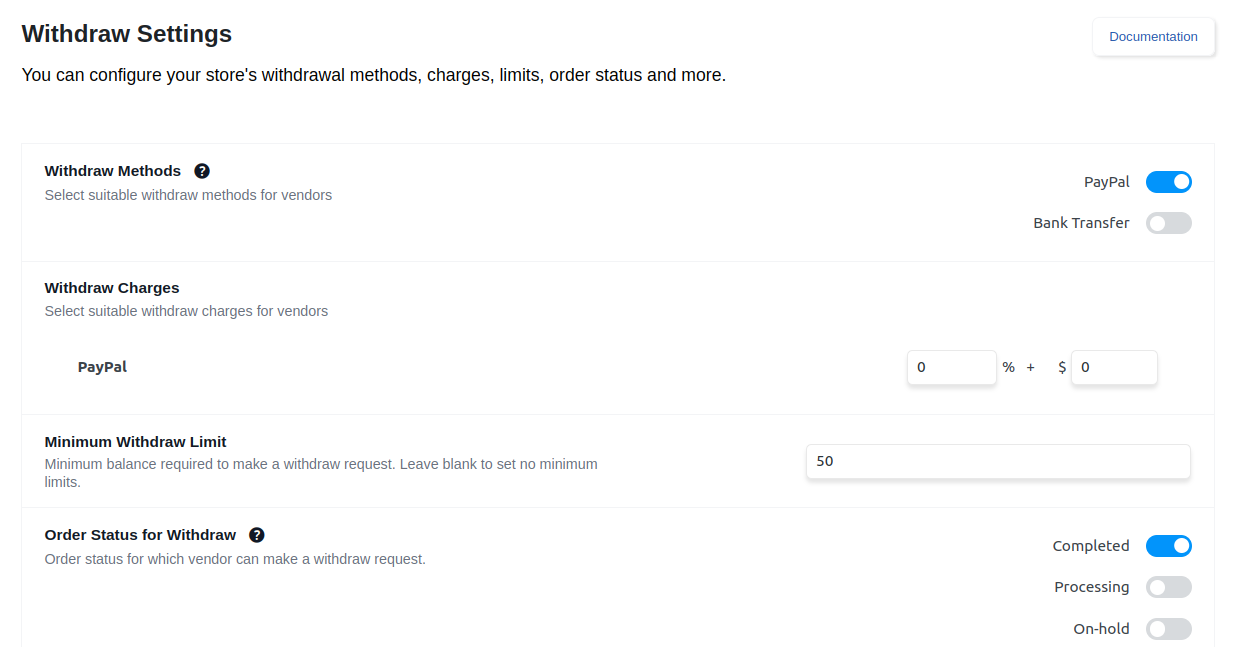
Withdraw Methods: Vendors can withdraw through PayPal or bank transfer, the two methods Dokan Lite supports out of the box.
Withdraw Charges: As the admin, you can set withdrawal charges as a flat rate or a percentage.
Minimum Withdraw Limit: You can set a minimum balance a vendor needs before they’re able to withdraw at all.
7. Reverse Withdrawal Settings
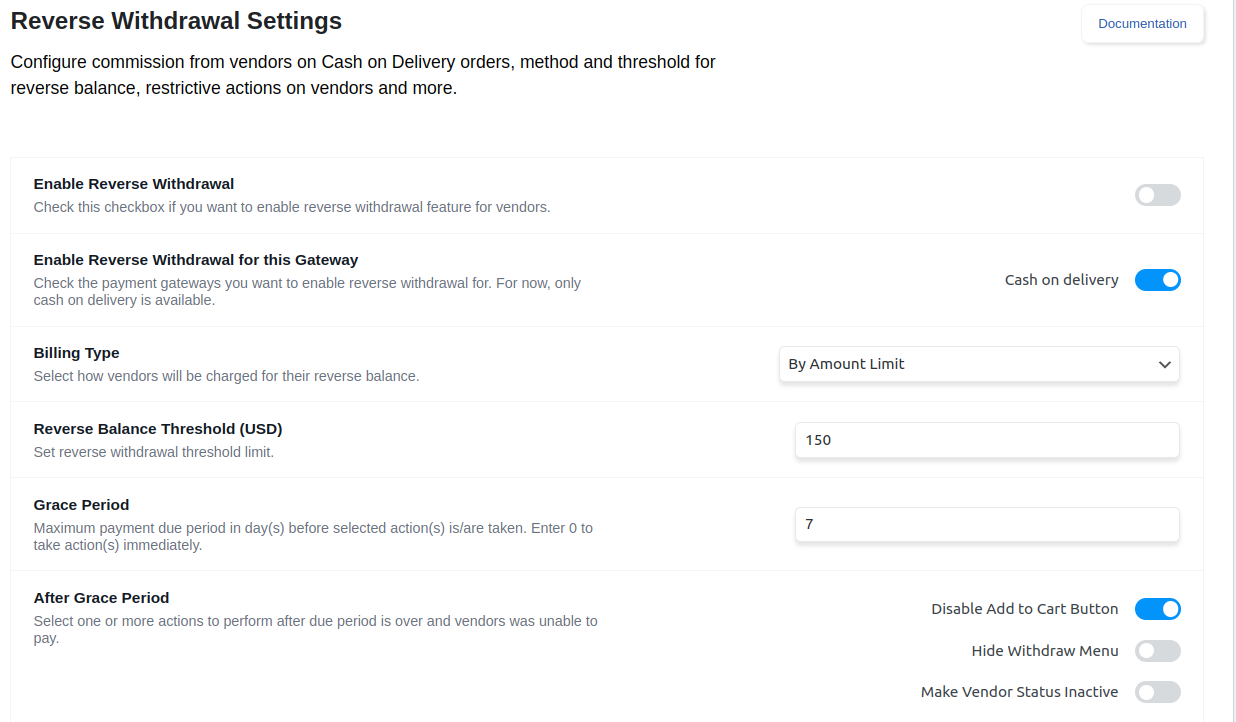
Reverse Withdrawal Settings let site administrators manage and control how vendors withdraw funds from their marketplace accounts. It’s a feature that matters more than it sounds like it should, since it directly affects financial stability, security, and transparency across the whole marketplace.
8. Customization
Dokan Lite is flexible and works with multiple themes. We’re using the free BuddyX theme for the screenshots throughout this guide, which handles the marketplace’s frontend without needing custom CSS to look right.
9. Reviews
Dokan Lite lets admins approve, edit, delete, and reply to product reviews, so review moderation doesn’t fall entirely on individual vendors.
10. Modules
Dokan Lite ships with five companion modules as separate plugins that extend what the core plugin does:
Setting Up Your First Vendor
Getting a marketplace from install to first sale involves a handful of steps that are worth walking through in order. First, install and activate WooCommerce alongside Dokan Lite, since Dokan builds directly on top of it rather than replacing it. Second, run through Dokan’s setup wizard, which configures store URLs, commission defaults, and payment settings before any vendor even signs up.
Third, decide whether vendor registration is open to anyone or requires admin approval. Open registration gets a marketplace populated with sellers faster, but approval-gated registration gives you more control over who’s allowed to sell, which matters a lot once a marketplace has a reputation to protect. Fourth, once a vendor registers, they land in their own dashboard and can start adding products immediately, no waiting on the admin to manually set anything up on their behalf.
Choosing Commission Rates That Work
Setting the commission rate is one of the first real decisions a marketplace owner has to make, and it’s worth thinking through rather than picking an arbitrary number. Too high, and vendors won’t find the marketplace worth their time compared to selling directly or through a competing platform. Too low, and the marketplace doesn’t generate enough revenue to be worth running.
A common approach is to research what similar marketplaces in the same niche charge, then set a rate competitive with that baseline while accounting for whatever extra value your marketplace offers, built-in traffic, a trusted brand, marketing support the vendor wouldn’t get selling on their own. Dokan’s flexibility to set rates per category or per vendor also means a marketplace can start with a single flat rate and refine it later as data comes in on which categories and vendors are actually profitable at the current commission level.
What Dokan Lite Doesn’t Cover
Being clear-eyed about the limits of the free version saves a lot of frustration down the line. Dokan Lite covers the core marketplace mechanics well: storefronts, orders, commissions, and withdrawals. Advanced features like vendor subscriptions, product auctions, booking-based products, live shipping rate integrations, and vendor verification badges sit in the paid Dokan Pro tier and its add-ons. For a marketplace just getting started, Dokan Lite is usually enough to launch and validate demand before deciding whether the paid features are worth the upgrade.
A practical way to decide whether the upgrade is worth it: track how many times a vendor or customer requests a feature Dokan Lite doesn’t have, subscriptions being the most common one for marketplaces selling recurring services or memberships. A handful of requests in the first few months is a normal part of finding a plugin’s limits. A steady stream of the same request is a clearer signal that Pro’s specific modules are solving a real, recurring problem rather than a hypothetical one.
Keeping a Multi-Vendor Marketplace Trustworthy
A marketplace’s biggest risk isn’t a missing feature; it’s a customer getting burned by one bad vendor and blaming the whole platform for it. Dokan’s review system, moderated centrally by the admin, is one line of defense, but it’s worth pairing with clear vendor policies covering shipping timelines, return handling, and communication standards before a marketplace opens to customers, not after the first complaint comes in.
Vendor vetting matters more than it seems like it should at launch, when the instinct is usually to accept every seller who applies just to get inventory on the site. A marketplace with ten trustworthy, responsive vendors builds a better reputation faster than one with fifty vendors, five of whom ignore orders or ship late. Quality of vendors, not just quantity, is what customers actually judge a marketplace by after their first purchase.
Marketing a Marketplace, Not Just a Store
Marketing a multi-vendor marketplace is a slightly different problem than marketing a single-owner store. A marketplace has two audiences to attract at once: buyers who need enough vendor variety to make the site worth visiting, and vendors who need enough buyer traffic to make selling there worth their time. Launching with too few vendors gives buyers a thin selection; launching with too few buyers gives vendors no reason to stay active.
A common way around that chicken-and-egg problem is to recruit an initial batch of vendors directly, rather than waiting for organic sign-ups, and seed the marketplace with real inventory before opening it to buyer traffic. Once there’s enough there to make a first visit worthwhile, marketing spend on the buyer side starts converting into actual purchases instead of visitors landing on an empty-feeling site.
Getting the Marketplace’s Front End Right
A multi-vendor plugin only handles half of what makes a marketplace feel trustworthy. The other half is the theme it runs on. A vendor storefront built on a theme with dated typography, cramped product grids, or no dark mode support undercuts the professional feel Dokan’s backend is trying to project. That’s part of why pairing Dokan Lite with a modern, actively maintained theme matters as much as configuring the commission settings correctly. A marketplace that looks credible converts better than one that looks like a WordPress default install with a shopping cart bolted on.
Migrating an Existing Store Into a Marketplace
Not every Dokan install starts from a blank WooCommerce site. Plenty of marketplace owners start with a single-vendor store they already run and decide later to open it up to other sellers. That migration path works reasonably well with Dokan Lite: existing WooCommerce products stay intact, and the admin’s own inventory can continue operating as one of the vendors on the new marketplace, or stay separate and unaffiliated with the vendor system entirely, depending on how the business wants to structure itself going forward.
The Dokan Migrator module listed above specifically targets this kind of transition, easing the move for stores that are switching from a different multi-vendor plugin rather than starting fresh. Reviewing what that module actually migrates before relying on it for a live store’s data is worth the extra caution any migration deserves.
Frequently Asked Questions
Does Dokan Lite require WooCommerce?
Yes, Dokan Lite is built on top of WooCommerce and requires it to be installed and active. WooCommerce handles the underlying product catalog and checkout, and Dokan Lite adds the multi-vendor layer on top.
Can a marketplace built on Dokan Lite scale to hundreds of vendors?
Yes, the plugin is used on marketplaces of varying sizes, though very large marketplaces with complex vendor tiers, subscriptions, or advanced shipping rules typically need Dokan Pro’s additional modules to manage that complexity smoothly.
How does Dokan Lite compare to WC Vendors, another free multi-vendor plugin?
Both are legitimate, actively maintained options built on WooCommerce. Dokan Lite tends to offer a more polished frontend vendor dashboard out of the box, while the right choice often comes down to which specific features and modules a given marketplace needs, since the two plugins overlap heavily on core functionality.
Do vendors need their own WordPress account?
Yes, each vendor registers as a user on your WordPress site with a vendor role, but that role only grants access to their own frontend dashboard, not the WordPress admin area. That separation is what keeps vendors from accidentally touching site settings, other vendors’ data, or anything outside their own store.
Can Dokan Lite handle digital products, not just physical ones?
Yes, since it inherits WooCommerce’s native support for digital, physical, and variable products, vendors can sell downloadable files, physical goods with shipping, or products with variations like size and color, all from the same dashboard.
Is Dokan Lite a good fit for a marketplace with only one or two vendors?
It works fine at that scale, though the real value of a multi-vendor structure shows up more clearly once there are enough vendors that the automated commission, dashboard, and withdrawal systems save real admin time compared to managing sellers manually.
Handling Disputes Between Vendors and Customers
Every marketplace eventually deals with a dispute: an item that arrived damaged, a vendor who didn’t ship on time, a customer requesting a refund the vendor disagrees with. Dokan Lite gives the admin visibility into order details and communication for every store on the marketplace, which means a dispute doesn’t have to be resolved entirely between the vendor and the customer with no oversight. The admin can step in, review the order history, and mediate when a vendor and a customer can’t resolve something on their own.
Having a written dispute policy in place before launch, covering who’s responsible for return shipping, how refunds get processed through the commission system, and what happens to a vendor who accumulates repeated complaints, saves a lot of ad hoc decision-making once real disputes start coming in. A marketplace that handles its first few disputes fairly and consistently builds trust with both vendors and customers faster than one making up the rules as it goes.
Is Dokan Lite Worth Building On
Dokan Lite Multivendor Marketplace offers a genuinely comprehensive foundation for anyone looking to build an online marketplace with WordPress. With robust features and an intuitive interface, it gives entrepreneurs and businesses the tools to create a marketplace where multiple vendors can showcase products and services without stepping on each other’s toes.
From frontend management to vendor dashboards, it gives vendors what they need to run their stores effectively, covering everything from product listings to order fulfillment. The commission system offers real flexibility in setting rates, balancing fair vendor compensation against admin revenue.
Whether you’re a newcomer to eCommerce or an established business looking to expand, Dokan Lite gives you a solid, actively maintained starting point for building and running a multi-vendor marketplace.