

Planning a WordPress website but not sure which plugins you actually need? There are thousands of options and most of them do very specific jobs. Below are 10 that cover the fundamentals nearly every site needs: forms, SEO, security, speed, backups, page building, and eCommerce.
Free and Premium WordPress Plugins
1. Gravity Forms
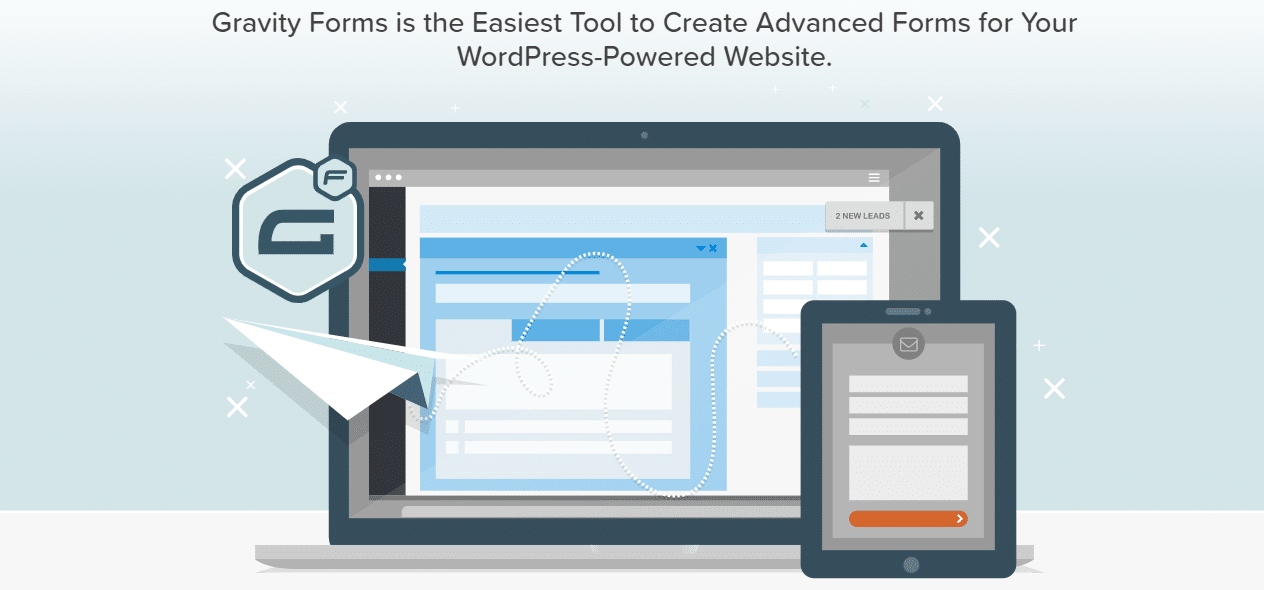
Every site needs a contact form eventually, and for anything beyond the basics, Gravity Forms is the standard. Note it’s paid only, no free tier, $59-259/yr depending on the license.
What you actually get for that price: more than 30 ready-to-use form fields covering everything from a simple text input to file uploads and multi-page forms, conditional logic that shows or hides fields, sections, or entire pages based on how someone answers an earlier question, mobile-responsive forms without any extra configuration, and spam protection built directly into the plugin rather than requiring a separate add-on. The conditional logic is the feature that actually separates it from a basic contact-form plugin, it’s what lets a single form serve as a job application, a quote request, and a support ticket depending on what the visitor selects at the top.
2. Yoast SEO

Yoast SEO remains one of the most widely used SEO plugins, largely because it’s genuinely beginner-friendly without dumbing down the harder parts.
It walks you through keyword and keyphrase optimization with plain-language guidance rather than jargon, suggests internal linking opportunities as you write instead of leaving that entirely to memory, and shows a Google search preview so you can see roughly how a title and meta description will actually render before publishing. A readability check using the Flesch Reading Ease score flags sentences and paragraphs that are getting hard to follow, full breadcrumb control and a built-in redirect manager handle two things that otherwise need separate plugins, and all of it works in both the block editor and the classic editor for sites that haven’t fully migrated yet.
3. Jetpack by WordPress.com
Jetpack bundles security, performance, and site management into one plugin from Automattic (the company behind WordPress.com). Individual modules can be toggled on or off, so you’re not stuck running features you don’t need weighing down your site for no benefit.
The bundle covers site security scanning and monitoring that flags suspicious activity before it becomes a real breach, performance and CDN features that speed up image and static asset delivery without a separate caching plugin, the ability to manage your site from any device through the Jetpack mobile app when you’re away from a desktop, and built-in social media scheduling that publishes a new post out to your connected accounts automatically. That modularity matters more than it sounds: a site that only wants the security scanning without the social scheduling can turn off everything else and keep the plugin lean.
4. Wordfence Security
Wordfence is one of the most established WordPress firewall and malware scanners, with real-time monitoring and alerting when something looks wrong.
Its web application firewall blocks malicious traffic before it ever reaches your site’s code, brute-force login protection pairs with two-factor authentication to stop the most common attack vector against WordPress admin accounts, and malware scanning with source-code verification can actually repair hacked files rather than just flagging that something’s wrong and leaving cleanup to you. Leaked password protection checks new passwords against known breach databases, and live traffic monitoring gives you a real-time view of who’s hitting your site and how, useful for spotting a scraping bot or an attack in progress rather than discovering it after the fact in a log file nobody checked.
5. W3 Total Cache
W3 Total Cache is a long-standing caching plugin with page, database, browser, and object caching, plus CDN integration for reducing load times.
Between the four caching layers, page, database, browser, and object, it covers most of what actually slows a WordPress site down under real traffic, and CSS and JS minification trims file sizes further without you having to manually optimize every asset. AMP support matters if you’re still serving accelerated mobile pages for any part of your traffic, and the plugin works across shared, VPS, dedicated, and private hosting environments, which is worth checking directly against your specific host’s configuration since caching plugins occasionally conflict with a host’s own built-in caching layer.
6. UpdraftPlus
For backups, UpdraftPlus is the most widely used option, free and premium tiers, with one-click backup to Dropbox, Google Drive, Amazon S3, and others.
It handles backups up to 100GB, which covers the vast majority of WordPress sites without needing a specialized enterprise backup service, and it’s multisite compatible for anyone running a network of sites off one install. Automatic scheduling means backups happen on a set cadence without anyone remembering to trigger them manually, and restore, recover, and migrate functions all live in the same interface, so moving a site to new hosting or recovering from a bad update doesn’t require a separate tool on top of the backup plugin itself.
7. Elementor

Elementor is the most widely used WordPress page builder, live visual editing with drag-and-drop, no coding required.
More than 300 templates give a starting point for common page types rather than a blank canvas, and over 90 widgets cover buttons, headlines, forms, and the rest of what a typical page actually needs without hunting for a separate plugin for each individual element. Responsive editing controls let you adjust a layout per breakpoint directly in the visual editor rather than guessing how a design will hold up on a phone until after it’s published, and autosave is built in, which matters more than it sounds the first time a browser crashes mid-edit on a page you hadn’t saved yet.
8. Slider Revolution
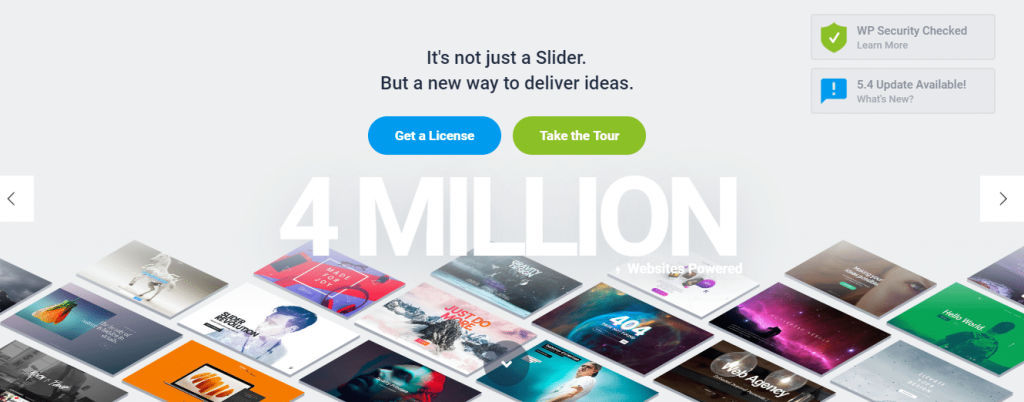
Slider Revolution is a long-running premium slider and carousel builder, drag-and-drop, responsive, and covers hero images, header sliders, and carousels alike.
The full drag-and-drop interface means building a slider doesn’t require touching code, and complete control over styles, animations, and transitions lets a design match a brand’s existing visual language rather than settling for a generic default look. Output is responsive and mobile-optimized without extra configuration, and a library of ready-to-use slider styles gives a faster starting point than building every animation from scratch, useful when a deadline doesn’t leave room for extensive custom design work.
9. WooCommerce
For an online store, WooCommerce is still the default choice: free core, open-source, and flexible enough to sell physical products, digital downloads, or both.
It sells physical and digital products through the same storefront without needing separate systems for each, and being fully open-source means there are no artificial feature limits gating basic store functionality behind a paywall the way some closed platforms do. It works with the vast majority of WordPress themes, so switching a store’s visual design later doesn’t usually mean rebuilding the underlying commerce logic, and built-in product sorting and filtering covers the basic discovery experience a shopper expects without a separate plugin just to let customers narrow down a catalog.
10. Smush Image Compression and Optimization
Smush automatically resizes and compresses images to keep page weight down without a manual step every time you upload something.
Bulk compression runs across your whole media library at once, useful for a site that’s accumulated years of unoptimized images before anyone thought to install a compression plugin. Lazy loading defers offscreen images until a visitor actually scrolls to them, oversized-image detection flags a photo uploaded at full camera resolution when a much smaller file would have looked identical on the page, and Gutenberg block integration plus multisite compatibility mean it fits cleanly into a modern WordPress workflow rather than requiring a workaround for the block editor.
How These Ten Actually Fit Together on a Real Site
None of these plugins compete with each other, they cover different jobs, forms, SEO, security, speed, backups, design, store, images, so it’s reasonable to run several of these at once rather than picking just one. A typical small business site might run Yoast SEO, Wordfence, UpdraftPlus, and Smush as a genuine baseline regardless of what else the site does, then add Gravity Forms if lead capture matters, Elementor if the design needs more flexibility than the theme alone provides, and WooCommerce only if there’s an actual store behind it. Adding a plugin because a list like this one recommends it, rather than because your specific site has the underlying need, is how a lot of WordPress installs end up carrying more plugins than they can properly maintain.
A Note on Stacking Caching and Security Plugins
W3 Total Cache and Wordfence are both included here because each is genuinely well-established in its category, but it’s worth a direct check before running either alongside another tool doing a similar job. Running two caching plugins simultaneously, or a caching plugin on top of a host’s own built-in caching layer, is a common source of confusing, hard-to-diagnose bugs, a page that shows stale content, a form that stops submitting correctly, that trace back to two systems both trying to manage the same cached output. The same logic applies to security plugins: Wordfence’s firewall and a hosting provider’s own server-level firewall can occasionally conflict rather than layering cleanly. Check what your specific host already provides before adding a plugin that duplicates it.
Evaluating Any Plugin Before You Install It, Not Just These Ten
These ten are established enough that vetting them individually isn’t really necessary, but the same checklist is worth applying to anything else you’re considering adding to a site. Check the last-updated date on the WordPress.org plugin page or the vendor’s own changelog, a plugin that hasn’t been touched in over a year is a real risk, particularly for anything security-adjacent like a firewall or a form plugin handling submitted data. Check the active install count and review rating together rather than either alone, since a plugin with a handful of five-star reviews and almost no installs tells you far less than one with thousands of installs and a consistent 4-star-plus average over time.
Read a few of the negative reviews specifically, not just the star average, since that’s where you’ll find the actual failure patterns other users have hit, a conflict with a specific popular theme, a feature that silently stopped working after an update, a support team that goes quiet after a purchase. And check compatibility claims against your specific WordPress version and PHP version before installing on a live site, testing on a staging copy first whenever the plugin touches anything customer-facing or security-related.
Setup Order Matters More Than It Seems
Installing all ten of these at once on a fresh site invites exactly the kind of conflict described above, since you won’t know which plugin caused a problem if three just went live simultaneously. A more reliable approach: install and configure one plugin fully, confirm the site still works as expected, then move to the next. Security and backups first, Wordfence and UpdraftPlus, since those protect everything you build afterward. SEO next, since Yoast benefits from being in place before you’ve published much content for it to analyze retroactively. Caching last, after the site’s actual structure and content are mostly settled, since a caching plugin configured against a site that’s still changing daily tends to need re-tuning anyway once things stabilize.
What Happens When Two of These Plugins Actually Conflict
It’s worth knowing the troubleshooting process before you need it. If a page breaks, a form stops submitting, a checkout starts erroring, after installing a new plugin, the fastest diagnostic step is deactivating plugins one at a time (starting with whatever was most recently installed or updated) and reloading the page after each, rather than guessing which one is responsible. Keep a staging copy of the site specifically for this kind of testing if the site handles real transactions or real customer data, so the troubleshooting process itself doesn’t risk breaking something live while you’re trying to fix something else that’s already broken. Document what you find once you’ve isolated the cause, a short note on which two plugins conflicted and what fixed it saves real time the next time a similar issue shows up on a different site.
Frequently Asked Questions
Do I need all 10 of these plugins on a single site?
No. This list covers ten distinct categories of need, not ten plugins every site should install by default. A simple blog with no store and no complex forms genuinely doesn’t need Gravity Forms or WooCommerce installed. Pick from this list based on what your specific site actually does, not the full count.
Are the free versions of these plugins good enough, or is the premium tier usually necessary?
It depends on the specific plugin and your site’s actual requirements. Yoast SEO, W3 Total Cache, UpdraftPlus, WooCommerce, and Smush all have genuinely capable free tiers that cover most small-to-midsize sites well. Gravity Forms has no free tier at all, and Elementor and Slider Revolution both have meaningfully more capable premium versions worth the upgrade once a site’s design needs outgrow the free tier’s limits.
How many plugins is too many for one WordPress site?
There’s no fixed number, a well-coded plugin doing a genuinely needed job costs far less in performance and maintenance risk than a poorly coded one doing something marginal. The better question isn’t a count, it’s whether each installed plugin is still doing something your site actually needs. Audit your active plugin list periodically and remove anything installed for a feature you no longer use or never actually launched.
Should I install a plugin from this list even if my theme already claims to include a similar feature?
Check what the theme’s built-in version actually covers before assuming it’s redundant. A theme’s bundled caching or SEO feature is often a lighter, less configurable version of what a dedicated plugin offers, fine for a very simple site, genuinely limiting once you need finer control. If the built-in version is meeting your actual needs, adding a dedicated plugin on top just adds conflict risk for no real benefit. If it’s falling short in a specific, identifiable way, that’s the signal to add the dedicated tool.
Is it safe to update all of these plugins automatically, or should updates be reviewed first?
For most sites, automatic updates for minor version bumps are reasonable, particularly for security-critical plugins like Wordfence where a delayed patch is a real risk. Major version updates, the kind that change core functionality rather than just patching a bug, are worth reviewing on a staging site first, especially for anything customer-facing like WooCommerce or a page builder, where a breaking change can affect live transactions or a public-facing layout before anyone notices. Read the plugin’s own changelog before a major update ships to production, most well-maintained plugins flag breaking changes explicitly, and that five-minute read is cheaper than discovering the change live.