
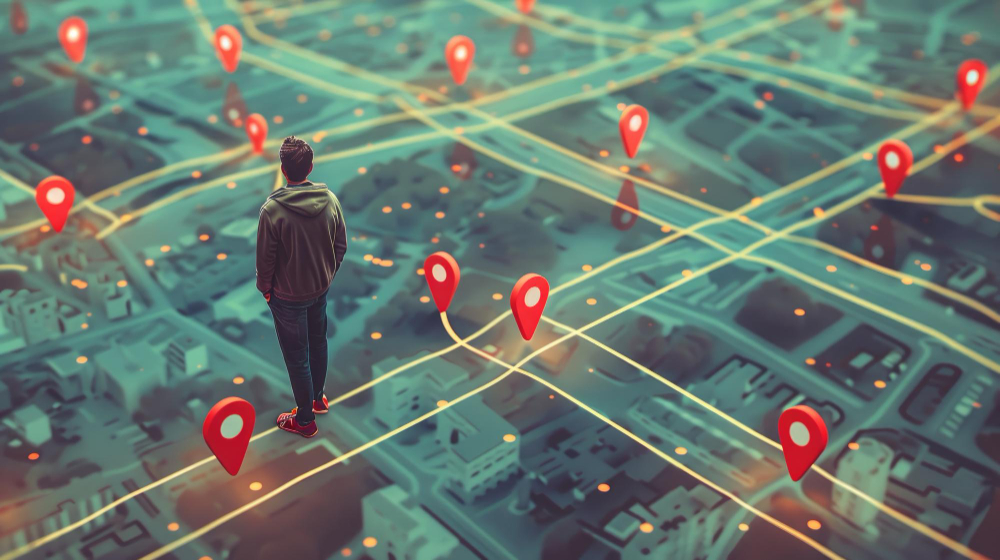
Most marketing still treats location as an afterthought: a city name in an ad targeting panel, maybe a store locator on the website. Geofencing treats location as the trigger itself. Draw a virtual boundary around a place that matters, a store, a competitor’s parking lot, a conference venue, and the moment someone with a phone crosses that line, something happens automatically. For a business trying to reach people at the exact moment location makes them relevant, that’s a meaningfully different tool than a standard ad campaign, and it’s worth understanding how it actually works before deciding whether it fits your marketing plan, not just what it promises on a vendor’s sales page.
Understanding Geo-Fencing
Geofencing uses GPS or RFID signals to create invisible perimeters around a physical location. Cross that perimeter with a smartphone or other connected device, and it triggers whatever action the business configured ahead of time, a push notification, a data collection event, an ad served the next time the person opens an app. Marketers offering location-relevant services or promotions have leaned on this for years because it solves a problem broad targeting can’t: knowing not just who someone is, but where they physically are right now.
How Geo-Fencing Actually Works
The mechanism depends on GPS, Wi-Fi, or cellular signal strength to draw its boundaries, and the accuracy varies depending on which one a business relies on. Organizations set up virtual perimeters around locations that matter to them: their own retail stores, event venues, or, in more aggressive campaigns, a competitor’s storefront. When a device with location services enabled and the right app installed enters that zone, the system fires whatever action was defined in advance, a personalized offer, a reminder, a notification tied to what the business already knows about that customer.
Geofencing typically works through a mobile app rather than a browser, since apps can request the background location permissions a website generally can’t. That app-based dependency is worth flagging upfront: geofencing only reaches customers who have the business’s app installed and location permissions granted, which is a real ceiling on reach that broader advertising formats don’t have. Where it does reach someone, though, the data collected on entry and exit patterns feeds back into a much sharper picture of customer behavior than most other channels provide.
What Businesses Actually Get From It
The most immediate benefit is focused marketing that reaches people while location is still relevant to the decision. A coffee shop that fires a discount notification the moment a regular customer walks within a block of the store is working with a level of intent broad ad targeting can’t replicate. More foot traffic through that kind of location-triggered promotion tends to translate directly into more transactions, since the person receiving the offer is already physically close enough to act on it.
Beyond the immediate promotion, geofencing generates behavioral data most businesses don’t otherwise have: how often a given customer passes a location without entering, how long they dwell once inside a geofenced zone, which competitor locations they also visit. Used carefully, that data shapes better decisions about where to open a new location, when to run a promotion, or which customer segment actually responds to proximity-based offers. It also supports loyalty programs directly, since personalized, location-triggered offers tend to bring repeat customers back more reliably than a generic email blast, and it enables a kind of real-time responsiveness (greeting a returning customer, flagging a VIP’s arrival to staff) that static marketing can’t match.
Where Different Industries Actually Use It
Retail is the most visible use case: stores fire personalized deals the moment a shopper enters a mall or walks near a specific location, competing for attention right at the point where a purchase decision is most likely. Event organizers use the same mechanism to send timely schedule updates, session reminders, or vendor promotions to attendees without requiring anyone to check an app manually.
Hospitality has adopted geofencing for guest experience specifically: a hotel can trigger a room service offer or an event reminder the moment a guest’s phone re-enters the property after being away for the day, which reads as attentive service rather than intrusive marketing when it’s implemented well. Healthcare has found a narrower but genuinely useful application in patient management, using geofenced zones around a facility to help coordinate check-ins, wayfinding, or timed medication reminders tied to a patient’s location on a campus.
The Real Challenges Worth Planning For
Privacy is the challenge that matters most, and it’s not a minor compliance checkbox. Location data is some of the most sensitive information a business can collect, since it can reveal where someone lives, works, worships, or seeks medical care. Businesses running geofencing campaigns need to be explicit about what they’re collecting, why, and how long they keep it, and that disclosure needs to happen before location tracking starts, not buried in a privacy policy nobody reads. Regulations governing location data vary significantly by region, so a geofencing campaign that’s compliant in one market may need real adjustment before it runs in another.
Technical accuracy is the second real constraint. GPS-based geofences can drift by tens of meters depending on device and environment, which means a poorly tuned boundary either misses genuine visitors or fires for people who never actually entered the intended zone. Both failure modes cost the business something: missed opportunities in the first case, and frustrated customers who get an irrelevant or mistimed notification in the second.
Battery consumption is the third practical issue, and it’s the one that quietly kills adoption. Continuous background location tracking drains a phone’s battery noticeably, and users who notice an app draining their battery tend to revoke location permissions or delete the app outright. Any geofencing implementation needs real attention to how frequently it polls location, not just how precisely it draws boundaries, or the technical accuracy of the geofence becomes irrelevant once users have turned tracking off.
Where Geo-Fencing Is Headed
AI and machine learning are making geofencing more targeted without requiring wider or more invasive tracking. Instead of firing the same offer to everyone who crosses a boundary, machine learning models increasingly weigh a customer’s past behavior to decide whether, and what, to send, which cuts down on the irrelevant notifications that drive people to disable location permissions in the first place.
The expanding footprint of wearables and connected IoT devices is also widening what geofencing can reach beyond phones specifically. A smartwatch or a connected car can trigger the same kind of location-based action a phone does, which means the geofencing use cases businesses are building today will likely need to account for a wider range of device types within the next few years, not just smartphone apps.
Measuring Whether a Geofencing Campaign Is Actually Working
The obvious metric, notifications sent, tells you almost nothing about whether the campaign is doing its job. What matters is the conversion path from a triggered notification to an actual visit or purchase, and that requires tracking beyond the notification itself: did the customer open the app, did they redeem the offer, did foot traffic in the physical location increase during the campaign window compared to a baseline period.
Dwell time inside a geofenced zone is a useful secondary signal, since a customer who lingers near a location without entering may be a near-miss worth a different kind of follow-up than someone who walked straight past. Comparing conversion rates across different zone sizes and trigger distances also tends to reveal a sweet spot: a geofence drawn too tight around a store catches almost nobody, while one drawn too wide fires for people who were never realistically going to visit, wasting the notification and irritating anyone who finds it intrusive.
Running a geofencing campaign without this kind of measurement in place is effectively guessing. Most platforms that support geofencing also support basic attribution reporting, connect that reporting before launch, not after a few months of campaigns have already run without a clear read on whether they’re working.
Getting Started Without Overcomplicating It
Businesses new to geofencing tend to do better starting with a single, well-defined use case, a promotion tied to one store location, or a check-in reminder tied to one event, rather than trying to build a comprehensive location strategy on day one. Get the boundary accuracy, the notification timing, and the battery impact right on a small deployment before expanding to multiple locations or more complex triggering logic. A geofencing program that works reliably in one location and earns customer trust is worth far more than an ambitious multi-location rollout that fires inaccurate or poorly timed notifications and trains customers to ignore the app.
Geofencing vs Beacon Technology
It’s worth distinguishing geofencing from Bluetooth beacon technology, since the two get conflated often and solve slightly different problems. Geofencing relies on GPS, Wi-Fi, or cellular signals and works at a broader scale, city blocks or an entire property. Beacon technology uses small, physical Bluetooth transmitters placed inside a location and works at a much finer resolution, individual aisles or specific rooms within a store. A retailer might use geofencing to trigger a notification as a customer approaches the mall, then hand off to beacons once they’re inside the store to guide them to a specific promotion in a specific aisle. The two technologies complement each other more often than they compete, and businesses building a serious location strategy usually end up using both at different stages of the customer’s physical journey.
What It Actually Costs to Run a Geofencing Campaign
Costs break down into a few categories worth budgeting separately. There’s the software or platform cost, whether that’s a dedicated geofencing SDK integrated into an existing app or a third-party ad platform offering geofenced targeting without requiring an owned app. There’s the development cost of setting up boundaries, testing accuracy, and integrating the trigger logic with whatever backend sends the actual notification or offer. And there’s the ongoing cost of managing and refining the campaign, since a geofence that worked well at launch can drift out of relevance as store locations change, competitor footprints shift, or customer behavior patterns evolve.
Smaller businesses without an existing app generally get more value starting with a geofenced advertising campaign through an ad platform rather than building custom geofencing infrastructure from scratch. That path has real limits on precision and reach compared to app-based geofencing, but it avoids the much larger upfront cost of app development purely to support a location feature.
A Technology Worth Getting Right, Not Just Adopting
Geofencing gives businesses a genuinely useful way to reach customers at the moment location makes an offer relevant, and the data it generates along the way informs decisions well beyond the immediate promotion. Getting there requires taking privacy seriously, tuning boundaries carefully, and respecting the battery and attention constraints of the people carrying the phones that make it work at all. Businesses that treat those constraints as part of the design, not an afterthought, tend to build geofencing programs customers actually welcome rather than quietly disable, and that difference shows up directly in whether the technology keeps earning its place in the marketing budget a year from now, long after the novelty of a location-triggered notification has worn off and only the ones that are genuinely useful keep getting opened.
Common Mistakes That Undercut a Geofencing Program
The most avoidable mistake is treating every geofence entry as equally valuable and firing the same generic offer regardless of who’s crossing the boundary. A first-time visitor and a loyalty program regular don’t need the same message, and sending an identical blanket notification to both wastes the personalization advantage geofencing is supposed to provide over standard advertising.
The second is over-triggering. A geofence that fires every single time a customer passes nearby, rather than respecting a reasonable frequency cap, trains people to ignore the notification entirely or, worse, revoke location permissions and opt out of the channel altogether. Set a minimum interval between notifications to the same device and respect it, even when the technology would allow firing more often.
The third is neglecting the exit trigger. Most geofencing conversations focus entirely on entry events, but exit-triggered actions, a post-visit survey, a thank-you offer, a reminder about an item left in a cart, are an underused part of the toolkit that can extend the value of a single physical visit well past the moment the customer walks out the door.
Frequently Asked Questions
Does geofencing work without a dedicated mobile app?
Generally, no, or only in a limited way. Full geofencing with background location triggers requires an app with location permissions granted. Some ad platforms offer geofenced advertising through mobile browsers using less precise IP or Wi-Fi-based location, but the accuracy and reliability are meaningfully lower than app-based geofencing.
How accurate is a typical geofence?
It depends on the signal source. GPS-based geofences are generally accurate to within a few tens of meters outdoors, though accuracy drops indoors or in dense urban areas with tall buildings. Wi-Fi and Bluetooth beacon-based geofencing can be far more precise, down to a few meters, but requires physical infrastructure installed at the location.
Is geofencing legal, and does it require customer consent?
Yes, it’s legal, but it requires clear, informed consent in most jurisdictions before a business can collect and act on someone’s location data. Requirements vary by region, and businesses operating across multiple markets should check local regulations rather than assuming one consent flow covers every jurisdiction they operate in.
What’s the difference between geofencing and geotargeting?
Geotargeting generally refers to broader, ad-platform-level targeting based on a user’s declared or inferred location, often at the city or zip code level. Geofencing is more precise and trigger-based, tied to a specific drawn boundary and an entry or exit event, rather than a general regional targeting setting.
Can competitors legally geofence around a rival’s physical location?
In most jurisdictions, yes, the practice, sometimes called competitive conquesting, is legal as long as the campaign follows the same consent and data-handling rules as any other geofencing use. It’s a genuinely common tactic, particularly in retail and quick-service dining, though it tends to draw more scrutiny from privacy advocates than location-based marketing tied to a business’s own property.
How many locations does a small business need before geofencing makes sense?
Even a single location can benefit, particularly for a business with real foot traffic potential nearby, a mall storefront or a spot on a busy street. The bigger factor than location count is whether enough of your target customers actually have your app installed with location permissions granted; without that baseline, geofencing has nobody to reach regardless of how many locations you’re running it across, which is why building app adoption often needs to happen before a geofencing strategy can deliver meaningful results.
Interesting Reads:
AppSumo Alternatives: Best Platforms for Lifetime Deals and SaaS Discounts
The Best WordPress Themes for Student Blogs and Academic Projects