
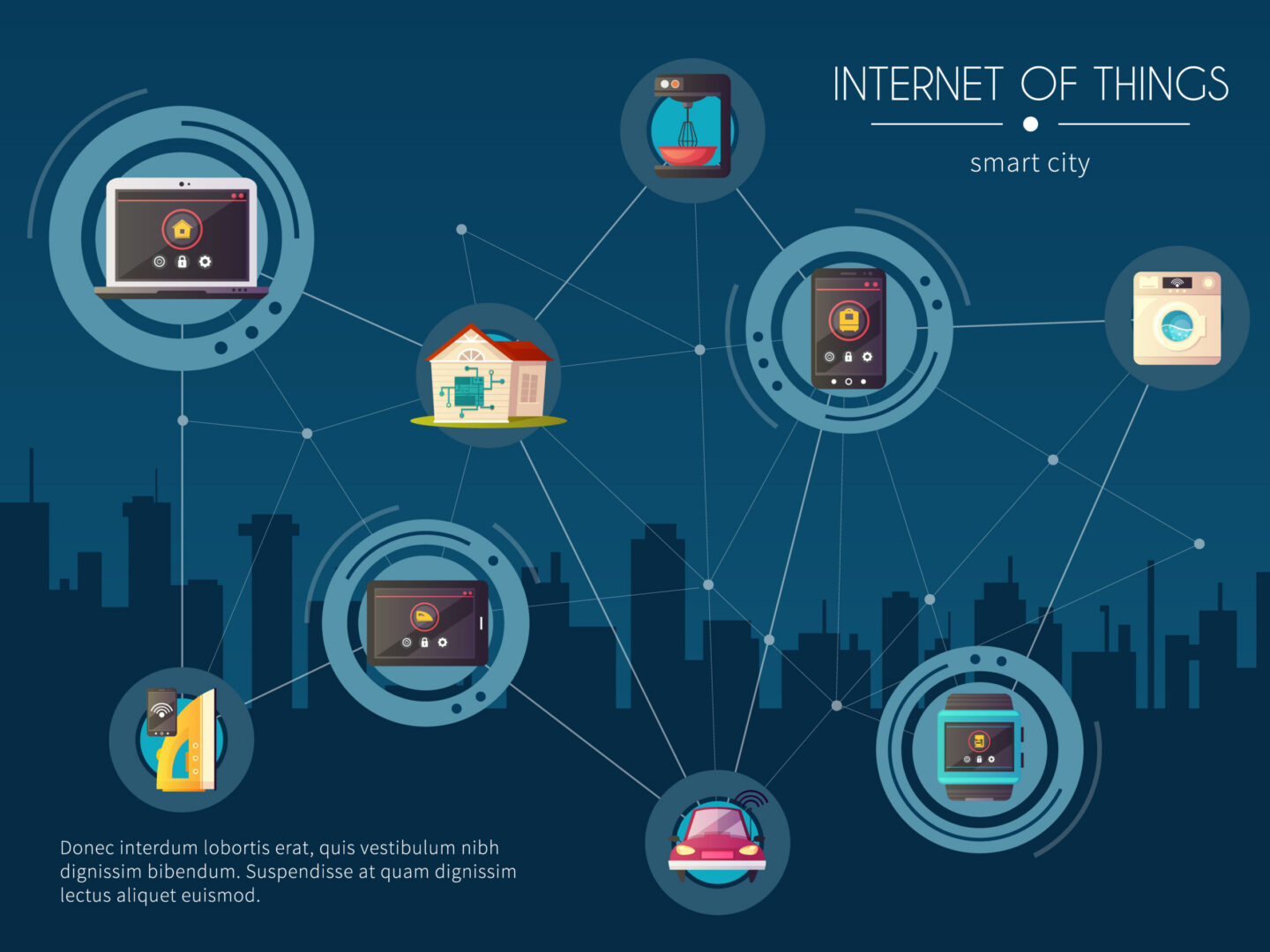
The Internet of Things (IoT) has changed industries worldwide, connecting devices, collecting data, and driving smarter decision-making. From home automation to industrial advancements, Internet of Things companies are at the forefront of this shift. Yalantis offers comprehensive IoT services, including full-cycle development, system integration, advanced analytics, and maintenance, covering industries such as healthcare, manufacturing, and transportation.

Pioneers Driving the IoT Revolution
The Internet of Things is reshaping how we live and work, connecting devices, systems, and people to drive innovation across industries. From smart homes and cities to industrial automation and healthcare, IoT has become a cornerstone of modern technology. Behind this shift are leading Internet of Things companies that build the platforms and infrastructure enabling businesses and individuals to put connectivity to work. This roundup covers ten companies actively shaping that landscape in 2026, along with what to weigh when choosing between them and where the underlying products have changed since these platforms first launched, sometimes substantially.
Best Internet of Things Companies
1. Amazon Web Services (AWS)

Amazon Web Services is a major force in cloud computing, offering robust IoT infrastructure for businesses worldwide. AWS IoT Core enables device management, data collection, and integration with machine learning tools, all on infrastructure that scales without the customer managing servers directly. These capabilities keep AWS among the top internet of things companies driving connectivity at scale.
Headquarters:
- Seattle, Washington
Key Products:
- AWS IoT Core
- AWS IoT Greengrass
Industries Served:
- Healthcare
- Manufacturing
Notable Achievements:
- Recognized as a leader in Gartner’s Magic Quadrant for Cloud IoT Platforms.
- One of the largest IoT device management footprints of any cloud provider.
2. Cisco

Cisco brings advanced networking and cybersecurity expertise to IoT. Their IoT Control Center gives businesses reliable device connectivity and fleet management, making them one of the prominent internet of things companies in the market, particularly for organizations that already run Cisco networking infrastructure.
Headquarters:
- San Jose, California
Key Products:
- Cisco IoT Control Center
- Cisco Edge Intelligence
Industries Served:
- Energy
- Transportation
Notable Achievements:
- Deployed IoT solutions across a large global footprint of countries and carriers.
- Contributed IoT infrastructure to smart city projects internationally.
3. Siemens
Siemens leads the industrial IoT space with solutions built for manufacturing, energy, and smart cities. Its former MindSphere platform has since evolved into Insights Hub, Siemens’ current AI-driven manufacturing platform, which integrates IoT data with predictive analytics to optimize equipment availability, quality, and throughput. This focus makes Siemens a standout among internet of things companies specializing in industrial solutions.
Headquarters:
- Munich, Germany
Key Products:
- Insights Hub (formerly MindSphere)
- Industrial Edge
Industries Served:
- Manufacturing
- Smart Cities
Notable Achievements:
- Recognized by major analyst firms as a leader in industrial IoT platforms.
- Deployed smart grid and manufacturing solutions across dozens of countries.
4. IBM

IBM combines IoT and artificial intelligence to deliver asset management and operations solutions. IBM retired its standalone Watson IoT Platform, folding its capabilities into the broader Maximo Application Suite, which now handles asset monitoring, predictive maintenance, and reliability management for industries like automotive and utilities. Among internet of things companies, IBM stands out for integrating AI directly into asset lifecycle management rather than treating IoT as a separate product line.
Headquarters:
- Armonk, New York
Key Products:
- Maximo Application Suite
- Maximo Asset Monitor
Industries Served:
- Automotive
- Utilities and Energy
Notable Achievements:
- Widely deployed asset management platform across manufacturing and utility operators.
- Recognized for advancing AI-powered asset performance management.
5. Bosch
Bosch delivers IoT solutions across diverse domains, from smart homes to manufacturing. The Bosch IoT Suite offers secure device connectivity and data management for various applications, positioning it among the leading internet of things companies globally, with the added credibility of also being one of the world’s largest manufacturers of the physical sensors IoT systems depend on.
Headquarters:
- Stuttgart, Germany
Key Products:
- Bosch IoT Suite
- Smart Sensors
Industries Served:
- Smart Homes
- Manufacturing
Notable Achievements:
- Recognized for sustainable IoT innovations in energy management.
- Operates one of the world’s largest connected-device ecosystems.
6. Intel

Intel sits at the hardware layer of IoT, providing processors and edge computing silicon that other vendors’ platforms run on top of. Its IoT-focused chipsets enable local data processing for devices in industries like healthcare and retail, where sending every byte to the cloud isn’t fast or private enough.
Headquarters:
- Santa Clara, California
Key Products:
- Intel IoT Platform
- Edge AI Solutions
Industries Served:
- Healthcare
- Retail
Notable Achievements:
- IoT-focused chipsets deployed across billions of connected devices.
- Long-standing partnerships with global tech vendors building on Intel’s edge silicon.
7. GE Vernova

Following General Electric’s 2024 split into three independent companies (GE Aerospace, GE Vernova, and GE HealthCare), the industrial IoT business formerly known as GE Digital now sits inside GE Vernova, focused on energy infrastructure. The old Predix platform has given way to Proficy Industrial Software and Asset Performance Management (APM) tools, which handle predictive maintenance and operational efficiency for power and grid operators.
Headquarters:
- Cambridge, Massachusetts
Key Products:
- Proficy Industrial Software
- Asset Performance Management (APM)
Industries Served:
- Energy
- Power Grid Operations
Notable Achievements:
- Asset Performance Management tools credited with meaningful downtime reduction for energy operators.
- GridOS orchestration software adopted by utilities managing large-scale grid modernization projects.
8. Huawei

Huawei focuses on IoT connectivity and smart city infrastructure. Their earlier OceanConnect platform has since been folded into Huawei Cloud’s IoT Device Access (IoTDA) service, which handles device connectivity, remote management, and rule-based event processing across multiple protocols. Their expertise in 5G technology continues to strengthen their IoT offerings and their standing among internet of things companies.
Headquarters:
- Shenzhen, China
Key Products:
- Huawei Cloud IoT Device Access (IoTDA)
- 5G IoT Solutions
Industries Served:
- Telecommunications
- Smart Cities
Notable Achievements:
- Deployed smart city infrastructure across a large number of global cities.
- A leading provider of 5G-enabled IoT connectivity.
9. PTC
PTC combines IoT with augmented reality to build interactive solutions for industries like manufacturing and retail. Their ThingWorx platform delivers real-time insights and analytics, and remains one of the most established dedicated industrial IoT platforms on the market. Their solutions are widely used for improving operational efficiency and customer engagement, solidifying PTC’s position among internet of things companies.
Headquarters:
- Boston, Massachusetts
Key Products:
- ThingWorx IoT Platform
- Vuforia AR Suite
Industries Served:
- Manufacturing
- Retail
Notable Achievements:
- Recognized for leadership in industrial IoT platforms.
- Widely adopted AR-based training solutions for global manufacturers.
10. Samsung

Samsung leverages its consumer electronics expertise to lead in consumer IoT. Its SmartThings platform connects smart devices for both homes and businesses, spanning appliances, sensors, and third-party accessories under one app. This makes Samsung a prominent name among internet of things companies. Many enterprises now rely on specialized IoT development services to build custom-connected solutions tailored to their own industry requirements rather than relying solely on off-the-shelf consumer platforms.
Headquarters:
- Suwon, South Korea
Key Products:
- SmartThings Platform
- IoT-Enabled Appliances
Industries Served:
- Smart Homes
- Healthcare
Notable Achievements:
- Sold IoT-enabled devices at massive scale across global markets.
- Helped drive mainstream consumer adoption of connected smart home ecosystems.
Consumer vs Industrial IoT: Different Buying Decisions
Not every company on this list competes in the same market, and conflating consumer and industrial IoT leads to bad vendor comparisons. Samsung’s SmartThings and Bosch’s smart home line target individual consumers and small deployments, prioritizing ease of setup and app-based control. Siemens, GE Vernova, and PTC target industrial operators managing thousands of sensors across a factory floor or power grid, where reliability, uptime guarantees, and integration with existing operational technology matter far more than a polished consumer app.
AWS, Cisco, IBM, and Huawei sit in a middle zone, offering infrastructure flexible enough to serve both consumer-scale and industrial-scale deployments depending on how a customer configures it. Know which category your own project falls into before comparing vendors, a platform built for smart thermostats and one built for oil refinery sensors solve genuinely different problems even when both get called IoT.
What to Evaluate Beyond the Product Sheet
Feature lists tell only part of the story when comparing IoT vendors. Device connectivity limits matter once a deployment scales past a pilot, some platforms handle thousands of devices comfortably but get expensive or unstable past tens of thousands. Data residency and compliance requirements matter enormously for healthcare and financial deployments specifically, confirm a vendor’s data centers and certifications match your regulatory obligations before committing.
Vendor lock-in is worth weighing honestly too. A platform built entirely around one cloud provider’s proprietary tools is harder to migrate away from later than one built on open standards like MQTT. That tradeoff isn’t automatically wrong, the proprietary option is often more polished, but go in with eyes open about the switching cost if the relationship sours later. Ask each vendor directly what a migration off their platform would actually involve. A vague or evasive answer is itself useful information.
How Pricing Actually Works Across These Vendors
IoT platform pricing rarely resembles a simple monthly subscription once real deployments are involved. Most of the cloud-based platforms here, AWS, Cisco’s cloud tools, Huawei Cloud, price by connected device count, message volume, or data throughput, which means costs scale directly with deployment size rather than staying flat. A pilot running 50 devices can look inexpensive and then surprise a budget once it scales to 5,000.
The industrial platforms, Siemens Insights Hub, IBM Maximo, GE Vernova’s Proficy and APM tools, and PTC ThingWorx, typically run on enterprise licensing negotiated per deployment rather than published self-serve pricing. Budget for a genuine sales conversation and a pilot period with these vendors rather than expecting a public price list, and factor in implementation and integration costs separately from the software license itself, industrial IoT deployments often cost more to integrate than the platform license does.
Running a Pilot Before Committing to a Vendor
Every vendor on this list will demo well in a sales meeting. What separates a good fit from a costly mistake is a real pilot deployment before signing a multi-year contract. Run a pilot with your actual device hardware, your actual data volume, and your actual network conditions, not the vendor’s polished demo environment, which is tuned to make the platform look effortless.
Set a clear success threshold for the pilot before starting it: a target uptime percentage, a maximum acceptable latency, a specific integration that must work cleanly with your existing systems. Vendors are generally happy to support a structured pilot because it increases their odds of closing the deal if the platform genuinely fits, and a pilot that surfaces real problems now is far cheaper than discovering them after a full rollout.
Case Studies Worth Knowing About
Real deployments tell a more useful story than product marketing does. A large logistics operator using AWS IoT Core to track refrigerated shipping containers can catch a failing compressor hours before spoiled cargo becomes an insurance claim, precisely because AWS’s device management layer flags sensor readings drifting outside a defined range automatically rather than waiting for a scheduled inspection. That kind of early-warning use case is where cloud-scale IoT platforms earn their reputation, not in the sales deck.
On the industrial side, a manufacturer running Siemens Insights Hub across a multi-site factory floor typically starts with a narrow pilot, one production line, one failure mode they already know is costly, before expanding the same predictive maintenance model plant-wide. Vendors who push for a full-site rollout on day one are usually optimizing for their own contract value rather than for a deployment that will actually succeed, and it is worth being skeptical of that pressure regardless of how established the vendor is.
Questions to Bring to a Vendor Sales Call
A short, specific list of questions filters out a lot of sales fluff quickly. Ask what happens to device data during a platform outage, whether devices queue locally or simply lose data. Ask for a reference customer running a deployment similar in size and industry to yours, not just a logo on a slide. Ask directly what the total cost looks like at your projected scale in eighteen months, not just the pilot price quoted today.
Vendors confident in their own platform answer these questions specifically and quickly. Vague or deflected answers to any of the three above are a signal worth taking seriously before signing anything long-term.
Security Considerations Specific to IoT Deployments
IoT devices expand the attack surface of any network they join, often significantly. Unlike a traditional server that gets regular security patches, many IoT devices, particularly cheaper consumer hardware, ship with weak default credentials and infrequent firmware updates. Before selecting any platform on this list, confirm it enforces device authentication, encrypts data in transit and at rest, and supports over-the-air firmware updates so vulnerabilities discovered after deployment can actually be patched.
For industrial deployments specifically, network segmentation between IoT devices and core business systems is not optional. A compromised sensor on an isolated IoT network segment is a contained incident. The same compromised sensor with a direct path to financial or customer data systems is a much bigger problem, and that segmentation decision happens at the network architecture level, not inside the IoT platform itself.
Where IoT Platforms Are Headed
The clearest trend across this list is the shift from raw device connectivity toward embedded AI-driven analytics. Siemens’ rebrand from MindSphere to Insights Hub and IBM’s consolidation of Watson IoT into Maximo both reflect the same underlying move: vendors are packaging predictive maintenance and automated decision-making directly into the platform rather than treating AI as a bolt-on analytics layer purchased separately.
Edge computing is the second clear direction, processing data closer to the device rather than round-tripping everything to the cloud, driven by both latency requirements and the sheer volume of data modern sensor fleets generate. Intel’s edge silicon and AWS’s IoT Greengrass both exist specifically to serve this shift, and expect more platforms to lean further into edge processing as device counts keep climbing.
Common Questions
Is it better to use one vendor for the entire IoT stack, or mix vendors across hardware, connectivity, and analytics? Depends on scale and technical resources. Smaller deployments benefit from a single vendor’s integrated stack, less to configure and fewer integration points to troubleshoot. Larger deployments with dedicated engineering teams often mix vendors deliberately, Intel silicon with an AWS backend and a third-party analytics layer, to avoid being fully dependent on any single company’s roadmap.
How do I know if an IoT platform will scale with my business? Ask vendors directly for their documented device limits and pricing at 10x your current planned deployment size, not just your launch-day numbers. A platform that’s affordable for a 500-device pilot can become dramatically more expensive, or technically strained, at 50,000 devices.
Do I need a specialized IoT development partner, or can my existing dev team handle this? IoT development involves hardware constraints, connectivity protocols, and security considerations that differ meaningfully from typical web or app development. A team without prior IoT experience can absolutely learn, but a specialized partner shortens the timeline and avoids common early mistakes around device provisioning and firmware update strategy.
Why do so many enterprise IoT product names keep changing? Consolidation, mostly. Large tech companies acquire and merge products, rebrand for strategic reasons, or fold standalone platforms into broader suites as their AI and analytics strategies mature. Watson IoT folding into Maximo and MindSphere becoming Insights Hub are both examples of this pattern, and it’s worth checking a vendor’s current product name before signing a contract that references an older one.
Leading the Way in IoT Innovation
The Internet of Things industry is driven by continuous change, with companies like AWS, Cisco, Siemens, and others reshaping their own platforms as fast as the technology itself moves. These leaders don’t just provide connectivity, they’re actively consolidating IoT with AI, edge computing, and asset management into unified platforms that look different year over year. As IoT keeps evolving, expect the specific product names on this list to keep shifting even as the underlying companies stay at the center of the industry.
Interesting Reads
Top 10 Artificial Intelligence Companies
Top 10 Virtual Reality Companies and Augmented Reality Developers