
Finding remote jobs that actually align with European time zones is harder than it should be, mostly because a large share of “remote” listings are quietly US-only once you read the fine print. The fix isn’t a smarter search engine, it’s picking boards that expose location and time-zone filters clearly, and reading each listing’s fine print before you invest an application. This guide lists 15 remote job boards that regularly post EU-friendly roles and how to filter each one for Europe specifically.
The frustration is a familiar one for anyone who’s searched “remote” on a general job site and watched half the results turn out to require US work authorization anyway. That mismatch isn’t a bug in how these boards operate, it’s a byproduct of most listings originating from US-headquartered companies that default to US-only hiring and only sometimes bother to update the filter tags once they open a role to international candidates. Knowing that going in changes how you search: filters help, but reading the actual posting text remains the final check that matters.
One thing worth separating early: “EU-friendly” and “hires EU residents legally” aren’t the same claim. A listing can be open to European time zones for coordination purposes while still requiring you to work through an Employer of Record or have existing authorization to work in a specific country. That distinction matters more than which board you’re browsing, and it’s worth checking before you get emotionally invested in a role.
The EU remote hiring landscape has matured noticeably over the past few years. More companies now use established Employer of Record providers rather than improvising ad hoc contractor arrangements, which is genuinely good news for job seekers: it means fewer surprises around benefits, tax withholding, and termination terms than the earlier wave of remote hiring that treated cross-border employment as an afterthought.
How to Search for EU-Friendly Remote Roles
Use location filters like Europe, EMEA, UK, EU, or the time-zone shorthand CET and UTC directly in your search. Where a board supports a dedicated region filter, start there rather than scanning a general feed and guessing from company names.
When a filter isn’t available, check the listing text itself for time-zone overlap requirements before applying. “Must overlap 4 hours with PST” buried in paragraph three of a posting is a common way US-centric roles get miscategorized as globally remote, and it’s worth catching before you spend time tailoring an application to a role that was never realistically going to work with a European schedule.
Best Remote Job Boards for Europe and EU Time Zones in 2026
1) FlexJobs
FlexJobs screens listings before they go live, which filters out a lot of the vague or outright fake postings that plague open boards, and it includes a meaningful volume of international and EU-eligible roles alongside the US-heavy ones. Location filters combined with saved alerts are worth setting up here specifically since the vetting means fewer wasted clicks per session.
2) We Work Remotely
We Work Remotely posts genuinely global roles at high volume, with region and time-zone notes included on most listings rather than left implicit. Its advanced search supports filtering specifically for Europe, which is worth using rather than scanning the general feed, since the general feed skews toward US-based postings by sheer volume.
3) Remote.co
Remote.co organizes by category rather than region primarily, which means EU-eligible roles are mixed in rather than separated out. Always check the specific location requirement inside each listing rather than assuming category browsing alone tells you enough; EMEA or EU tags, where present, are the fastest signal to look for.
4) Remotive
Remotive is one of the stronger boards here specifically because its filters handle location and time-zone restrictions directly rather than leaving you to infer them from listing text. Filter by Europe or EMEA whenever the option appears, since it does meaningfully narrow the noise compared to a keyword-only search.
5) Working Nomads
Working Nomads curates its feed and maintains a dedicated location filter page, which makes it genuinely useful for narrowing down to EU-specific remote roles rather than sifting a general list yourself. The Europe location page specifically is worth bookmarking as a recurring check.
6) Remote OK
Remote OK uses tags and region filters together, and a meaningful share of its listings explicitly note Europe-only or EMEA requirements rather than staying vague. Searching directly for Europe or EU tags surfaces these faster than browsing the tech-heavy general feed.
7) Jobspresso
Jobspresso is curated and smaller in volume than the larger boards, but many of its listings include location-specific notes that spell out region eligibility clearly rather than leaving it ambiguous. Worth checking specifically for that clarity, even given the lower posting frequency.
8) JustRemote
JustRemote keeps its filtering simple, which makes it a reasonable supplemental board rather than a primary source. Adding Europe-specific keywords directly into the search box compensates for the lighter filter set and surfaces EU-friendly roles that a passive scroll would miss.
9) SkipTheDrive
SkipTheDrive requires no signup and supports quick scanning with alerts, useful for broad EU-eligible scanning across categories rather than deep filtering within one. Searching with EU or EMEA keywords directly narrows what would otherwise be a fairly unfocused browse.
10) Himalayas
Himalayas pairs filters with detailed company profiles, which is genuinely useful for identifying which companies are actually set up to hire in Europe versus which ones just say “remote” without the underlying legal infrastructure to back it up. Check the company profile before applying, not just the listing itself.
11) Wellfound
Wellfound is startup-focused and includes a genuine subset of EU-remote roles, though the volume skews smaller than the general boards above. Filtering by location and company stage together narrows things down to startups specifically set up to hire across European borders.
12) NoDesk
NoDesk curates listings and ships a newsletter that often includes global roles alongside its site listings, which makes it a solid weekly scan rather than a daily check. Treat the newsletter as a scheduled sprint rather than letting it accumulate unread.
13) Remote.com Jobs
Remote.com Jobs runs on a global hiring platform built specifically around cross-border employment infrastructure, which makes it one of the stronger options here for EU applicants specifically since international hiring is the platform’s core business, not an afterthought. Check time-zone overlap notes on each listing before applying.
14) Dynamite Jobs
Dynamite Jobs focuses on remote-first companies with real category depth, and EU-friendly listings show up regularly within those categories. Time-zone keywords in search help surface the EU-eligible subset faster than browsing categories alone.
15) People-First Jobs
People-First Jobs curates around remote-first, culture-conscious companies, which is useful if EU time zone alignment matters to you alongside genuinely async-friendly practices rather than just nominal remote status. Pair it with a larger board for volume, since People-First trades volume for that curation.
The legal side most boards don’t mention
A listing can be genuinely open to European candidates and still be complicated to actually take, and this is where a lot of EU job seekers get burned after an otherwise smooth application process.
Most US and UK companies hiring across EU borders use one of two structures: an Employer of Record that legally employs you in your country on the company’s behalf, or a contractor arrangement where you invoice as a freelancer or through your own registered business. Neither is inherently worse, but they carry very different tax, benefits, and job security implications, and it’s worth asking directly which structure a company uses before you’re deep into a final-round interview and emotionally committed to the outcome.
Contractor arrangements in particular deserve scrutiny under EU labor law. Several EU countries have specific rules around what counts as disguised employment, a contractor role that functions like full-time employment in every practical way except the paperwork, and misclassification carries real risk for the worker, not just the company. If a “contractor” role expects your full-time hours, exclusive availability, and day-to-day direction the way an employee relationship would, ask how the company is handling that classification question before signing anything.
Time zone overlap: what actually works in practice
CET sits roughly six hours ahead of US Eastern and nine ahead of US Pacific, which shapes what a genuinely workable overlap looks like more than most job postings acknowledge directly.
A four-hour overlap requirement, common in postings that don’t specify further, usually means either your morning or your evening gets consumed by synchronous meetings with a US-based team, depending on which coast they’re concentrated on. Ask specifically which hours the overlap is expected to cover before accepting an offer; “four hours of overlap” sounds identical whether it means a reasonable 9am-1pm CET block or a genuinely rough 6-10pm CET block eating into personal time every day.
Companies with team members already spread across the UK, continental Europe, and the US tend to have already solved this problem with rotating meeting times or asynchronous defaults, and that’s usually a positive signal during the interview process. A company still figuring out EU-US coordination for the first time is more likely to default to “whatever’s convenient for the US team,” which is worth probing directly rather than assuming it’ll sort itself out after you start.
A useful interview question that surfaces this directly: ask how the team currently handles a decision that needs input from both the EU and US sides during a normal week. A specific, concrete answer, a documented async decision process, a rotating meeting slot, a clear escalation path, signals a team that’s actually solved the coordination problem. A vague answer, or one that boils down to “we figure it out,” is worth weighing against everything else the offer includes.
Getting paid: currency, invoicing, and VAT
Compensation structure for EU remote roles varies more than a single number on a job posting suggests, and the details matter once an offer is actually on the table.
Salary quoted in USD from a US company doesn’t automatically mean you’re paid in USD; check whether the company converts to EUR or GBP at the time of each payment, since currency fluctuation over a year can meaningfully shift your actual take-home versus what looked like a fixed number when you signed. Ask directly whether the number quoted is gross or net, and whether currency conversion happens at a fixed rate or a floating one tied to payment date.
If you’re working as a registered freelancer or through your own limited company rather than as an EOR employee, VAT treatment on services sold to a company outside your country follows specific rules depending on your country and the client’s location, commonly reverse-charge VAT within the EU, different treatment again for a client outside the EU entirely. This isn’t something to guess at; a local accountant or tax advisor familiar with cross-border freelance income is worth the consultation fee before you sign a first invoice, since getting it wrong retroactively costs far more than getting it right upfront.
Which boards to prioritize based on your specific situation
Checking fifteen boards daily isn’t realistic for most job seekers, and the right subset depends on what you’re actually optimizing for.
If minimizing wasted applications to US-only roles mistakenly labeled remote matters most, FlexJobs and Remotive do the most upfront filtering work for you, since both support genuine location and time-zone filters rather than keyword search alone. If raw volume matters more because you’re early in a broad search, We Work Remotely and Remote OK post at higher frequency and are worth a daily check even though you’ll filter out more US-only noise manually.
If you’re specifically concerned about the legal and structural side, whether a role uses an EOR or contractor model, Remote.com Jobs is worth prioritizing since cross-border employment infrastructure is its core specialty rather than a secondary feature. And if a weekly cadence suits your search better than daily scanning, NoDesk’s newsletter format turns the process into a scheduled task rather than an open-ended scroll.
Presenting yourself as a strong EU-based remote candidate
A resume aimed at a US-headquartered company hiring across EU time zones should answer a question the company is quietly worried about before they ask it directly: will coordination with this person actually work.
State your time zone explicitly near the top rather than assuming a hiring manager will infer it from your location, and give a concrete overlap window with common US working hours if you can offer one, even a modest one. “CET, available 2-6pm CET for synchronous calls” is a small detail that removes a scheduling question a US-based hiring manager would otherwise have to raise themselves, and answering it before it’s asked reads as competence rather than mere availability.
If you’ve previously worked with a distributed team spanning European and US time zones specifically, name that experience directly rather than folding it into a generic “worked remotely” line. Companies that have been burned before by a hire who technically worked remote but never actually solved the coordination problem are screening hard for evidence that you’ve done this specific thing successfully before, not just that you’re comfortable with a laptop and a decent internet connection.
Common questions from EU job seekers
Do I need a specific visa to work remotely for a US company while living in the EU?
Generally no, if you’re an EU citizen residing in your own country and working for a foreign company as a contractor or through an EOR, you’re not crossing a border to work, you’re providing services from home. The picture changes if you’re a non-EU citizen residing in an EU country, where your existing residence permit’s work conditions matter directly; check those conditions specifically rather than assuming remote work for a foreign employer is automatically covered.
Is it worth applying to a role that doesn’t explicitly mention Europe but says “remote, global”?
Worth a shot, but verify before investing real time. “Remote, global” sometimes genuinely means anywhere, and sometimes means “remote within the US with occasional exceptions we haven’t bothered to specify.” A quick message to the recruiter asking directly whether EU-based candidates are eligible saves you from tailoring a full application to a role that was never actually open to you.
How much should time zone overlap concerns affect which roles I apply to?
Weigh it against how synchronous-heavy the role actually is. A role built around deep individual work with occasional check-ins tolerates a wider time zone gap than one built around constant real-time collaboration, pair programming, live customer calls, fast-moving support queues. Read the day-to-day description in the posting for cues about which category a role falls into before assuming any EU-eligible role will feel the same to work.
Build Your Own Job Board (Bonus)
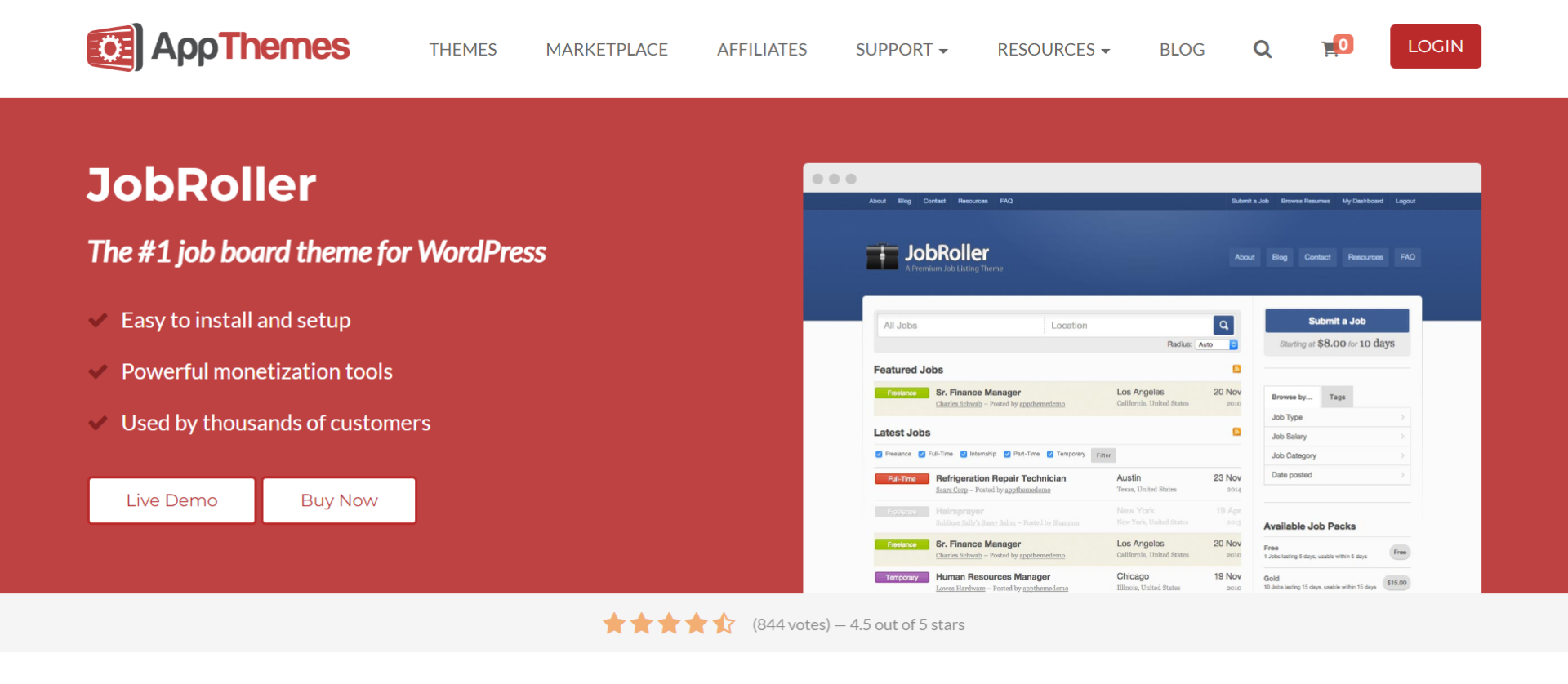
If you want to build a Europe-focused remote job board with WordPress, start with a job-board-ready theme, install a job board plugin, and create location filters for EU or EMEA time zones. Add email alerts to keep candidates engaged. For help with setup, contact Wbcom Designs and we will guide you through the build.