
Finding the right SEO tools to manage client projects effectively matters more than most marketers think about upfront. SE Ranking and Ahrefs are both well known, but they serve different budgets and different depths of work. I’ve used both extensively across dozens of client accounts over the past few years, and the honest answer isn’t “one beats the other.” It’s that they solve different problems, and picking wrong means either overpaying for depth you don’t use or underpaying for depth you actually need. Here’s where each one actually earns its keep.
Why SE Ranking Is My Daily Driver
Rank Tracking Made Simple
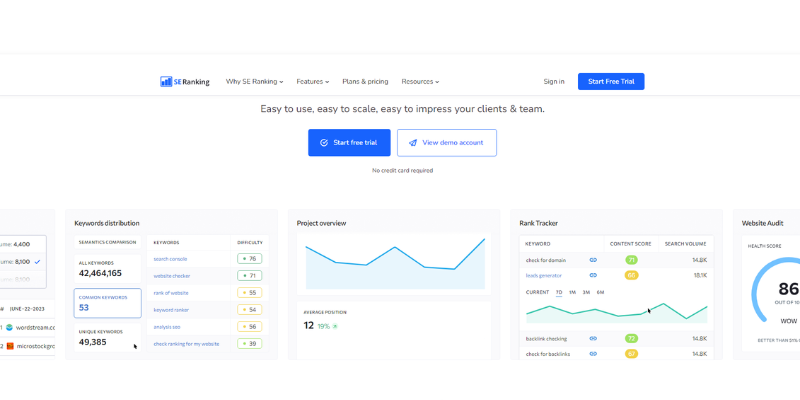
SE Ranking‘s rank tracker is straightforward to set up and manage, keyword rankings across locations and search engines, updated frequently enough that I trust the data without double-checking it manually.
Thorough Website Audits
SE Ranking’s audit tool digs through a site and flags technical issues dragging down SEO performance, with actionable fixes rather than just a list of problems. Genuinely saves time across multiple client projects.
Competitor Research
Shows what competitors rank for and their backlink profiles, useful for spotting real opportunities rather than guessing at strategy.
PPC Insights: An Underrated Feature
The PPC analysis tool gets overlooked, but it lets me view paid and organic performance together, a more complete picture of a client’s overall search strategy than looking at either alone.
Where Ahrefs Stands Out

Keyword Research
Ahrefs‘s keyword data depth is hard to match, particularly for niche, long-tail terms that matter for a specific audience rather than broad volume plays.
Backlink Analysis
Ahrefs’ real strength. The database is vast and it grades link quality, not just quantity, which matters more for understanding actual impact on a site’s authority.
Content Explorer
Useful for finding high-performing content across niches, both for content ideation and for understanding what’s actually resonating with an audience right now.
Getting Started: Onboarding and Learning Curve
Nobody talks enough about how long it actually takes to become productive in a new SEO tool, and it’s a real cost when you’re billing client hours. SE Ranking’s interface maps closely to how most marketers already think about SEO work, projects, keywords, audits, competitors, laid out in a way that doesn’t require a tutorial to navigate. I had a junior team member fully self-sufficient in it within a single afternoon.
Ahrefs takes longer to feel natural, not because it’s badly designed, but because it packs in more depth and more ways to slice the same data. Site Explorer alone has enough filters and report types that a new user can spend an hour just exploring what’s available before running an actual analysis. That depth is exactly why Ahrefs earns its reputation, but it’s worth budgeting real ramp-up time for anyone new to it, especially if they’re expected to produce client-ready reports quickly.
Reporting and Client Communication
Half the value of any SEO tool for agency work isn’t the raw data, it’s how easily that data turns into something a client actually understands. SE Ranking’s white-label reporting is one of its stronger features for this. Reports are simple to brand, schedule, and automate, so clients get a consistent monthly update without me manually building a deck every time.
Ahrefs’ reporting has improved over the years but still leans more toward exporting raw data than building a polished client-facing narrative out of the box. I usually end up pulling numbers from Ahrefs into a separate reporting tool or dashboard when a client needs the deeper keyword or backlink story explained visually. That’s not a dealbreaker, but it’s an extra step SE Ranking mostly skips.
API Access and Integrations
Both tools offer API access, but they serve different purposes in practice. SE Ranking’s API is straightforward for pulling rank tracking and audit data into a custom dashboard or client portal, which matters if you’re managing enough accounts that manual exports become a bottleneck. Ahrefs’ API, tied to its Research API credits on higher plans, is built more for pulling large volumes of keyword and backlink data programmatically, useful for agencies or in-house teams building their own tools on top of Ahrefs’ dataset rather than just checking numbers manually.
If API access is a genuine requirement rather than a nice-to-have, check current credit limits and rate limits on whichever plan you’re considering before committing. Both companies have adjusted API allowances more than once as pricing tiers shifted, so what a plan included a year ago isn’t necessarily what it includes today.
Data Freshness and Update Frequency
How often the underlying data actually refreshes matters more than most feature comparisons give it credit for. SE Ranking’s rank tracking updates daily on most plans, which is frequent enough to catch algorithm-update fallout or a competitor’s sudden ranking jump without waiting a week to notice. Its backlink index updates less aggressively than Ahrefs’, which is the tradeoff for the lower price point.
Ahrefs built its reputation partly on crawl frequency and index size for backlinks specifically, and that reputation is earned. New backlinks tend to show up in Ahrefs faster and more completely than in most competing tools, SE Ranking included. If your work depends on catching new links quickly, whether you’re monitoring your own link-building campaign or watching what a competitor is doing, that speed difference is real and it’s the main reason Ahrefs still commands premium pricing even against cheaper alternatives.
Common Mistakes Marketers Make Choosing Between Them
The most common mistake I see is picking a tool based on which one a favorite YouTuber or blogger recommends rather than an honest look at daily workflow. Ahrefs gets recommended constantly because its brand recognition is strong and its free educational content is genuinely excellent, but that doesn’t mean every marketer needs its full depth. Plenty of freelancers buy into Ahrefs’ higher tiers, use maybe a third of what they’re paying for, and never notice because they never compared it against what a cheaper tool would have covered.
The second mistake runs the opposite direction: sticking with a familiar cheaper tool well past the point where it’s actually limiting real work. If you’re regularly hitting walls on keyword depth or backlink data and just working around it instead of upgrading, that workaround has a cost too, usually in the form of slower turnaround or weaker strategic recommendations to clients who are paying for better insight than the tool is currently giving you.
The fix for both mistakes is the same. Track what you’re actually using versus what you’re paying for every few months, honestly, not just at renewal time when the invoice shows up. Tools that made sense at ten client accounts don’t automatically stay the right fit at fifty, and the reverse is true too, a scaled-back solo practice doesn’t need agency-tier pricing just because it used to.
A Direct Comparison
Pricing has shifted enough since this post was first written that the old “SE Ranking is the budget option” framing needs an update: SE Ranking’s Core plan now starts around $103/month billed annually, Ahrefs has added a genuinely cheap Starter tier at $29/month and a limited free option through Ahrefs Webmaster Tools, though that free option only covers sites you personally own and verify, not competitor research. Neither is simply “the affordable one” anymore, it depends more on which specific features you need than raw price.
- SE Ranking: Better for freelancers and small agencies who want rank tracking, audits, and competitor research in one straightforward interface, without needing Ahrefs’ full keyword/backlink depth.
- Ahrefs: Better when keyword research or backlink analysis is the actual bottleneck in your work, its depth there still outclasses SE Ranking’s.
Also Read: Can You Undelete A WordPress Category
Team Size and Workflow Fit
The right tool changes depending on how many people are actually touching it day to day. A solo freelancer managing three or four client accounts rarely needs Ahrefs’ full depth and often finds SE Ranking’s simpler interface faster to work in without sacrificing much capability that actually gets used. A small agency with a couple of specialists splitting rank tracking, audits, and content strategy across different people benefits more from having both tools available, SE Ranking for the daily operational work and Ahrefs pulled in specifically when a project needs deeper keyword or link analysis.
Larger in-house SEO teams tend to lean harder toward Ahrefs simply because the volume of keyword and backlink work justifies the higher price point and the steeper learning curve pays for itself once the whole team is fluent in it. If you’re a team of one or two, weigh the ongoing subscription cost against how often you’d genuinely use Ahrefs’ deeper features versus just wanting them available “just in case.” That distinction is where a lot of marketers overspend on tools they don’t fully use.
Switching Tools Without Losing Historical Data
One thing I wish someone had told me earlier: switching your primary SEO tool mid-project means losing historical ranking data unless you plan for it. Neither SE Ranking nor Ahrefs exports a clean, complete history to hand off to the other, so if you’re currently on one and considering a switch, start tracking your key metrics in the new tool alongside the old one for at least a month before fully cutting over. That overlap period lets you build a baseline in the new tool while still having the old data available for client reporting during the transition.
This matters more for agencies reporting monthly ranking trends to clients than for solo practitioners doing more ad-hoc work. A client who’s used to seeing a twelve-month ranking trend line gets understandably nervous if that history suddenly resets to zero because of a tool switch they didn’t ask for and don’t understand. A month of parallel tracking avoids that awkward conversation entirely.
Also worth checking before switching: whether your current tool locks you into an annual contract with a real penalty for early cancellation, versus a month-to-month arrangement you can walk away from without much friction. Both SE Ranking and Ahrefs offer meaningfully cheaper pricing on annual billing, which is worth it if you’re confident in the tool long-term, but it does reduce your flexibility to switch quickly if your needs change sooner than expected.
Using Both Together
SE Ranking is my primary tool, day-to-day rank tracking, audits, competitor monitoring. When I need to go deeper on keyword research or build out a detailed backlink profile, that’s when Ahrefs comes in. Not an everyday tool for me, but the one I trust when the project actually calls for that extra layer of data.
In practice this means most client accounts live entirely inside SE Ranking, with Ahrefs pulled out for specific, bounded tasks: a competitor backlink audit before a new client engagement starts, a deep keyword research pass at the start of a content strategy, that kind of thing. Running both subscriptions costs more than running just one, obviously, but the combined cost still comes in lower than what a single Ahrefs Standard-tier subscription would run alone, while covering more ground day to day than Ahrefs’ own lower tiers would on their own.
Pros and Cons
SE Ranking
Pros:
- Rank tracking and audit tools that are genuinely simple to use.
- Clean interface, low learning curve.
- PPC insights combining paid and organic in one view.
- Strong white-label reporting for agencies managing multiple clients.
Cons:
- No longer the clear budget option, current pricing starts around $103/month.
- Advanced features require an upgrade to a higher tier.
- Support response times can lag.
Ahrefs
Pros:
- Keyword research depth that’s hard to match elsewhere.
- The most detailed backlink data in the industry.
- Content Explorer is genuinely useful for content strategy, not just link building.
- Now has a $29/month Starter tier, lowering the entry point considerably.
Cons:
- Full-featured plans (Standard and above) still run $249+/month.
- The interface has a real learning curve given how much it packs in.
- No trial on the paid plans, and the free Webmaster Tools option only covers sites you own.
What I’d Tell a Marketer Just Starting Out
If someone’s picking their first serious SEO tool and budget is genuinely tight, start with SE Ranking’s Core plan or Ahrefs’ new Starter tier rather than jumping straight to a higher tier “to be safe.” Both entry points cover more than enough for a first year of real client work, and it’s far easier to upgrade once you’ve actually hit a specific limitation than to pay for headroom you’re not using yet.
Pay attention to which specific limitation you hit first, because it tells you which tool to grow into. If you keep running into keyword or backlink depth that Ahrefs’ higher tiers would solve, that’s your signal. If you’re mostly frustrated by reporting friction or wishing rank tracking felt more automated, SE Ranking’s higher tier is probably the better next step. Either way, don’t upgrade based on a feature list alone. Upgrade based on a limitation you’ve actually run into on real client work.
One more thing worth mentioning for anyone brand new to SEO tooling generally: neither tool replaces actually understanding SEO fundamentals. I’ve seen marketers buy the most expensive plan available assuming better data automatically means better results, and then get frustrated when rankings don’t move despite the fancy dashboard. Both SE Ranking and Ahrefs are genuinely good at what they measure, but they measure, they don’t strategize for you. The tool surfaces the data. What you do with that data, which keywords to actually target, which technical issues to prioritize fixing first, which backlinks are worth chasing, still comes down to judgment that no software replaces.
That’s also why I’d caution against tool-hopping every time a new SEO platform launches with flashy marketing. Both SE Ranking and Ahrefs have been around long enough to have genuinely mature feature sets, stable APIs, and support teams that have seen every edge case a working marketer runs into. A newer tool might look impressive in a demo, but demos don’t show you what happens six months into daily use, when edge cases pile up and you need a support team that actually knows the product. Staying with an established tool for a year or two, learning its quirks deeply, usually beats chasing whatever launched most recently on Product Hunt.
Where I’ve Landed After Using Both

I use both. SE Ranking handles most day-to-day work; Ahrefs comes in for the deeper keyword and backlink dives. That combination keeps my workflow efficient without paying for capability I’m not using most days. Neither tool is objectively “the best SEO tool,” despite what plenty of listicles will tell you. The best tool is the one that matches how you actually work, how many accounts you’re managing, and how deep your specific projects genuinely need to go.
Also Read: How To Mask URL For Subdomain In WordPress
Trying SE Ranking
SE Ranking offers a 14-day free trial, no credit card required, worth using to check the interface and feature set fit your workflow before committing to a monthly plan.
FAQ
1. Which is more affordable, SE Ranking or Ahrefs?
Neither is clearly cheaper anymore. SE Ranking starts around $103/month; Ahrefs now has a $29/month Starter tier and a limited free Webmaster Tools option below its $129+/month Lite plan. Compare based on which features you actually need, not just sticker price.
2. Can I use SE Ranking for competitor analysis?
Yes, it tracks competitor keywords and backlinks and surfaces where they’re outranking you.
3. Is Ahrefs better for backlink analysis?
Yes, its database and link-quality grading are still the industry benchmark.
4. Which is easier for beginners?
SE Ranking’s interface is more approachable. Ahrefs packs in more, which means more to learn upfront.
5. Can I try SE Ranking before paying?
Yes, a 14-day free trial with full feature access.
6. Is it worth paying for both tools at the same time?
For agencies managing several client accounts, often yes, since Ahrefs’ deep dives typically happen a few times per project rather than daily. Solo freelancers with a handful of accounts can usually get by on SE Ranking alone and add Ahrefs’ Starter tier only for specific projects that need it.
7. Does either tool offer white-label reporting for agencies?
SE Ranking’s white-label reporting is more built-out and easier to automate. Ahrefs supports exports and some reporting features but generally needs more manual work to turn into a polished client-facing report.