
Finding the right design agency can feel like navigating a maze, with countless options and varying expertise. But the truth is, the right design partner can be a game-changer for your business. Whether you’re looking to refresh your brand, enhance your website, or create eye-catching marketing materials, a top-tier design agency can transform your vision into reality. This post looks at what makes the best design agencies stand out, from their creative approach to their ability to understand and communicate your brand’s story effectively, then walks through the agencies worth knowing about for your next project.

Why Design Quality Actually Affects the Bottom Line
It’s tempting to treat design as a cosmetic layer applied after the real business decisions have been made. In practice, the businesses that treat design as a strategic function tend to see it show up in harder metrics. A clearer visual identity reduces the cognitive effort a new customer spends figuring out what a company does and whether to trust it, which shows up as faster conversion on a landing page or product page. Consistent brand application across touchpoints, packaging, website, support emails, social presence, builds the kind of recognition that lowers customer acquisition costs over time, because people start recognizing the brand before they’ve even read a word of copy.
None of that happens automatically just by hiring a well-known agency name. It happens when the agency relationship includes enough context about the business, its customers, and its constraints that the resulting design actually reflects strategy rather than trend-chasing. That is the real difference between an agency that produces attractive deliverables and one that produces work that moves a business forward.
What Do Design Agencies Do?
Design agencies offer a broad range of creative services to help businesses enhance their visual identity, user experience, and overall brand presence. Here’s a breakdown of their key functions:
Brand Identity Development
- Craft logos, color schemes, and typography that reflect a brand’s essence.
- Develop guidelines to ensure consistent branding across platforms.
Website and UX/UI Design
- Create visually appealing and user-friendly websites.
- Focus on seamless navigation and enhanced user experiences.
Graphic Design
- Design marketing materials such as brochures, banners, and infographics.
- Create custom illustrations and visual assets for online and offline campaigns.
Product Design
- Develop designs for physical or digital products, ensuring functionality and aesthetics.
- Integrate user feedback to refine designs.
Marketing Campaign Design
- Conceptualize and design creatives for advertisements, social media, and email campaigns.
- Align visuals with marketing goals to increase engagement.
Not every agency does all of this well. Some studios specialize narrowly in brand identity and leave website builds to a separate development partner. Others are full-service and can carry a project from a first logo sketch through a finished, coded website. Knowing which type of agency you actually need before you start reaching out saves a lot of time in the vetting process.
It is also worth understanding where a given agency sits on the spectrum between pure creative execution and strategic consulting. Some firms will hand you polished deliverables based on a brief you provide. Others push back on the brief itself, running workshops and research to challenge assumptions before any visual work starts. Neither approach is wrong, but they produce very different working relationships, timelines, and price points, so it helps to know which one you are actually hiring before the contract is signed.
What to Look for in Top Design Agencies
1. Strong Portfolio: Look for diverse and high-quality past projects that demonstrate creativity and versatility.
2. Expertise in Your Industry: Choose agencies with experience working within your industry for tailored design solutions.
3. Creative and Innovative Approach: Ensure they bring fresh ideas and can push boundaries with their design concepts.
4. Effective Communication: Look for agencies that actively listen to your goals and maintain transparent communication throughout the project.
5. Understanding of User Experience (UX): Prioritize agencies that focus on creating intuitive and user-friendly designs for digital platforms.
6. Collaborative Process: Choose agencies that value collaboration and are open to feedback, ensuring your vision is executed properly.
Top Design Agencies
1. Pentagram

Pentagram, an iconic name in the design world, excels in graphic design, packaging, and identity creation. Their projects range from minimalist logos to elaborate branding systems, and the firm remains structured as a partnership of independently practicing partners rather than a single hierarchical agency, which is part of why their output stays so varied from project to project.
Notable Clients: Mastercard, Rolls-Royce, Windows
Leadership Experience Score: 9.5/10
Company Size: 200+ professionals
Years in Business: 50+
Headquarters: London, UK
2. IDEO

Known for their human-centered design approach, IDEO transforms complex problems into innovative design solutions. Their expertise spans product design, branding, and user experiences, and the firm continues to publish research on design methodology through IDEO U, its education arm, alongside its client consulting work.
Notable Clients: Apple, Nike, Microsoft
Leadership Experience Score: 9.4/10
Company Size: 300+ professionals
Years in Business: 40+
Headquarters: Palo Alto, California, USA
3. Landor

Specializing in branding and strategy, Landor creates memorable brand identities that resonate with audiences. The agency traded under the name Landor & Fitch for several years following its 2019 merger with Fitch, before consolidating back to the single Landor name as part of a wider WPP brand simplification. Their designs blend creativity with strategic insights.
Notable Clients: Coca-Cola, FedEx, BMW
Leadership Experience Score: 9.3/10
Company Size: 400+ professionals
Years in Business: 75+
Headquarters: New York, USA
4. Sagmeister & Walsh

This boutique agency is celebrated for its bold and experimental design work, focusing on projects that push creative boundaries. As a design partnership between Stefan Sagmeister and Jessica Walsh, it stays deliberately small compared to the network agencies on this list, taking on fewer projects but investing heavily in each one.
Notable Clients: Adobe, The New York Times, Snapchat
Leadership Experience Score: 9.2/10
Company Size: 50+ professionals
Years in Business: 30+
Headquarters: New York, USA
Also Read: Top 10 Social Media Marketing Agencies 2025
5. MetaDesign

MetaDesign is renowned for its ability to translate complex brand stories into clear, impactful visual identities. The consultancy has operated continuously since 1979 and today sits within Publicis Groupe’s network of creative agencies, running offices across multiple continents.
Notable Clients: Volkswagen, Apple, Adobe
Leadership Experience Score: 9.1/10
Company Size: 250+ professionals
Years in Business: 40+
Headquarters: Berlin, Germany
6. Design Bridge and Partners

Design Bridge and Partners focuses on integrating branding with storytelling, creating compelling narratives for global brands. WPP folded its Superunion agency into Design Bridge in 2022, and the combined firm now operates under the Design Bridge and Partners name across its global studio network.
Notable Clients: FIFA, Huawei, Unilever
Leadership Experience Score: 9.0/10
Company Size: 500+ professionals
Years in Business: 60+
Headquarters: London, UK
7. Wolff Olins
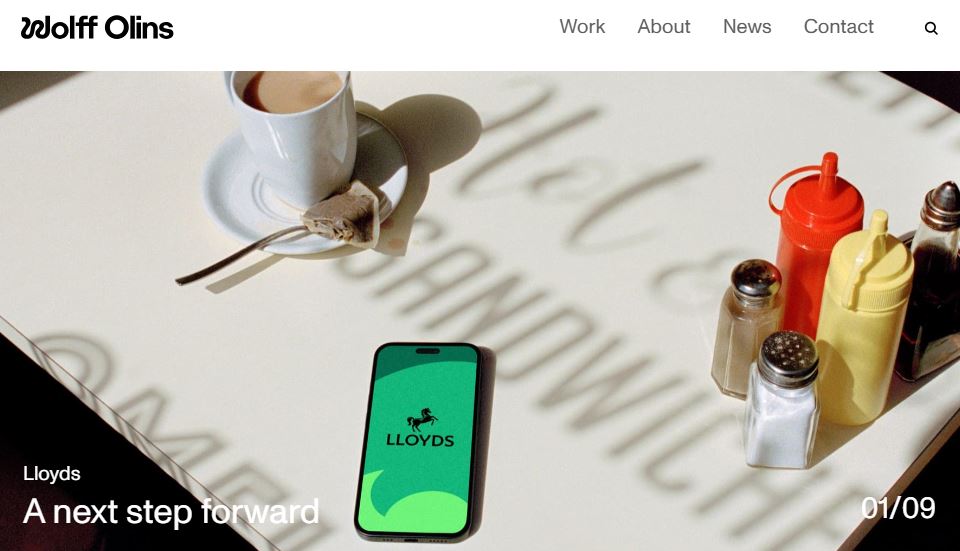
Known for their innovative approach to brand strategy and design, Wolff Olins specializes in creating transformative brand experiences. The agency has long positioned itself around ambitious rebrands for large organizations navigating a major shift in direction rather than routine identity refreshes.
Notable Clients: Google, Uber, Sony
Leadership Experience Score: 8.9/10
Company Size: 300+ professionals
Years in Business: 50+
Headquarters: London, UK
8. Chermayeff & Geismar & Haviv

This legendary agency is behind some of the world’s most iconic logos and has consistently delivered timeless designs. Its identity work from the 1960s and 1970s, including marks still in active use today, is frequently taught in design school curricula as a reference point for logo longevity.
Notable Clients: NBC, National Geographic, Mobil
Leadership Experience Score: 8.8/10
Company Size: 100+ professionals
Years in Business: 60+
Headquarters: New York, USA
9. Frog Design

Frog Design specializes in blending technology with design, focusing on product innovation and brand strategy. Since being acquired by Capgemini in 2019, the studio now operates as frog, part of Capgemini Invent, continuing its long-running work on physical and digital product design.
Notable Clients: Disney, HP, GE
Leadership Experience Score: 8.7/10
Company Size: 500+ professionals
Years in Business: 50+
Headquarters: San Francisco, California, USA
10. Interbrand
Interbrand is a global brand consultancy handling brand strategy, naming, and identity design for large corporate clients.
Headquarters:
New York, NY, with offices worldwide.
Years in Business:
Founded in 1974.
Where Wbcom Designs Fits In
Wbcom Designs is a WordPress plugin and theme development company, not a brand design consultancy, and does not run brand identity or naming engagements the way the firms above do. It does not belong in a design agency ranking built around global branding consultancies. Its real specialty is WordPress community, membership, and LMS platforms; for brand and identity design, the agencies above are the direct fit.
How to Evaluate a Design Agency’s Portfolio
A portfolio full of beautiful screenshots tells you less than it seems to. Look past the visuals and ask what business problem each project actually solved. A rebrand case study that only shows a new logo and color palette, with no mention of what changed in customer perception or business results, is a weaker signal than one that walks through the reasoning behind each decision.
Pay attention to range as well. An agency whose entire portfolio looks like variations on the same aesthetic may struggle to adapt to a brand voice that doesn’t fit their house style. Conversely, a portfolio with genuinely distinct solutions across different clients suggests a team that starts from your brand’s specific needs rather than a template they reuse.
It also helps to check how recent the work is. A portfolio dominated by projects from five or more years ago may not reflect the team currently doing the work, especially at agencies with high staff turnover. Ask directly who on the current team led the projects you’re most impressed by.
Red Flags When Reviewing Proposals
A few patterns in a proposal or pitch are worth treating as warning signs rather than dismissing as minor. Vague deliverables, a proposal that says “brand strategy” without specifying what documents or assets you’ll actually receive, often leads to scope disagreements later. Pricing that seems dramatically lower than every other agency you’ve spoken with usually means either junior staff doing senior-level work, or a scope that will expand into costly add-ons once the project starts.
An agency that can’t clearly explain their process, how research turns into strategy, how strategy turns into concepts, how concepts get refined into final assets, is often winging it project by project rather than running a repeatable, reliable method. And be cautious of any agency unwilling to put revision limits, timelines, and ownership of final files in writing before you sign.
How Much Do Design Agencies Cost?
Pricing varies enormously depending on agency size and scope. A boutique studio taking on a small logo and brand identity project might charge a flat project fee in the low five figures. A full network agency handling a global rebrand, new packaging system, and multi-market rollout can run into the high six or seven figures once research, strategy, design, and implementation across markets are all included.
Smaller businesses are often better served by a boutique or mid-size agency, or a specialist like Wbcom Designs for WordPress-centric brand and web work, rather than a large network agency built around enterprise retainer budgets. Matching agency size to project size matters as much as matching creative style.
In-House Design Team vs. Hiring an Agency
An in-house team gives you constant availability and deep familiarity with your brand, which suits companies that need a steady stream of smaller design work, social assets, ad creative, minor web updates. An agency brings a wider range of specialist skills, an outside perspective that catches blind spots an internal team can miss, and the ability to scale up quickly for a major project like a full rebrand or a new product launch.
Many mid-size and larger companies run both, using an in-house team for day-to-day execution and bringing in an agency for strategic, high-stakes work like a rebrand, a major campaign, or a new market launch where outside expertise and objectivity carry real weight.
Signs It’s Time to Switch Design Agencies
A few warning signs suggest a client-agency relationship has run its course. Turnaround times keep slipping without a clear explanation. The same senior creative director who pitched the account has been replaced by junior staff you’ve never met. Feedback rounds produce smaller and smaller improvements, suggesting the agency has settled into a comfortable rhythm rather than pushing the work forward. If any of these patterns persist for more than a couple of project cycles, it is usually worth having a direct conversation before deciding whether to move on.
Questions to Ask Before Hiring a Design Agency
A short discovery call rarely tells you everything you need to know, so it helps to ask pointed questions. Who specifically will work on your account day to day, not just who pitches the business. How does the agency handle revisions, and how many rounds are included before additional fees apply. What does a typical project timeline look like from kickoff to final delivery, and what could realistically delay it. Can they share references from clients in a similar industry or of a similar size to yours, not just their flagship case studies.
The answers to these questions often reveal more about how a working relationship will actually feel than the portfolio does on its own.
Working with a Global Network Agency vs. a Regional Studio
The agencies at the top of this list, Pentagram, IDEO, Landor, Wolff Olins, and the others, mostly operate through global networks with offices spanning several continents. That scale is genuinely useful for a multinational company that needs consistent brand execution across a dozen markets and languages at once, since the agency already has local teams and cultural context built in.
A regional or single-location studio can be the better fit for a business operating primarily in one country or region. Communication tends to be more direct, with fewer layers between the client and the people actually doing the work, and pricing is often more accessible for a mid-size business that doesn’t need a presence in every market a network agency covers. Neither structure is inherently better. The right choice depends on how many markets your brand actually needs to show up in consistently.
Frequently Asked Questions
How long does a full rebrand typically take? A complete rebrand, covering strategy, identity design, and rollout across a company’s touchpoints, commonly takes anywhere from three to nine months depending on the size of the organization and how many markets or product lines are involved.
Do I need a different agency for branding versus website design? Not necessarily. Full-service agencies handle both, but if you hire separately, make sure your brand agency delivers assets and guidelines your web team can actually implement without a second round of interpretation.
Is a bigger agency always better? No. A larger agency brings more resources and specialist depth, but a smaller studio often brings more senior attention to your specific account, since you are less likely to be one account among hundreds.
What should I prepare before my first meeting with a design agency? Bring whatever brand materials already exist, even outdated ones, a clear budget range, examples of brands you admire and why, and honest answers about what has not worked with previous design efforts. Agencies do their best work when they understand the real starting point rather than a polished version of it.
Should a small business consider a specialist agency over a generalist one? Often yes. A specialist that regularly works with businesses your size and in your platform ecosystem, WordPress and community sites being one example, tends to move faster and avoid costly missteps compared to a generalist agency learning your platform’s constraints for the first time on your project.
Choosing the right design agency is a significant decision for any business looking to establish a strong visual identity and improve user experience. Focusing on creativity, industry expertise, a solid portfolio, and clear communication puts you in a strong position to find a partner who understands your goals rather than one who simply makes things look polished. Whether the project is branding, web design, or marketing materials, the right agency partnership can shape how customers perceive your business for years after the initial engagement wraps up.
Interesting Reads
Top 10 Software Testing Companies