
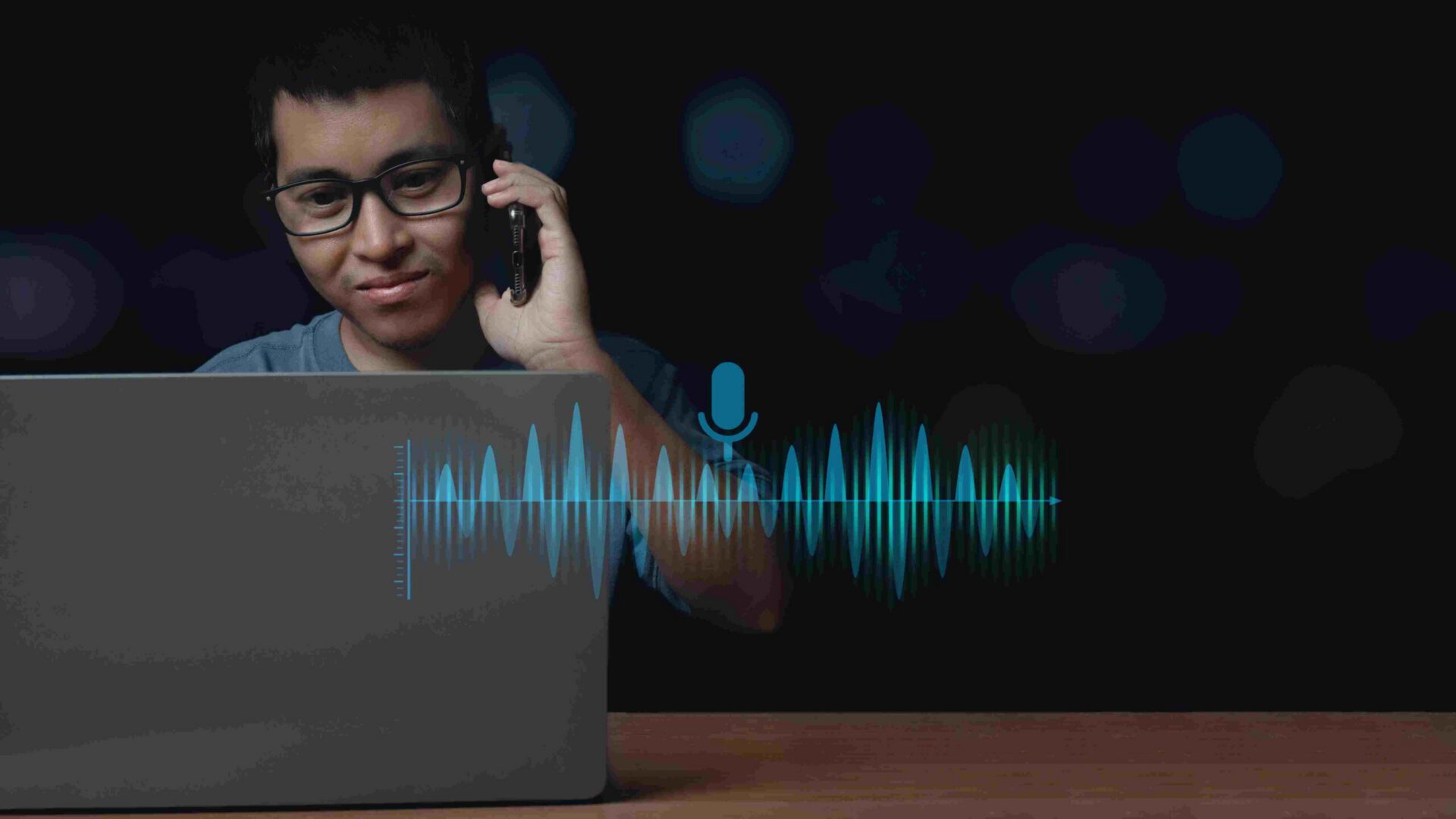
Professionals working with ConnectWise, a widely used IT service management and business platform, spend a lot of their day documenting things: ticket notes, customer calls, meeting summaries, and internal handoffs. Every minute spent typing that documentation is a minute not spent actually resolving a ticket or closing a deal. Dictation software closes that gap by converting speech into text in real time, and pairing the right tool with a ConnectWise-based workflow can meaningfully cut down the administrative overhead that eats into a technician’s or account manager’s day. This guide covers the strongest dictation tools for ConnectWise users in 2026, what to look for, and how to actually get value out of pairing the two.
Documentation overhead is one of those costs that’s easy to underestimate because it’s spread across dozens of small moments rather than showing up as one obvious line item. A technician who spends four or five extra minutes typing up notes after every ticket, multiplied across a full day of tickets and a full team of technicians, adds up to real lost capacity over a month. That’s the case for treating dictation software as an operational efficiency decision rather than a nice-to-have convenience feature.
What Dictation Software Actually Does
It’s easy to underestimate how far this category has come. Early speech-to-text tools required painstaking training sessions where a user read scripted passages aloud for twenty minutes before the software would recognize their voice reliably, and even then accuracy on technical vocabulary was inconsistent at best. Modern cloud-based tools work close to out of the box, adapting to an individual’s speech patterns in the background while they use it normally, and they handle background noise, accents, and industry terminology far better than the desktop dictation software many IT professionals remember trying and abandoning a decade ago.
Dictation software, also called speech-to-text software, converts spoken words into written text using AI-driven speech recognition and natural language processing. Modern tools go well beyond simple word-for-word transcription, handling punctuation commands, formatting, and increasingly, summarization of what was said rather than just a raw transcript.
Where It Actually Saves Time
- Faster documentation. Speaking is generally two to three times faster than typing for most people, which adds up quickly across ticket notes, emails, and customer interaction logs.
- Fewer transcription errors. Modern AI-driven recognition has gotten accurate enough that, for straightforward business language, it often outperforms rushed manual typing.
- Better accessibility. Dictation is a real accommodation for anyone with a physical limitation that makes typing difficult, and simply a preference for others who think better out loud than at a keyboard.
- Workflow integration. Several dictation tools plug directly into the business platforms teams already use, cutting out the copy-paste step between where you speak and where the text needs to live.
Why Pair Dictation Software With ConnectWise Specifically
ConnectWise is built around managing IT services, customer relationships, and project tracking, and a lot of that work involves writing things down under time pressure: a technician wrapping up a service call, an account manager logging a client conversation, a project lead summarizing a status meeting. Pairing dictation software with that workflow lets teams:
- Log customer interactions immediately after a call instead of typing notes from memory twenty minutes later.
- Create detailed service tickets through voice input while still standing at a workstation or on-site with a client.
- Turn meeting recordings into searchable notes without a dedicated note-taker in the room.
- Keep internal handoffs between technicians clearer, since a spoken summary is often more complete than a rushed typed one.
The net effect across a team of any real size is measurable: less time spent on administrative documentation, more consistent ticket quality, and fewer details lost between when something happened and when it got written down. For a team billing hourly for services, that recovered time has a direct dollar value attached to it, which makes the case for adopting dictation tools an easier one to make to leadership than a vaguer “productivity improvement” pitch would be.
The Best Dictation Software for ConnectWise Users
1. Dragon Professional Anywhere
Dragon Professional Anywhere is the enterprise-grade, cloud-hosted version of Nuance’s long-standing Dragon speech recognition line. Nuance was acquired by Microsoft in 2022, and while some Dragon products in the consumer line have been phased out since then, Dragon Professional Anywhere remains part of the active product lineup, built on Microsoft Azure and positioned for teams handling higher-security data.
- Features: speech recognition accuracy that Nuance advertises at up to 99% for typical business dictation, industry-specific vocabulary customization, cross-device accessibility, and voice commands for editing and navigation without touching a keyboard.
- Why it fits ConnectWise workflows: its accuracy and customizable vocabulary make it well suited to technical ticket notes full of product names and jargon that a general-purpose dictation tool might mishear.
2. Otter.ai
Otter.ai built its reputation on live meeting transcription and has become one of the most widely used tools for turning spoken conversations into searchable text. It isn’t purpose-built for ConnectWise, but its API and broad integration ecosystem make it straightforward to route transcripts into whatever system a team already uses for documentation.
- Features: real-time speech-to-text conversion, automated meeting summaries, and a searchable archive of past transcriptions.
- Why it fits ConnectWise workflows: particularly strong for teams that want a running record of client calls and internal meetings without someone manually taking notes during the conversation.
3. Google Docs Voice Typing
For smaller ConnectWise shops without budget for a dedicated dictation platform, Google Docs’ built-in Voice Typing feature is a genuinely useful, completely free option that’s already available to anyone with a Google Workspace account.
- Features: free and simple to turn on, support for a wide range of languages, and basic voice commands for punctuation and formatting.
- Why it fits ConnectWise workflows: a solid choice for quick note-taking and draft documentation that gets copied into ConnectWise afterward, without adding another subscription to the tool stack.
4. Microsoft Dictate
Microsoft Dictate is built into the Microsoft 365 suite and works directly inside Word, Outlook, and Teams. For any team that’s already standardized on Microsoft’s productivity tools alongside ConnectWise, it’s close to a zero-friction addition since there’s nothing new to install or learn.
- Features: voice-to-text built directly into Word, Outlook, and Teams, multi-language support, and built-in editing and formatting voice commands.
- Why it fits ConnectWise workflows: ideal for technicians and account managers who spend their day moving between Microsoft apps and ConnectWise, since dictated text can move between the two with minimal extra steps.
5. Sonix
Sonix focuses on automated transcription with an emphasis on accuracy and a workflow-friendly editing interface, making it a strong fit for teams that need detailed, cleaned-up transcripts rather than a rough real-time draft.
- Features: support for a wide range of languages, advanced in-browser editing tools for correcting transcripts, and secure cloud storage for archived recordings.
- Why it fits ConnectWise workflows: a good match for teams that need polished, accurate written records of meetings and service interactions rather than just a quick real-time caption.
Pairing Dictation With ConnectWise CPQ
Dictation tools handle the documentation side of the workflow, but a lot of ConnectWise-based teams are also managing quotes, invoices, and billing, and it’s worth understanding how that piece fits into the same efficiency conversation. ConnectWise CPQ, formerly known as ConnectWise Sell, is ConnectWise’s own quote-to-cash tool, letting sales and account teams build accurate quotes with guided selling and real-time pricing, then push approved quotes straight through to invoicing and billing without re-entering the same data twice.
The two tools solve adjacent problems. Dictation speeds up the unstructured side of documentation, ticket notes, call summaries, meeting recaps, while a tool like ConnectWise CPQ speeds up the structured side, quotes and billing that need to stay consistent and error-free. Teams that adopt both tend to see the biggest overall time savings, since neither tool alone closes the full gap between a client conversation and a finished, billed engagement.
Common Mistakes When Rolling Out Dictation Tools
A handful of predictable mistakes derail dictation adoption on IT service teams. Picking based on a demo instead of real dictation is one of the most common: a vendor demo uses clear, scripted speech in a quiet room, and that bears little resemblance to a technician dictating notes with background office noise or a strong accent the model wasn’t tuned for. Always test with the actual people who’ll use the tool daily, saying the actual kinds of things they’ll actually say, before signing a contract.
Skipping vocabulary training is another frequent gap. Most serious dictation tools let you add custom terms, whether that’s your company’s product names, common client names, or industry-specific jargon, but this step gets skipped when teams roll out quickly. The accuracy difference between a trained and untrained vocabulary set can be dramatic, particularly in a technical MSP environment full of acronyms and product names a general speech model has never encountered.
Finally, treating dictation as a total replacement for typing rather than a complement to it sets unrealistic expectations. Even the most accurate dictation tools need occasional manual correction, and some tasks, like precisely formatted technical documentation, genuinely are still faster to type than dictate and edit. The goal isn’t zero typing, it’s meaningfully less of it on the tasks where speaking naturally beats typing.
How to Choose the Right Dictation Software
A few factors matter more than feature lists when comparing options for a ConnectWise-centered workflow.
- Integration fit. Confirm the tool either integrates directly with ConnectWise or slots cleanly into whatever step happens right before information gets entered into it.
- Accuracy on your actual vocabulary. General accuracy claims matter less than accuracy on the specific technical terms, product names, and client-specific jargon your team uses every day. Test with real dictation before committing.
- Vocabulary customization. Tools that let you train or add custom terms will outperform generic ones once your team’s dictation includes internal product names or acronyms.
- Pricing structure. Compare free and paid tiers honestly against your team’s actual volume rather than assuming the premium tier is automatically worth it for a two-person team.
- Ease of onboarding. A tool that takes a technician twenty minutes to learn will get adopted. One that takes a week of training will quietly get abandoned within a month.
Setting Up Vocabulary and Templates Before You Roll Out
The tools that let you customize vocabulary are only as good as the setup work someone actually does before rollout. Before turning a dictation tool loose on a team, spend an hour or two feeding it a list of your company’s product names, common client names, and any industry acronyms that show up regularly in tickets. Most enterprise tools also support custom voice commands or templates, so a technician can say something short, “start ticket note,” for instance, and have the tool automatically apply the right formatting rather than dictating structure by hand every time.
This upfront setup work is easy to skip when a team is in a hurry to start using a new tool, but it’s the difference between a tool that saves real time from week one and one that frustrates users with constant misrecognitions until someone eventually goes back and does the vocabulary work anyway. Doing it before rollout, rather than reactively after complaints start, avoids that wasted adoption period entirely.
Security and Compliance Considerations for MSPs
ConnectWise users are disproportionately IT service providers and managed service providers, and that comes with a specific wrinkle worth thinking through before picking a dictation tool: a lot of what gets dictated involves client-confidential information, network details, credentials discussions, or compliance-sensitive customer data. Cloud-based dictation tools transmit and often store audio and transcripts on remote servers, so it’s worth confirming a vendor’s data retention policy, where their servers are located, and whether they offer any enterprise agreement covering data handling before rolling a tool out across a team that regularly discusses sensitive client infrastructure.
Enterprise-focused tools like Dragon Professional Anywhere tend to be built with this in mind from the start, offering HIPAA-eligible hosting and enterprise data agreements that consumer-grade dictation apps generally don’t provide. If your MSP serves clients in regulated industries, healthcare, finance, government, that compliance posture should weigh more heavily in your decision than raw accuracy numbers or price.
Cost Comparison at a Glance
Budget varies a lot depending on team size and how core dictation becomes to daily work. Google Docs Voice Typing costs nothing and is worth trying first for any team unsure whether dictation will actually stick as a habit. Microsoft Dictate comes bundled with an existing Microsoft 365 subscription for teams already paying for that suite, so it’s effectively free marginal cost for many ConnectWise shops. Otter.ai and Sonix both offer usage-based paid tiers that scale with transcription volume, reasonable for teams with regular meetings or calls to document. Dragon Professional Anywhere sits at the top of the price range, reflecting its enterprise security posture and accuracy, and makes the most financial sense once a team’s documentation volume is high enough that the time saved clearly outweighs the subscription cost.
A practical way to figure out where your team lands: track how many hours a week your technicians or account managers currently spend on typed documentation before evaluating tools. If that number is small, a free option is probably enough. If it’s eating a meaningful chunk of billable time, the case for a premium tool gets much stronger, and the return on investment becomes easy to calculate in hours saved per week.
Getting Real Adoption, Not Just a Trial License
The biggest failure mode with dictation tools isn’t picking the wrong software, it’s rolling it out and having half the team quietly go back to typing within a few weeks. Adoption tends to stick when a team introduces the tool around one specific, high-friction task first, ticket close-out notes, for example, rather than asking everyone to dictate everything from day one. Once people trust the tool for that one task and see it actually save them time, expanding its use to meeting notes or email drafting becomes a much easier sell than starting broad and hoping it sticks everywhere at once.
It’s also worth setting a basic quality expectation up front: dictated text almost always needs a quick read-through before it goes into a ticket or gets sent to a client, especially for technical terms a general model might mishear. Treating dictation as a fast first draft rather than a finished document keeps quality consistent while still capturing most of the time savings.
Measuring the actual impact matters too, rather than assuming a rollout worked just because people are using the tool. Track ticket close-out time before and after adoption, or simply ask technicians directly whether documentation feels faster a month in. A tool that’s technically being used but hasn’t actually moved that needle is worth reevaluating rather than assuming the investment paid off by default.
Pairing ConnectWise with the right dictation software genuinely changes how much administrative time a team spends on documentation versus actual client work. Whether that’s a feature-rich enterprise tool like Dragon Professional Anywhere or a free option like Google Docs Voice Typing depends entirely on your team’s size, budget, and how technical your day-to-day vocabulary gets. Combined with a structured quoting tool like ConnectWise CPQ for the billing side, the two together cover most of the documentation and paperwork gap that otherwise eats into a service team’s day.
None of this requires an all-at-once overhaul of how your team works. Start with the single documentation task that costs the most time right now, run a real trial with the people who’ll actually use it, and expand from there once it’s clearly saving time rather than just adding another tool to the stack nobody fully adopts.
Interesting Reads:
The Best Audio Redaction Software for 2026: Top Picks and Features
Best Bookkeeper Accounting Software for 2026
Transform Your Music with the Best Song-to-Video AI Software in 2026