

A brand profile is a page that represents something other than a person, a business, a product line, an organization, inside a social platform. On a BuddyBoss community, it works the same way a Facebook Page does: separate from any individual member’s profile, with its own activity feed, followers, and settings. Here’s how to set one up, and what each part of it actually looks like once it’s live.
What BuddyBoss Handles on Its Own
BuddyBoss covers member profiles, groups, activity feeds, messaging, course delivery for anyone running training alongside the community, tiered memberships, and a path to a branded mobile app. None of it is built around a brand identity distinct from an individual member, that layer comes from an add-on.
What the Plugin Does
Set one up using BuddyPress Business Profile from Wbcom Designs. It lets any community member spin up a business/brand page with its own categories, activity stream, review system, and private inbox, effectively a Facebook Page inside your BuddyBoss site. Current version (v2.1.0) features:
- Custom fields and categories per profile.
- An activity feed unique to each brand page.
- Branding controls: colors, action buttons, logo, cover image.
- Photo and video uploads.
- Star ratings and written reviews from other members.
- Keyword search across all business profiles, plus a directory with map view.
- A social-links widget.
- Private messaging between members and the brand’s admins.
- Role assignment (admin, moderator) per page.
- Optional integration toggles for Events, Jobs, and Shop.
- Per-role limits on how many brand pages a member can create.
- LocalBusiness SEO schema, generated automatically.
Brand vs. Business: A Distinction Worth Making
The plugin doesn’t structurally separate “business” from “brand,” both are the same underlying Business Profile entry, category is what tells them apart on the frontend. But the framing matters for what you build out first. A business profile usually leads with practical information, hours, location, services. A brand profile more often leads with identity, visual consistency, a consistent voice across posts, a following built around recognition rather than a transaction.
If you’re setting this up for something more abstract than a storefront, a product line, a media brand, a community initiative that isn’t tied to one physical location, plan the About tab and cover imagery around telling visitors what the brand stands for before you get to contact details. Visitors arriving at a brand page are usually there to understand an identity first, transact second, which is close to the reverse of how most people approach a local business listing.
Creating the Profile

From the Business Directory page, click Create New Business. Enter the brand’s name, choose a category, write a short description, upload a logo, and add a cover image. Click Visit Business when done.
What the Live Profile Looks Like
Home
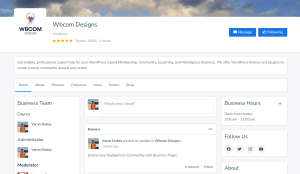
The homepage shows the activity stream, posts, images, video, along with likes and comments from members, the same shape as a standard social feed.
About

Contact details, hours, price range, services offered. The plugin’s repeater fields let you build out structured, repeatable sections here rather than a single block of text. For a brand rather than a storefront, this is also where a mission statement or brand story fits best, kept short and structured rather than one long paragraph.
Reviews
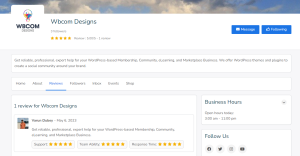
Members leave star ratings and written feedback. This is the section doing the actual credibility-building, a brand page with zero reviews reads very differently to a visitor than one with a dozen.
Followers
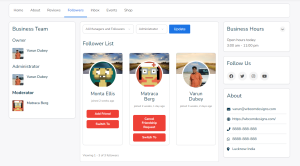
A public follower count, visible on the profile. Simple, but it’s the first number a visitor checks before deciding whether a brand page is worth paying attention to.
Inbox
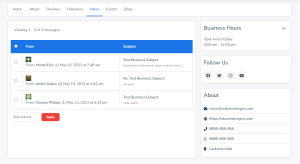
Direct messages from customers land here, outside the public activity stream. Supports text, images, video, GIFs, and links, a real inbox, not just a contact form.
Settings

General details, profile/cover photos, contact info, social links, work and education fields, hours, tab visibility, action buttons, sidebar customization, and the option to delete the page entirely.
Why This Beats Building Brand Identity Into a Group Instead
A reasonable alternative worth ruling out first: since BuddyBoss already supports groups, why not just create a group and treat it as the brand’s presence instead of using a separate profile plugin? For some communities that’s genuinely enough, especially if the goal is mostly discussion among a defined member base rather than public discoverability.
Where it falls short is everything a group wasn’t designed for: there’s no reviews system on a group, no public follower count distinct from membership, no LocalBusiness schema for search visibility, and no branding controls beyond a basic cover image. A group is built for member-to-member discussion around a shared interest. A brand profile is built to represent an entity to the whole community, members and non-members browsing the directory alike, and those are different jobs even though both involve an activity feed. Nothing stops you from running both, a brand profile as the public-facing presence and a group as a more focused community around it, and for an established brand with an engaged audience, that combination often works better than either alone.
Choosing a Category That Actually Helps Discovery
Category is the main filter members use when browsing the directory rather than searching by name, and a brand page filed under the wrong one is effectively invisible to anyone browsing rather than searching directly. Before creating the profile, spend a few minutes looking at what categories already exist on the community and where similar brands have filed themselves, rather than guessing or defaulting to the broadest option available.
If the site owner allows suggesting new categories, a brand that genuinely doesn’t fit anything existing is worth raising rather than forcing it into an awkward near-fit. A mismatched category doesn’t just hurt discovery, it can actively mislead a visitor who found the page expecting one kind of brand and got another, which is a worse first impression than simply being harder to find.
Writing Activity Feed Posts That Build a Following
The activity feed is where a brand page either earns repeat visits or gets ignored after the first look. Posts that read like broadcast announcements, one-way, promotional, rarely inviting a response, tend to get less engagement than posts that ask something of the reader, a question, a request for feedback, an invitation to share their own experience with the brand.
Mix content types rather than posting the same format every time: a behind-the-scenes photo, a short update, a direct question to followers, a repost or mention of a member’s positive review. Visual content, images and video, tends to outperform plain text in a social feed context, and a brand with visual assets available (product shots, event photos, team pictures) should lean into that rather than defaulting to text-only updates because they’re faster to write.
Before Announcing the Brand Page Publicly
Treat the actual public unveiling as a small event, not something that happens automatically the moment the page is technically live. Confirm every field in the About tab is filled in, send a test message to the inbox from a separate account to confirm it’s working, and check how the page renders on mobile, a meaningful share of visitors will be browsing from a phone rather than a desktop.
Have several activity-feed posts ready before the first announcement rather than launching to an empty feed. A brand page with a strong About section but nothing in the feed reads as unfinished even if everything else is polished, while three or four posts already up gives an arriving visitor something to engage with immediately.
Building a Recognizable Visual Identity
The plugin’s branding controls, colors, logo, cover image, action-button styling, do more for a brand profile than for a typical business listing, because recognition is the point. A visitor who follows several brand pages inside the same community should be able to tell them apart at a glance, and consistent color and imagery choices across every post in the activity feed reinforce that faster than any written description does.
Keep the logo and cover image consistent with whatever the brand already uses elsewhere, a separate visual identity on the BuddyBoss profile than on the brand’s actual website or social accounts creates a disconnect that undermines the recognition you’re trying to build. Small things matter here: cropping the logo the same way everywhere, using the same accent color in graphics posted to the activity feed, keeping post formatting consistent rather than switching style from post to post.
Handling Messages at Brand Scale
A brand profile with any real following gets more inbound messages than a single owner can realistically answer personally, general questions, partnership inquiries, the occasional complaint. Role assignment exists for this: bring a community manager or marketing team member on as an admin or moderator to triage the inbox, escalating only what genuinely needs a decision-maker’s input.
Set clear internal guidelines for what counts as an escalation before the volume makes that decision under pressure. A brand that responds consistently, even to routine questions, reads as more trustworthy than one where replies are sporadic or come from an inconsistent voice depending on who happened to be online.
Coordinating Multiple People Behind One Voice
A personal profile has one obvious author. A brand profile often doesn’t, several team members might post to the activity feed or answer inbox messages over time, and inconsistency between them is more noticeable to followers than most teams expect. A brand that sounds warm and casual in one post and formal and clipped in the next reads as disorganized, even if both posts individually would have been fine.
A short internal style note, three or four sentences on tone, what the brand does and doesn’t say, how to sign off a message, saves a lot of this drift without requiring a formal brand guidelines document. It’s a small amount of upfront coordination that pays off every time a new person joins the team managing the page, rather than each person defaulting to their own instincts.
Growing the Follower Count Without Gaming It
The public follower count is a visible trust signal, which makes it tempting to inflate artificially, encouraging existing personal contacts to follow regardless of actual interest, or worse, fake accounts. Resist that. A follower count that doesn’t match actual engagement on posts, likes, comments, review activity, is easy for an attentive visitor to notice, and a mismatch reads worse than a smaller, honest number.
Organic growth here comes mostly from consistent, genuinely useful activity-feed content and cross-promotion through the brand’s other channels, an email signature, existing social accounts, a mention in a newsletter, rather than any trick specific to the plugin itself.
Keeping the Profile Current Over Time
A brand profile set up once and left alone slowly drifts out of date, an old cover image tied to a discontinued campaign, contact details that changed, a description that no longer matches how the brand actually positions itself. None of this breaks the profile technically, but it erodes credibility gradually, and there’s no error message flagging it, just a visitor noticing something feels stale.
A light monthly or quarterly review, checking the About tab for anything outdated, confirming social links still point to active accounts, refreshing the cover image if it’s tied to a specific past campaign, keeps the page feeling actively maintained. Assign this to whoever’s already managing the activity feed and inbox rather than creating a separate task that ends up nobody’s responsibility.
Extending the Rest of Your Community
A few other Wbcom Designs add-ons worth pairing with this one:
- BuddyPress Member Type (free), custom member classifications with their own roles and fields.
- BuddyPress Member Blog / Member Blog Pro (free / from $49), frontend blogging from a member’s own profile.
- BuddyPress Statistics (from $49), registration, post, and engagement tracking across your community.
Check free BuddyPress plugins and premium BuddyPress add-ons for current pricing on the full lineup.
Choosing Visibility: Public, Private, or Hidden
Public visibility fits most brand profiles, since discoverability through search and the directory is usually the entire point of setting one up in the first place. Private visibility, requiring a follow or approval step before the full profile is visible, suits a smaller or more exclusive brand relationship, a members-only product line, a brand that wants a curated following rather than maximum reach.
Hidden visibility mostly makes sense while the profile is still being built out, before the first public post goes live, rather than as a long-term setting. A hidden profile forfeits the directory and search visibility that’s the main reason to use this plugin over a plain member profile, so treat it as a temporary staging state during setup, not a permanent configuration once the brand is ready to be seen.
Pricing and What Else Is Out There
Current pricing: Personal (1 site) $59/year, Professional (5 sites) $129/year, Agency (unlimited sites) $299/year, with lifetime options also available. All three tiers include the same feature set, the difference is purely how many sites a license covers, so there’s no need to weigh a feature trade-off against price the way you would with a typical free/Pro split. See the product page for exact current terms.
Frequently Asked Questions
A few questions that come up most often once a brand profile is live and being actively managed by more than one person:
Can a brand profile be linked to a group the brand runs? There’s no automatic linking between a Business Profile entry and a BuddyBoss group, but you can cross-reference them manually, a link in the About section pointing to the group, and a mention of the profile in the group’s description.
Does the plugin support multiple admins with different permission levels? Yes, role assignment supports admins and moderators per page, so a team can share responsibility for the same profile without sharing one login.
Is there a limit on how many brand pages one member can create? Per-role limits are configurable, a site owner can cap how many pages a given member role is allowed to create, useful for preventing spam pages on a large open community.
Can the Events and Jobs integrations be turned off if not needed? Yes, they’re optional toggles rather than always-on features, a brand profile that has no use for job listings can leave that tab disabled entirely.
Does deleting a brand profile remove its reviews and follower history? Yes, reviews and followers are tied to the specific profile entry. If the brand is only pausing rather than shutting down, hiding the profile rather than deleting it keeps that history intact.
Can a brand profile be found through the community’s main search, not just the business directory? The plugin’s keyword search covers business profiles specifically, and a well-filled-out About tab with clear, specific language (rather than vague marketing copy) tends to surface more reliably in that search than a sparse one.
What’s the difference between the free BuddyPress plugins and this add-on? BuddyPress core handles personal member profiles, groups, and activity; it has no concept of a brand or business entity distinct from an individual member. Business Profile adds that entity type on top, it’s a separate, dedicated add-on rather than a feature toggle inside BuddyPress itself.
Can a brand profile show up in the community’s map view even if it has no physical address? The map view is built around the LocalBusiness schema, which expects location data. A brand with no physical presence can leave the address field blank, it just won’t appear on the map, while still remaining fully searchable through the keyword directory search and browsable through its category.
Interesting Reads:
How Do Shortcodes Enhance The Functionality and Display of BuddyPress Components?
How Can We Create a Job Listings Section on a BuddyPress Website?
How to Create an Alumni Platform with BuddyPress and WordPress