
An influencer profile needs more room than a standard BuddyBoss member profile gives you, space for a bio, contact details, portfolio pieces, and reviews from the people you’ve worked with. A regular member profile is built for a name, an avatar, and a short description, useful for a casual community member but genuinely limiting for someone whose page needs to double as a media kit, a portfolio, and a trust signal to brands or collaborators browsing the community. BuddyBoss doesn’t build that in natively, but a plugin can add it in about ten minutes, and the setup itself is short enough that the real work is deciding how you want the profile to actually function once it’s live.
What BuddyBoss Actually Provides Out of the Box
BuddyBoss is the platform underneath: community features (profiles, groups, activity feeds, messaging), course delivery for anyone running an academy alongside the community, membership tiers with payment gateway integrations, and a path to a branded mobile app if you need one.
None of that is influencer-specific. For a dedicated influencer profile with reviews, a portfolio, and its own activity feed, you need an add-on.
Why “Influencer” and “Business” Share the Same Underlying Page Type
It’s worth pausing on why a plugin named “Business Profile” is the right tool for an influencer page at all, since the naming can be confusing at first glance. Structurally, an influencer profile and a business profile need almost identical building blocks: a name and description that isn’t tied to a personal member account, a way to display credibility signals (reviews for a business, past collaboration proof for an influencer), a media gallery, contact and booking information, and a place in a searchable directory so other members or brands can actually find the page. Rather than building two separate systems for what’s functionally the same page structure with different labeling, the plugin treats both as the same underlying page type, categorized differently. That’s a reasonable design choice, and it means the setup steps below work identically whether you’re representing a local business or a content creator with a following.
BuddyPress Business Profile

BuddyPress Business Profile from Wbcom Designs handles this. Despite the name, it’s built for any page-based identity on a BuddyBoss site, businesses, brands, celebrities, and influencer profiles all use the same underlying page type, just categorized differently.
The current release (v2.1.0) includes more than the original setup this post described:
- Star ratings and written reviews from other members, useful for an influencer building social proof.
- A searchable member/business directory with map view.
- Photo and video galleries for portfolio pieces.
- Public follower counts.
- Weekly availability scheduling, handy if the profile is also used for bookings.
- LocalBusiness SEO schema, generated automatically.
Multiple profiles per site are supported, no fixed limit on how many an admin can create or assign to members.
Setting Up the Profile
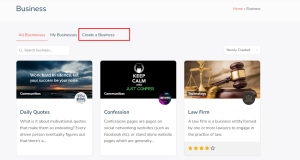
Go to the plugin’s Businesses page and click Create New Business.
Enter the profile name, a short description, and a category. Click Continue.
Upload a profile photo, click Next Step, then upload a cover image. Click Visit to see the finished profile live.
That’s the whole setup. Filling in reviews, availability, and gallery content is optional and can happen any time after.
Building Out the Profile Like an Actual Media Kit
The setup wizard gets a page live in minutes, but a bare page with just a name and photo does very little for an influencer trying to be found by brands, collaborators, or fans within the community. The gap between a technically complete profile and one that actually works comes down to what gets filled in after setup:
Description as positioning, not just a bio. A generic “content creator interested in lifestyle and travel” description tells a brand almost nothing useful. Naming a specific niche, audience size range, primary content format (video, written, photography), and the kind of collaborations you’re open to gives anyone browsing the directory the information they’d actually need to decide whether to reach out.
The gallery as a portfolio, not a photo dump. Since the plugin’s photo and video gallery tab is built to hold portfolio pieces, treat it that way, curated examples of past work rather than every photo you’ve ever posted. A brand or collaborator skimming a directory of profiles is making a fast judgment call, a tightly curated gallery of your best five to ten pieces does more work than fifty unsorted uploads.
Weekly availability as a booking signal. If your profile is also meant to field collaboration inquiries or bookings, filling in the availability scheduling feature gives visitors a concrete sense of when you’re reachable, rather than leaving them to guess and message blind.
Getting Your First Reviews as Social Proof
The star rating and review system is arguably the most valuable feature for an influencer profile specifically, since reviews from past collaborators function as third-party validation in a way a self-written bio never can. A brand or fellow community member deciding whether to trust an unfamiliar profile is far more likely to act on “worked with them twice, always delivered on time” from another member than on any amount of self-description.
The practical challenge is the same one every new profile with zero reviews faces: nobody wants to be first. A few ways influencers on BuddyBoss communities typically solve this early on: directly reaching out to a couple of past collaborators or brand contacts and asking them to leave an honest review once the profile is live, cross-posting the new profile link in your own community activity feed or elsewhere so people who already know your work can find it and leave feedback, and treating the first handful of reviews as a deliberate task to complete in the profile’s first week rather than something that happens passively.
Directory Discoverability: Category and Search Terms Matter
The searchable directory with map view is how other members and brands actually find influencer profiles they don’t already know about, which makes the category you select during setup more consequential than it feels at the time. A profile filed under a vague or overly broad category effectively disappears from anyone filtering the directory by a more specific niche. If your community’s category list doesn’t have a good fit for your specific content focus, it’s worth flagging that to the community admin rather than settling for the closest generic option, a well-organized category structure benefits every influencer on the platform, not just your own profile.
Keeping the Profile Current
An influencer profile that was filled in carefully at launch and never touched again loses its value fast. Follower counts and reviews accumulating over time are a meaningful trust signal, but only if the rest of the profile, availability, gallery, description, still reflects where you actually are now. A profile advertising availability from six months ago, or a portfolio that hasn’t been updated since launch, reads as abandoned even if you’re actively working, which undercuts the exact credibility the profile is supposed to build. Treat a periodic refresh, updating the gallery with recent work, confirming availability is current, as part of maintaining your presence on the platform rather than a one-time setup task.
How This Differs From a Standalone Media Kit or Linktree
It’s worth being clear about what this profile is and isn’t, since influencers often already maintain a separate media kit PDF or a link-in-bio tool. A BuddyBoss business profile isn’t a replacement for those, it’s a community-native alternative that lives inside the platform where your actual audience and potential collaborators already are, with the added advantage of the community’s built-in review and follower system providing social proof a static PDF or link page can’t. For influencers active primarily within one specific BuddyBoss community, having a profile that lives inside that same ecosystem, discoverable through the community’s own directory and search, is genuinely more useful than sending people to an external tool. For influencers managing a presence across many different platforms and communities, this profile is best treated as one node in that broader presence rather than the sole hub, worth linking to and from your other properties rather than replacing them outright.
Pricing and What You’re Actually Paying For
BuddyPress Business Profile is priced in tiers running roughly $59-299/year depending on how much of the feature set you need. The lower tiers cover the core profile setup, description, gallery, and basic directory listing, while the higher tiers unlock the map view for the directory, weekly availability scheduling, and deeper integrations with plugins like WooCommerce, Events Calendar, and WP Job Manager. For a single influencer profile, the entry tier is usually enough, the map view specifically matters more for a location-dependent business than for a content creator whose audience isn’t tied to a physical place. If your community admin is deciding which tier to purchase for the whole site, it’s worth surfacing which specific features your influencer members actually plan to use before defaulting to the most expensive plan.
Common Mistakes When Setting This Up
Treating the initial setup wizard as the finish line. As covered above, a profile with just a name, photo, and category is technically complete but does very little to actually attract collaborators or fans. The setup wizard gets you a live page, the description, gallery, and review-gathering work is what makes it useful.
Picking the closest available category instead of the accurate one. A mismatch between your actual niche and the category you’re filed under means the directory’s filtering, the main way people discover profiles they don’t already know, works against you rather than for you.
Leaving the profile static after the first week. Availability, gallery content, and description all go stale, and a visibly outdated profile undercuts the credibility the review system is supposed to build.
Not asking for reviews proactively. Given how much of the profile’s value comes from third-party social proof rather than self-description, waiting passively for reviews to accumulate on their own is slower and less reliable than directly asking a handful of past collaborators once the page is live.
A Practical Setup Checklist
Once the basic wizard is done, work through this before considering the profile genuinely ready to share:
- Description names a specific niche, content format, and the kind of collaborations you’re open to, not a generic self-summary.
- Gallery holds a curated set of your strongest recent work, not an unsorted dump of everything you’ve posted.
- Category accurately reflects your niche, confirmed against the community’s actual category list rather than the closest loose fit.
- Availability, if you’re using the scheduling feature, reflects your real current bandwidth for new collaborations.
- Social links point to your active external platforms, not accounts you’ve stopped using.
- At least one or two initial reviews are in place, requested directly from past collaborators rather than left to accumulate passively.
A profile that clears this checklist does meaningfully more work for you than one that stops at the setup wizard, and none of it takes more than an hour or two beyond the initial ten-minute setup.
Extending the Rest of Your Community
Wbcom Designs builds a broader set of BuddyPress/BuddyBoss add-ons beyond this one, social networking extras, e-learning integrations for LearnDash-powered academies, and WooCommerce-facing tools for community marketplaces. If your community pairs influencer or creator profiles with a marketplace where those creators sell digital products, merchandise, or paid consultations, it’s worth looking at the WooCommerce-facing add-ons specifically, since they let a profile like the one covered here extend into an actual storefront rather than staying a purely informational page.
Check free BuddyPress plugins and premium BuddyPress add-ons for the current lineup and pricing before deciding what to layer on top of the base influencer profile setup covered here.
Frequently Asked Questions
Do I need a certain follower count elsewhere to justify setting up a profile like this?
No, the profile itself doesn’t gate on external follower counts, it’s a community-native page rather than a verification system tied to another platform’s metrics. Whether it’s worth the setup time depends more on whether your community actually uses the directory to find collaborators, which is worth confirming with active members before investing heavily in the profile.
Can I link out to my Instagram, YouTube, or TikTok from the profile?
Yes, the profile settings include social link fields for exactly this, so the community profile can function as a hub pointing to your presence on other platforms rather than trying to replace them.
What happens if I stop being active in the community, does the profile get removed automatically?
No, the profile persists until an admin or the profile owner removes it. This is worth being deliberate about on both sides, community admins may want a policy for handling long-inactive influencer profiles so the directory doesn’t accumulate stale listings, and profile owners who are stepping back should consider updating the description or unpublishing rather than leaving an inaccurate, outdated page live.
Can more than one person manage the same influencer profile, useful for a creator with a manager or team?
Since an admin can assign a business/influencer page to any member and multiple profiles per site are supported with no fixed limit, coordinating access between a creator and a manager is a configuration decision for your community admin to handle, rather than something the profile owner can self-serve without admin involvement.
Is the review system moderated, or can anyone leave any review?
Review moderation policy is set at the community level rather than fixed by the plugin. If your community doesn’t already have a moderation process for reviews, this is worth raising with the admin before the feature sees heavy use, an unmoderated review system on any profile, influencer or business, is vulnerable to the same abuse risk as any open review system elsewhere online.
Can I switch a profile’s category later if I pivot to a different niche?
Yes, category is an editable field on the profile rather than a locked-in setting from the initial wizard. If your content focus shifts, updating the category keeps the directory’s filtering accurate rather than leaving the profile discoverable under a niche you’ve moved on from.
Does this profile type support video content directly, or only links to external video platforms?
The photo and video galleries support direct video uploads as part of the portfolio tab, so you’re not limited to linking out to YouTube or TikTok for every piece, though linking to your primary channels through the social link fields is still worth doing for anyone who wants to see your full body of work rather than just the curated gallery selections.
Why This Matters More on Larger Communities
On a small BuddyBoss community where most members already know each other, a dedicated influencer profile is a nice-to-have rather than a necessity, word of mouth does most of the discovery work anyway. The calculation changes on a larger community with hundreds or thousands of members, where an influencer with genuinely strong work can otherwise get lost in the general activity stream, indistinguishable from any other member post. A well-built profile with real reviews and a curated portfolio is what lets that influencer actually surface to the brands, collaborators, or fans specifically looking for someone in their niche, rather than relying on the general feed to somehow put them in front of the right people. If your community has grown past the point where everyone already knows everyone, this is worth treating as infrastructure worth investing real time into, not just a feature that happens to exist.
Interesting Reads:
How does Profile Pro enhance the functionality of BuddyPress Profiles?
How To Create A Favorite Notification Feature in BuddyPress?
Does the Activity Filter Enhance the Performance of the Activity Stream?