
A logo has maybe two seconds, sometimes less, to make a first impression before someone’s attention moves on to the next thing on the screen. In that brief window it has to do a lot of quiet work: signal clearly what kind of business this is, feel trustworthy or exciting or premium depending on what the brand actually needs, and stay legible whether it is printed six inches wide on the side of a delivery truck or six pixels wide as a tiny browser favicon. That is a genuinely hard design problem disguised as a simple one, which is why the gap between a logo made in an afternoon and one built by a firm that understands brand systems shows up so clearly once both are in the real world.
This guide covers eleven logo design companies spanning very different price points, working styles, and levels of process, from crowdsourced marketplaces built for speed and affordability to the legacy branding houses behind some of the most recognized marks in the world, along with what actually separates a good logo partner from a mediocre one.
It helps to be honest about what a logo can and cannot do on its own before you start shopping for a designer. A logo is not a substitute for a clear value proposition, and no amount of clever iconography will fix a business whose actual product or positioning is confused. What a strong logo does is give a clear, confused-to-consistent business a visual shorthand that makes every other marketing effort work a little harder, a memorable mark that customers can spot instantly, that designers can build a full visual system around, and that survives translation across a hundred different applications without losing its identity along the way.
Why a Great Logo Matters for Your Brand
A great logo is more than a visual symbol, it’s the cornerstone of your brand’s identity. It creates a first impression, communicates your business values, and sets you apart from competitors. A well-designed logo conveys professionalism, builds trust, and fosters brand recognition. It also serves as a visual anchor for all your marketing materials, ensuring consistency across platforms. Investing in a great logo is investing in the long-term perception and success of your business.
Key Features of the Best Logo Design Companies
Creative Expertise: Top companies possess creative professionals skilled at turning abstract ideas into meaningful visuals, with a command of symbolism and color psychology.
Custom Designs: Leading agencies don’t rely on generic templates. They create unique, tailor-made logos that differentiate your brand from competitors.
Strong Portfolio: A diverse, high-quality portfolio demonstrates the capability to create logos across different industries and styles.
Clear Communication: The best companies prioritize collaboration, ensuring your input shapes the final design.
Attention to Detail: From typography to color schemes and scalability, every aspect is thoughtfully designed and functional across all formats.
Understanding of Branding: A great logo is an integral part of overall brand strategy. The best agencies understand how a logo fits within broader branding and marketing efforts.
What a Logo Project Actually Costs
Logo pricing spans a wider range than almost any other creative service, and that range is genuinely rational once you understand what you are paying for at each tier. An AI-assisted logo maker or a crowdsourced contest platform can produce a usable mark for a few hundred dollars, which works fine for a very early-stage business that needs something functional fast and cannot yet justify a larger investment. A freelance designer working one-on-one typically runs $500 to $3,000 depending on experience and revision rounds included. A dedicated branding studio building a full identity system, not just a mark but a complete visual language with typography, color, and usage guidelines, commonly runs $10,000 to $50,000. A legacy house like Pentagram or Landor working on a major corporate rebrand can charge well into six or seven figures once strategy, research, and rollout across a global organization are included.
The price difference is not simply a matter of one firm being better at drawing shapes than another. What you are actually paying for at the higher tiers is strategic rigor: competitive research, stakeholder interviews, testing the mark across dozens of real-world applications before it ships, and a documented system that keeps the brand consistent for the next decade across every team that touches it. A small business genuinely does not need that level of process for its first logo, but a public company about to spend millions on signage, packaging, and advertising very much does.
Revision policy is another cost driver that catches first-time buyers off guard. Cheaper packages often cap revisions at a small fixed number, two or three rounds, after which further changes are billed separately or simply not offered. That structure works fine if you go in with a clear brief and reasonable expectations, but it can turn frustrating fast if your team is still debating internally what direction it even wants. Before signing, ask exactly how many revision rounds are included, what counts as a revision versus a completely new concept, and what the hourly or flat rate is for work beyond that included scope. Getting this in writing up front avoids an awkward renegotiation partway through the project.
Best Logo Design Companies
1. Design.com
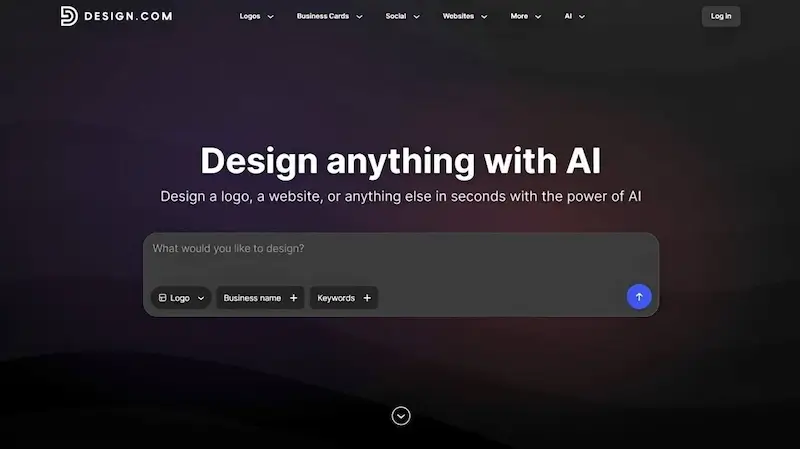
Design.com’s logo maker helps entrepreneurs, startups, and businesses create professional logos without professional designers or design experience. It combines AI and its massive logo library of over 500,000 professionally designed templates to generate thousands of logo concepts based on your business name and keywords.
Notable Clients: Various small businesses and entrepreneurs worldwide.
Leadership Experience Score: 9.8/10
Company Size: 200+ employees
Years in Business: 19+ years
Headquarters: Surry Hills, Australia
Contact: Visit Design.com
2. Pentagram

Pentagram is one of the most recognized logo design companies globally, offering innovative and visually striking logo design services. Their work spans across industries, helping clients create logos that become symbols of recognition. Pentagram’s expertise lies in their multidisciplinary approach, combining design, typography, and visual storytelling. Because the agency is owned by its own working partners rather than a holding company, the senior designer who pitches a project is typically the same person drawing the final mark, which is unusual at this level of the industry.
Notable Clients: Verizon, Mastercard, Windows
Leadership Experience Score: 9/10
Company Size: 200+ employees
Years in Business: 40+
Headquarters: London, UK
3. Landor

Landor, formerly operating as Landor & Fitch before consolidating back under the shorter Landor name as part of WPP’s brand consulting network, is renowned for its strategic and creative approach to logo design, ensuring every logo is a catalyst for brand transformation. With a strong focus on creativity and brand strategy, they deliver logos that stand the test of time while aligning with a brand’s long-term vision.
Notable Clients: FedEx, Procter & Gamble, Coca-Cola
Leadership Experience Score: 8.5/10
Company Size: 1,000+ employees
Years in Business: 75+
Headquarters: San Francisco, USA
4. Designhill

Designhill is a leading logo design company that connects businesses with creative professionals from around the world. Its crowdsourcing platform allows businesses to receive multiple logo concepts from different designers, ensuring clients find a logo that truly represents their brand. The contest format works particularly well for founders who are not yet sure exactly what visual direction they want, since it surfaces a range of interpretations rather than committing to one designer’s single point of view from the start.
Notable Clients: Pepsi, L’Oreal, Sony
Leadership Experience Score: 8/10
Company Size: 200+ employees
Years in Business: 10+
Headquarters: New York, USA
5. Hibu

Hibu is a logo design company known for its modern, customer-centric approach. The team works closely with clients to understand their core values and goals, ensuring the final logo reflects the business’s mission. Hibu also offers website development and digital marketing services, making them a one-stop shop for branding needs, which tends to appeal to small and mid-sized businesses that would rather manage one vendor relationship than three separate ones.
Notable Clients: Ford, Hilton, Bupa
Leadership Experience Score: 8/10
Company Size: 500+ employees
Years in Business: 20+
Headquarters: Reading, UK
Also Read: Top 10 Social Media Marketing Agencies
6. 99designs

99designs operates as a platform where businesses connect with freelance logo designers from around the world. With a focus on unique and eye-catching logos, the platform offers an interactive and collaborative approach to logo design, ensuring clients are satisfied with their custom-made logos. Now part of Vista, the parent company behind VistaPrint, 99designs has expanded beyond logos into a broader design marketplace covering everything from packaging to website design.
Notable Clients: Google, Salesforce, Hulu
Leadership Experience Score: 8.5/10
Company Size: 100+ employees
Years in Business: 12+
Headquarters: San Francisco, USA
7. Studio Dumbar

Studio Dumbar is a design agency based in the Netherlands that specializes in innovative and impactful logo designs. Known for its artistic approach, the agency offers high-quality logo design services that combine modern trends with artistry. Their designs are bold, creative, and perfect for businesses looking to make a statement, particularly cultural institutions and public sector organizations that want an identity system with real visual ambition.
Notable Clients: KLM, MTV, Dutch government
Leadership Experience Score: 9/10
Company Size: 50+ employees
Years in Business: 40+
Headquarters: Rotterdam, Netherlands
8. MetaDesign

MetaDesign is a leading logo design company focused on visually stunning and conceptually innovative designs. Their team works collaboratively with clients to develop logos that effectively communicate brand message and values. They also offer branding and digital design services, making them an all-inclusive design solution, with particular strength in the automotive and engineering sectors where German design discipline shows through clearly.
Notable Clients: Audi, Siemens, Microsoft
Leadership Experience Score: 9/10
Company Size: 500+ employees
Years in Business: 30+
Headquarters: San Francisco, USA
9. The Logo Company

The Logo Company is a global leader in custom logo design services. They offer personalized logo designs based on client needs, ensuring each logo is a true representation of the business. The company is known for high customer satisfaction and a commitment to delivering unique, standout logos, positioning itself between the fully custom agency tier and the templated online tools with fixed-price packages aimed squarely at small businesses.
Notable Clients: McDonald’s, Starbucks, IBM
Leadership Experience Score: 8/10
Company Size: 100+ employees
Years in Business: 10+
Headquarters: San Diego, USA
10. Toptal

Toptal connects businesses with the top 3% of freelance logo designers. Only the most talented and experienced designers are chosen to work on your project, giving you a distinctive and professional logo that aligns with your brand. The vetting process weeds out the volume-based freelance approach common on cheaper marketplaces, which matters most to companies that need one senior designer’s undivided attention rather than a fast turnaround from whichever contractor happens to be available.
Notable Clients: JPMorgan Chase, Bridgestone, Zendesk
Leadership Experience Score: 9.5/10
Company Size: 500+ employees
Years in Business: 10+
Headquarters: San Francisco, USA
11. Turner Duckworth
Turner Duckworth is a brand identity and logo design agency known for simplified, iconic logo and packaging work for major consumer brands.
Headquarters:
San Francisco, California, and London, United Kingdom.
Years in Business:
Founded in 1992.
Questions to Ask Before Hiring a Logo Design Company
1. What is your design process? Understanding their approach gives insight into whether their process matches your expectations and how much they involve you in the design phases.
2. Can you show me your portfolio? A strong portfolio reflects creativity and expertise. Look for logos designed for businesses in a similar industry.
3. Who will be working on my project? Clarify whether you’ll work with a dedicated designer or a team for clear communication and accountability.
4. What’s your experience in designing logos for businesses like mine? Industry-specific experience helps ensure the logo resonates with your target audience.
5. How long will it take to design my logo? Ask for a realistic timeline and confirm how many rounds of revisions are included.
6. What file formats and usage rights will I receive? Confirm you will get vector source files, not just a PNG export, and that you own full commercial rights to the final mark rather than a limited license.
Matching the Right Tier of Company to Your Actual Stage
A pre-revenue startup still validating whether its core idea even works does not need a six-figure identity system from a legacy branding house, and spending that money at that stage is usually a poor allocation of genuinely scarce early capital. A templated tool or a crowdsourced contest can get a functional, professional-looking mark in front of customers within days, which is often exactly what an early business needs while it is still testing whether the product itself has real demand. That logo can always be refined or replaced once the business has traction and a clearer sense of its own identity.
A growing company with an established customer base, real revenue, and a track record worth protecting sits in a genuinely different position. At that stage, a full rebrand touches signage, packaging, digital presence, and years of accumulated brand equity, and getting it wrong is expensive to unwind. This is where a dedicated branding studio earns its higher fee: strategic research, testing across real applications, and a documented system that keeps every future marketing asset consistent without reinventing the identity from scratch each time.
Whatever tier you choose, insist on seeing the mark tested in context before final sign-off, not just on a white background in a presentation deck. A logo that looks striking centered on a slide can fall apart at favicon size, look wrong reversed out of a dark background, or clash badly with a specific brand color once it is actually applied to a product or a storefront. Any competent design partner will show you these real-world tests as a standard part of the process, and if they do not offer to, ask for them directly before approving a final version.
Trademark clearance is a step that gets skipped far too often, particularly on lower-cost projects where the price does not include a legal search. Before you commit to a final mark, run at least a basic trademark search in your country and industry category to confirm nobody else is already using something confusingly similar. A cheap logo that later has to be scrapped because of a trademark conflict, after it has already been printed on packaging, business cards, and a website, ends up costing far more than the legal search would have in the first place. Larger branding studios typically build this check into their process; if you are working with a freelancer or a template tool, budget separately for a proper search before you commit to the final design everywhere.
Think about longevity as a design criterion in its own right, not just an afterthought. Trend-driven design elements, a specific gradient style, a particular illustration trend, a font that feels current this year, tend to date a logo faster than a more restrained, timeless mark would. That does not mean every logo needs to look conservative; it means asking your designer directly how they expect the mark to hold up in five or ten years, and pushing back if the honest answer is that it depends heavily on a visual trend that is already showing signs of fading. The agencies with the longest track records on this list, Pentagram and Landor among them, have built their reputations partly on marks that still look right decades after they first shipped.
Finally, plan for the handoff at the end of the project as carefully as you planned the kickoff. A finished logo should arrive with vector source files in multiple formats, a basic usage guide covering minimum sizing and clear space, and explicit guidance on which color variations are approved for which contexts. Skipping this step is a common way that a well-designed logo gets misused within the first year, stretched out of proportion, placed on a clashing background, or recreated poorly from a low-resolution screenshot because nobody could locate the original files. A small amount of documentation at handoff prevents a lot of avoidable damage to a mark you just paid real money to get right.
Interesting Reads
Top 10 Graphic Design Companies
Top 10 Digital Marketing Agencies
YouTube Marketing: Creating Engaging Video Content for Online Communities