
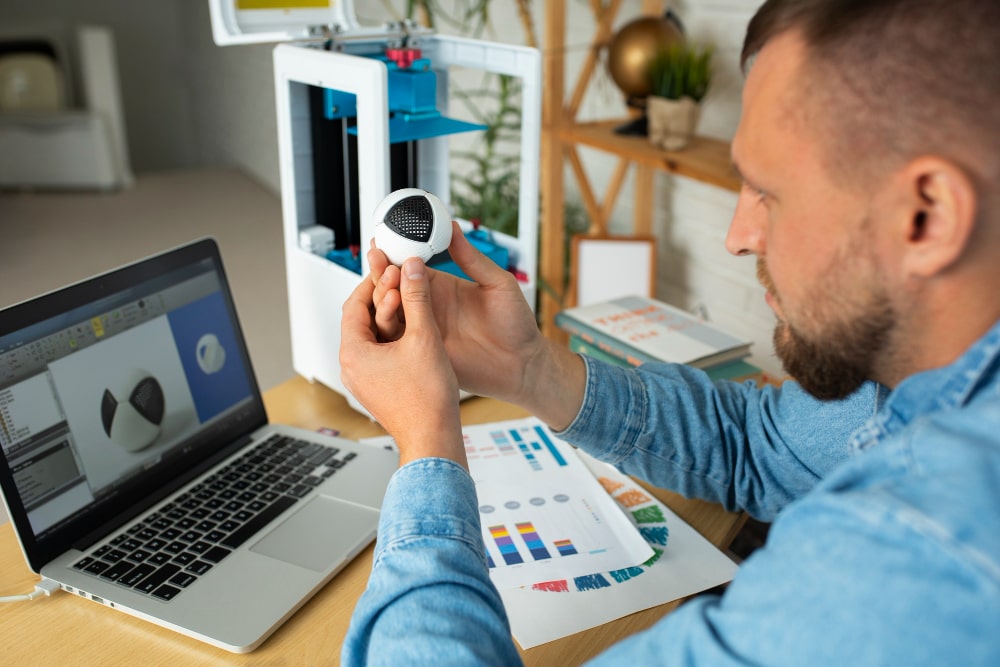
In today’s competitive market, the success of a product often hinges on the expertise and creativity behind its design and development. Taking a concept from a rough idea to a fully functional, marketable product requires an exceptional blend of innovation, strategy, and technical know-how, and very few companies have the internal resources to do all of that well without outside help. Whether it is a consumer gadget, an app, or a complex industrial tool, partnering with the right product design and development company can make the difference between a product that quietly disappears and one that defines an entire category. Here are ten product design and development companies that have set themselves apart through genuinely groundbreaking work and portfolios most competitors can only aspire to building over a full career.
What Do Product Design and Development Companies Do?
Product design and development companies specialize in taking an idea from concept to market-ready product. Their main focus is on creating functional, user-friendly, and aesthetically appealing products that meet both user needs and business goals. Here is what they typically do:
Market Research and Analysis: They study target audiences, competitors, and market trends to ensure the product is relevant and genuinely needed.
Product Conceptualization: They turn ideas into detailed product concepts, often involving brainstorming sessions, sketches, and early prototype designs.
Prototyping: A functional prototype is created to test the product’s design and features before mass production begins.
Design Iteration: Based on feedback and testing, they refine the product’s design to improve usability, functionality, and appearance.
Engineering and Technical Development: These companies also handle the engineering side of things, making sure the design can actually be manufactured and operates as intended once it leaves the prototype stage.
Production and Manufacturing Support: Some product design firms manage the manufacturing process directly or help businesses find reliable manufacturing partners.
Branding and Packaging Design: They may also help with branding, packaging, and product marketing to make the final product more appealing on shelf or online.
Testing and Feedback: They conduct user testing to ensure the product is intuitive, useful, and actually meets customer expectations before it ships at scale.
What to Look for in Product Design and Development Companies
When selecting a product design and development company, consider the following factors:
1. Experience and Expertise: Look for agencies with a proven track record in your industry and expertise in both design and development.
2. Portfolio: A strong portfolio showcases their creativity, problem-solving skills, and ability to deliver results across different product categories.
3. Innovative Approach: Choose companies that stay ahead of design trends and incorporate current technology thoughtfully into their work rather than for its own sake.
4. Client Collaboration: The best agencies work closely with clients, offering transparent communication and tailored solutions rather than a rigid, one-size-fits-all process.
5. Process and Workflow: Ensure their process includes stages like prototyping, testing, and user feedback to refine the product effectively before committing to expensive tooling.
6. Quality Assurance: Look for agencies that prioritize thorough testing and continuous improvement rather than treating the first working prototype as the finish line.
Top Product Design and Development Companies
1. IDEO

IDEO is a pioneer in the product design space, well known for popularizing the human-centered design approach that much of the industry now takes for granted. Their focus is on creating products that resonate with real users while addressing business objectives, and the firm’s design thinking methodology has been adopted as a teaching framework at business schools well beyond the product design field itself.
- Notable Clients: Ford, Apple, and Google.
- Leadership Experience Score: 9/10.
- Company Size: 500+ employees.
- Years in Business: Over 40 years.
- Headquarters: San Francisco, USA.
2. frog, part of Capgemini Invent

Frog Design, now operating simply as frog, has been part of Capgemini Invent since Capgemini’s 2019 acquisition of the studio. The firm excels at helping brands create advanced products through a collaborative, multidisciplinary approach, and its integration into Capgemini’s global consulting network has given clients access to engineering and data science resources a standalone design studio typically could not offer.
- Notable Clients: Microsoft, Disney, and LG.
- Leadership Experience Score: 8/10.
- Company Size: 1,000+ employees.
- Years in Business: 50+ years.
- Headquarters: San Francisco, USA.
3. Toptal

Toptal is a global network of vetted product designers and developers offering top-tier freelance talent for businesses looking to build products without committing to a full in-house team. Its rigorous screening process, which reportedly accepts a small fraction of applicants, is the core mechanism behind the consistency clients report across engagements.
- Notable Clients: JPMorgan, Zendesk, and Airbnb.
- Leadership Experience Score: 8/10.
- Company Size: 1,500+ freelancers.
- Years in Business: 10+ years.
- Headquarters: Remote.
4. Smart Design

With a focus on human-centered usability, Smart Design collaborates with companies to develop products that are both practical and genuinely pleasant to use day after day. The studio has a particular legacy in kitchen and personal care products, categories where the physical ergonomics of a design matter just as much as how it looks.
- Notable Clients: Pepsi, Ford, and Oral-B.
- Leadership Experience Score: 9/10.
- Company Size: 150+ employees.
- Years in Business: 35+ years.
- Headquarters: New York City, USA.
Also Read: Top 10 PPC Companies
5. Ziba Design

Ziba Design is known for its award-winning product design services, specializing in consumer electronics, medical devices, and industrial products. Its medical device work in particular requires navigating a significantly heavier regulatory and usability testing burden than most consumer product categories, which has shaped the studio’s rigorous documentation and validation processes.
- Notable Clients: HP, Intel, and Adidas.
- Leadership Experience Score: 8/10.
- Company Size: 50-100 employees.
- Years in Business: 40 years.
- Headquarters: Portland, USA.
6. Pentagram
Pentagram is a world-renowned design firm known for product design as well as brand strategy, offering creative direction and conceptual design work as part of a much broader identity system for its clients rather than as an isolated deliverable.
- Notable Clients: The Rolling Stones, Toyota, and Saks Fifth Avenue.
- Leadership Experience Score: 10/10.
- Company Size: 200+ employees.
- Years in Business: 50+ years.
- Headquarters: New York City, USA.
7. Landor

Landor, which simplified its name from Landor & Fitch as part of a broader rebrand, provides comprehensive product design services from research through development and branding, offering tailored solutions across a wide range of industries and product categories.
- Notable Clients: FedEx, Procter & Gamble, and BP.
- Leadership Experience Score: 9/10.
- Company Size: 500+ employees.
- Years in Business: Over 75 years.
- Headquarters: San Francisco, USA.
8. R/GA

R/GA has established itself as a leader in digital product design, delivering intuitive user experiences for connected products while also handling traditional physical product design work for clients who need both sides of the experience built cohesively.
- Notable Clients: Nike, Samsung, and Verizon.
- Leadership Experience Score: 8/10.
- Company Size: 1,000+ employees.
- Years in Business: Over 40 years.
- Headquarters: New York City, USA.
9. Aruliden

Aruliden is a full-service design and branding firm known for its distinct approach to product design, packaging, and user experience, treating each discipline as connected pieces of a single brand story rather than separate deliverables handed off between teams.
- Notable Clients: Adidas, Starbucks, and SONOS.
- Leadership Experience Score: 8/10.
- Company Size: 30-50 employees.
- Years in Business: 15 years.
- Headquarters: New York, USA.
10. Teague
Teague is an industrial design and product development firm working on physical hardware, transportation, and consumer electronics design, with a long history in aerospace and transportation interiors that gives it unusually deep experience in products that must meet strict safety and regulatory requirements.
Headquarters:
Seattle, Washington.
Years in Business:
Founded in 1926.
Sustainability Pressure Is Reshaping Physical Product Design
Regulatory pressure and consumer expectation have both pushed sustainability from a nice-to-have talking point to a genuine constraint baked into product briefs across most categories, mirroring a shift that has already reshaped the packaging design industry. Extended producer responsibility regulations in the European Union and several US states now hold manufacturers financially accountable for what happens to a product at end of life, which has real implications for material choice, disassembly design, and recyclability that need to be considered from the earliest concept stage rather than bolted on afterward.
Firms with genuine sustainability expertise, rather than a marketing veneer over conventional design practice, think about material selection, repairability, and end-of-life disassembly as part of the core design brief from day one. Ask any prospective partner directly what their process looks like for evaluating material choices against environmental impact, and ask for a specific example of a project where sustainability requirements meaningfully changed a design decision. A firm that cannot point to a concrete example is likely treating sustainability as a talking point rather than a genuine design constraint they have actually worked through under real project pressure.
Testing With Real Users Before You Commit to Tooling
One of the most expensive mistakes in physical product development is committing to manufacturing tooling before genuinely validating the design with real target users, not just internal stakeholders who already believe in the product. Internal teams are notoriously bad at predicting how outside users will actually interact with a new product, since everyone involved in development has spent months developing a mental model of how the product works that a first-time user simply does not have.
The strongest firms on this list build structured user testing into their process well before final tooling decisions get made, often running multiple rounds with progressively more refined prototypes. This testing frequently surfaces problems nobody on the internal team anticipated: an interaction that seems obvious to someone who has been staring at the product for months but confuses a first-time user within seconds, or a physical feature that looks fine in a rendering but feels wrong the moment someone actually holds it. Skipping this step to save time or budget is one of the most common reasons products underperform after launch despite strong concept-stage enthusiasm from everyone involved in building them.
Where Wbcom Designs Fits In
Wbcom Designs builds WordPress plugins and themes, not physical products; it has no real place in a product design and development ranking built around industrial design firms. Its actual specialty is WordPress community, membership, and LMS platforms. For physical product design and development, the firms above are the ones actually built for that work.
What Product Development Actually Costs From Concept to Manufacturing
Budget expectations for product development vary enormously depending on complexity, but a few benchmarks help set realistic expectations before your first call with any of the firms above. A digital-only product, an app or software interface with no physical component, typically runs $50,000 to $250,000 for a full design and initial development cycle at an established studio, depending heavily on feature scope. A physical consumer product involving industrial design, engineering, and tooling for injection-molded parts commonly starts around $150,000 for a relatively simple item and climbs well past $1 million for anything involving custom electronics, multiple components, or extensive regulatory testing.
Tooling costs deserve their own separate line item, since they are often the single largest expense in bringing a physical product to market and are easy to underestimate early on. A custom injection mold for even a moderately complex plastic part can run tens of thousands of dollars before a single unit has been manufactured, and that cost is fixed regardless of whether you sell a thousand units or a million. Firms like IDEO and Smart Design that have deep manufacturing partner networks can often help clients avoid costly tooling mistakes that a design team without hands-on production experience might not catch until it is too late to change cheaply.
Why the First Prototype Is Rarely the Final Product
A common misconception among first-time product founders is that a working prototype means the product is nearly ready to manufacture. In reality, the gap between a functional prototype and a mass-manufacturable product is often where the majority of the real engineering work happens. Something built by hand or on a 3D printer can behave very differently once it needs to be produced consistently at scale, using materials and processes suited to high-volume manufacturing rather than one-off fabrication.
This is where design-for-manufacturing expertise separates the firms that can carry a product all the way to shelf from those that excel only at the earlier concept stages. Ask any prospective partner directly how many of their past projects actually made it into commercial production, not just how many produced an impressive prototype or concept video. That distinction matters enormously, since a beautiful concept that never becomes a shippable product has not actually solved the problem you hired a firm to solve in the first place.
In-House Design Team Versus an External Partner
Does your company actually need an outside design partner, or would an in-house hire serve you better in the long run? That question is worth answering honestly before reaching out to any firm above, and the answer depends heavily on how frequently you expect to develop new products. Companies launching a single flagship product and then focusing on incremental iterations for years afterward are often better served bringing that expertise in-house once the initial design is locked, since ongoing iteration work rarely needs the breadth of specialized skills a full external studio provides.
Businesses that expect to launch multiple distinct products across different categories, or one entering an entirely new product line for the first time, usually get more value from an external partner precisely because studios like IDEO or Smart Design bring pattern recognition from dozens of past projects across industries that no single in-house team, however talented, could replicate. The strongest engagements often blend both approaches: an external studio leads the initial concept and industrial design work, while an in-house team takes over ongoing engineering, manufacturing liaison, and incremental improvements once the product ships and the studio’s specialized involvement is no longer the highest-value use of the budget.
Intellectual Property and Ownership Terms Deserve Real Scrutiny
Contracts with product design firms vary considerably in how they handle intellectual property ownership, and this is an area where the details genuinely matter rather than being boilerplate you can skim past. Most reputable firms transfer full IP ownership of the final design to the client upon final payment, which is the standard you should expect and insist on for anything client-specific. Some firms retain rights to underlying methodologies, proprietary tools, or generic components developed during the process, which is generally reasonable as long as those retained elements are clearly separated from the specific product IP that belongs to you.
Read the contract closely for language around confidentiality and non-compete provisions as well. A firm that works with dozens of clients in your industry inevitably develops institutional knowledge across those engagements, and a well-drafted contract should clarify what protections you have if that same firm later works with a direct competitor. This is a standard, reasonable question to raise during contract negotiation, and any firm that treats the question as an imposition rather than a fair request is telling you something worth paying attention to.
Choosing the Right Partner for Your Product
Selecting the right product design and development company can be a defining decision for your brand. The companies above have demonstrated genuine excellence in designing and developing products that resonate with users and hold up in the marketplace long after launch, well beyond the initial press cycle a strong concept can generate on its own. Whether you are looking for a firm to help bring your idea to life or to elevate an existing product line, these ten firms offer expertise that can meet your needs and, with the right fit, exceed what you originally thought was possible on your budget and timeline. Take the time to check references, ask about intellectual property terms, and insist on real user testing before tooling, and the odds of ending up with a product that actually earns its place on shelf improve considerably.